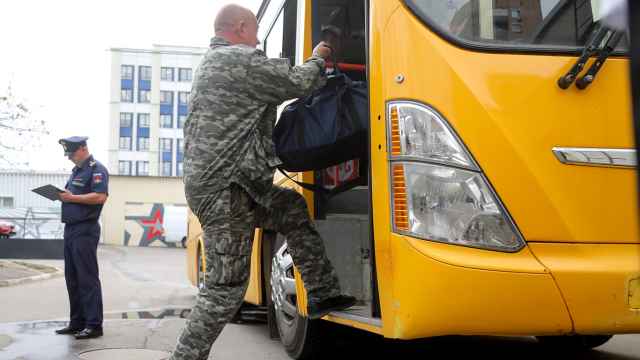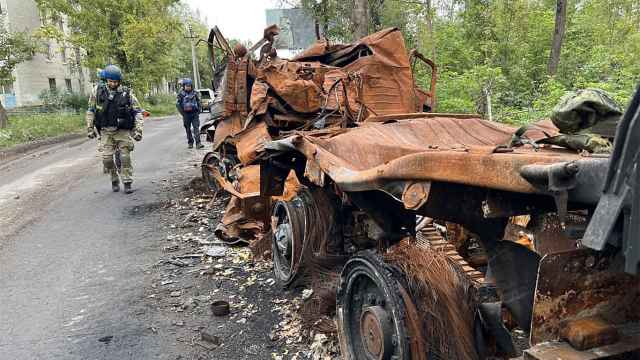
Violent crime committed by active-duty Russian servicemen has surged since the full-scale invasion of Ukraine, the Poland-based news outlet Vot Tak reported, with murders, sexual assaults and robberies rising far faster than the military’s expansion.
Russian garrison military courts received 729 murder cases involving servicemen between 2022 and 2025, compared with just 67 in the four years before the war, according to data compiled by Vot Tak.
The more-than-tenfold increase comes as the size of Russia’s Armed Forces grew by roughly one and a half times over the same period.
Cases of grievous bodily harm resulting in death rose sevenfold, while hundreds of prosecutions for rape, sexual violence and robbery were also recorded, with 2025 marking a peak year across multiple categories.
The data offers a rare window into crime within Russia’s military ranks, where official statistics are limited and many cases remain unpublished.
Hostage killing in Irkutsk
On Jan. 27 in the Siberian city of Irkutsk, a local women’s crisis center received an alert from a staff member at a nearby kindergarten who spotted a woman known to the organization being led down the street at knifepoint.
Around the same time, one of the crisis center’s residents received a message from her husband, an active serviceman, claiming he had taken the woman hostage and demanding beer and cigarettes be brought to his apartment.
Security forces including police, military personnel and special units surrounded the building and negotiated with the man for more than five hours. He agreed to open the door in the early hours of the morning.
When officers entered, they found the hostage dead. A forensic examination later determined she had died from strangulation and that the attacker remained in the apartment with the body for about an hour before surrendering.
The suspect, Roman Michurin, had a history of violent crime, including a prior murder conviction and repeated threats against his partner. At the time of the killing, he had been deployed to Ukraine after signing a military contract in 2024, though he later left the army following a reported injury.
Staff at the crisis center said his wife and young child had previously sought shelter there to escape his abuse.
Murders rising each year
The number of murders committed by servicemen outside combat zones has risen steadily each year of the war, according to the court data.
In 2025, the number of murder cases handled by garrison military courts was one and a half times higher than in 2024 and 16 times higher than in 2022, the first year of the invasion.
Overall, 729 such cases were filed between 2022 and 2025, compared to just 67 cases from 2018 to 2021.
Similarly, courts received 278 cases of grievous bodily harm resulting in death during the war years, compared with fewer than 40 in the preceding four-year period.
The sharp rise cannot be explained solely by the military’s expansion, Vot Tak said. Presidential decrees increased the size of the military by about 50% compared with pre-war levels, far below the rate of growth in violent crime.
Alcohol
Alcohol consumption appears to play a significant role in many of the killings.
In nearly three-quarters of published verdicts reviewed by Vot Tak, the perpetrator was intoxicated at the time of the crime. Soldiers committed murders while on leave, during downtime and even while on duty.
In one case, a senior warrant officer was sentenced to 14 years in prison after opening fire on his own unit during a drunken outburst.
According to the court verdict, the officer had consumed around two bottles of vodka while traveling with a group of servicemen assigned to clear debris at a former military site. He accused subordinates of refusing to participate in the war, then threatened to shoot them and himself before opening fire.
One soldier was killed and another wounded.
The victim was later commemorated as a war hero in his hometown, with local authorities and community groups stating he had died in combat.
In another case, a mobilized soldier shot two fellow servicemen during a drinking session and later claimed they had been killed by a Ukrainian sabotage group, according to media reports. He later confessed.
Violence beyond the barracks
While some killings involve disputes among servicemen, most take place outside military settings.
Only about 17% of the cases reviewed involved victims who were fellow soldiers. The majority of victims were civilians, oftentimes friends, acquaintances or strangers.
In one case, a mobilized soldier stabbed a woman 42 times in a wooded area after an argument during a drinking session. He later attempted to persuade a witness to help bury the body.
The court sentenced him to 10 years in prison, citing his participation in the war as a mitigating factor.
Medical experts concluded that he suffered from an emotionally unstable personality disorder linked to his combat experience.
Sexual violence and crimes against minors
The data also points to a sharp rise in sexual violence cases involving soldiers.
Courts received 549 cases related to rape and other forms of sexual assault between 2022 and 2025. At least 312 involved minors, including 249 cases concerning children under the age of 14.
As with murders, 2025 saw a spike, with 248 such cases filed in that year alone.
However, details of these crimes remain limited. Verdicts in sexual violence cases are rarely published in military court databases, making comprehensive analysis difficult.
Individual cases reported in the media suggest some offenders had prior criminal records and were recruited into the military from prison.
In one reported case from the occupied Donetsk region, a nine-year-old girl was abducted and killed by a serviceman who had previously been convicted of rape and robbery resulting in death. He had reportedly been living with the victim’s family while evading military authorities.
Robberies and looting
Property crimes have also risen sharply. Since the start of the war, 659 cases of robbery and armed robbery involving servicemen have been filed, nearly half of them in 2025 alone.
In one incident, a drunken soldier attempted to rob a grocery store at gunpoint, firing shots into the floor before demanding alcohol. He was later arrested at the scene.
Despite widespread reports of looting in conflict zones and border regions, prosecutions under Russia’s specific looting statute remain rare.
Only six such cases have reached military courts since the law was introduced in 2022, even though reports of soldiers stealing from civilians have been documented since the early days of the invasion.
Residents of border areas have reported break-ins and thefts in evacuated settlements where only a small number of locals and Russian troops remained. In many cases, investigations have stalled or failed to identify suspects.
Gaps in the data
The true scale of crime among servicemen is likely higher than the available data suggests, Vot Tak said.
Court records do not include cases still under investigation, and crimes committed by former servicemen are handled by civilian courts. Many verdicts, particularly in serious cases, are not published at all.
Data from courts in occupied Ukrainian territories is also largely unavailable.
“The entire combat zone is a lawless place,” said Timofey Vaskin, a legal expert with the human rights project Shkola Prizyvnika (Conscript's School). “Crimes committed there cannot be properly recorded, investigated or prosecuted.”
Lawyer Yevgeny Smirnov of the Perviy Otdel rights group said authorities appear more focused on maintaining troop levels than on punishing offenders.
“There is a sense that the Armed Forces are doing everything possible to ensure that people are sent to the front rather than to prison,” he said.
A Message from The Moscow Times:
Dear readers,
We are facing unprecedented challenges. Russia's Prosecutor General's Office has designated The Moscow Times as an "undesirable" organization, criminalizing our work and putting our staff at risk of prosecution. This follows our earlier unjust labeling as a "foreign agent."
These actions are direct attempts to silence independent journalism in Russia. The authorities claim our work "discredits the decisions of the Russian leadership." We see things differently: we strive to provide accurate, unbiased reporting on Russia.
We, the journalists of The Moscow Times, refuse to be silenced. But to continue our work, we need your help.
Your support, no matter how small, makes a world of difference. If you can, please support us monthly starting from just $2. It's quick to set up, and every contribution makes a significant impact.
By supporting The Moscow Times, you're defending open, independent journalism in the face of repression. Thank you for standing with us.

Remind me later.