
The war in Iran, and especially the quick decapitation of the country’s leadership structure, has been a swift, remarkable display of American power and Israeli determination. But there is one other fact it has proven: an alliance with Moscow counts for little when a regime faces its greatest threat.
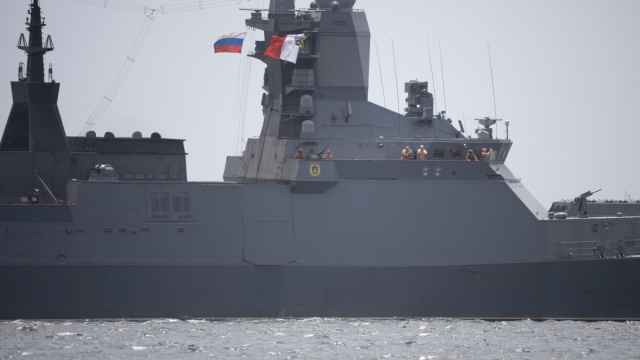
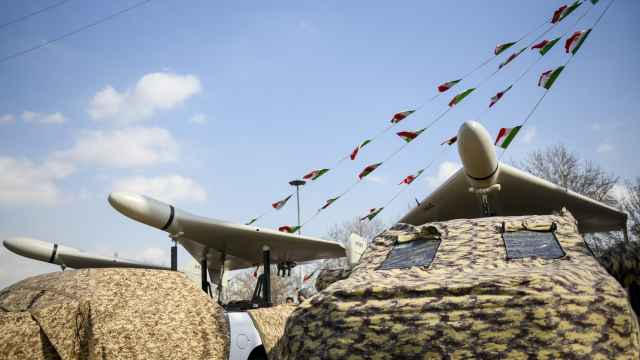
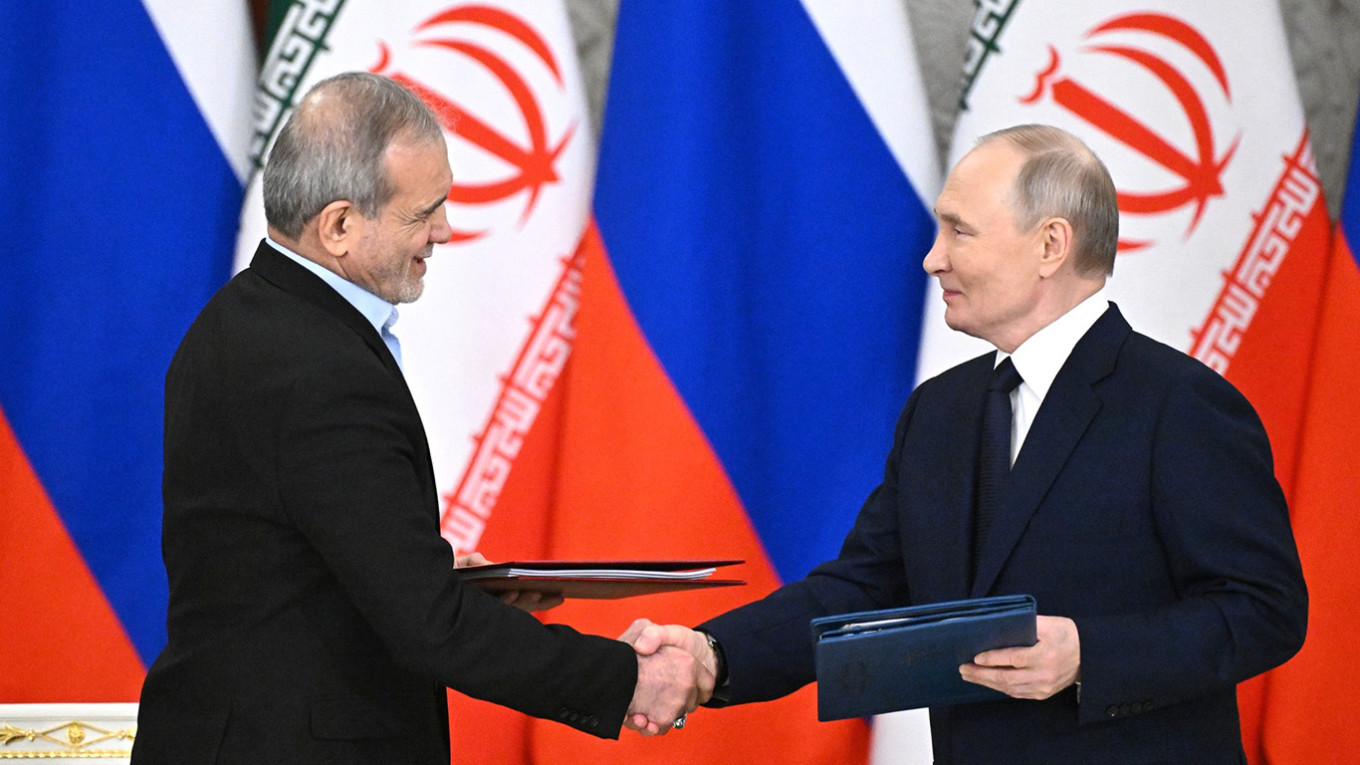
It wasn’t supposed to be this way. Just a year ago, Iranian and Kremlin officials inked a “comprehensive strategic partnership agreement,” cementing the deepening ties between the two regimes. It wasn’t quite the mutual defense pact that Russia had previously signed with North Korea. But it formalized closer defense cooperation between Tehran and Moscow and was the capstone of a years-long courtship in which Iran supplied billions of dollars’ worth of arms for Russia’s invasion of Ukraine. Indeed, Iran’s role in Russia’s drone and missile supply had become so pronounced that, as one expert on Russian-Iranian relations said, “Russia is reliant on Iran for its war” in Ukraine.
That may have been an overstatement, but only slightly. Along with a few select other countries, such as Belarus and North Korea, Iran was a primary bulwark of Russia’s neo-imperialist crusade in Ukraine.
A year later, however, that arrangement lies in tatters. Instead of racing to defend its Iranian allies, the Kremlin did little more publicly than wring its hands, bleat about violations of international law and hope for the best. In just a few short days, the war has exposed Russia’s geopolitical feebleness, confirming the Kremlin’s remarkable collapse in geopolitical relevance despite proclaiming itself a friend of the Global South. The entire war a strategic setback for the Kremlin, leaving Russia powerless to swoop in to its ally's aid.
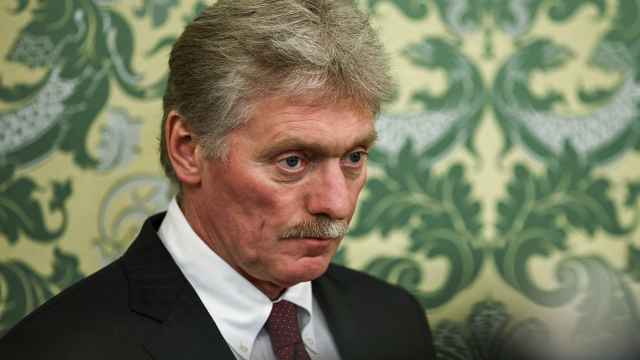
To be fair, Russia has at least attempted small shows of support for partners in Iran. Moscow has begun sharing targeting information with its Iranian counterparts to pinpoint American military assets. While Moscow denies this, multiple reports indicate that Russia has aided Iranian forces in both identifying American targets and in drone tactics. On its face, this is a clear indication of where Russia’s desires and ambitions still lie.
But it’s also a far cry from what the Iranians expected. After all, Iran spent years as a key part of Russia’s arsenal in its broader war against Ukraine. With the tables now turned, Russia is unwilling to return the favor to the same degree. While Russia’s intelligence sharing is concerning, the Kremlin’s space and satellite capabilities are leagues behind the United States’ know-how, making it, as the Wall Street Journal reported, “unclear how helpful” Russia’s data would actually be. Absent any troop or arms shipments to Tehran, analyst Dara Massicot said, Russia is making it clear that “this is not their problem and not their war.”
Even if Russia were willing to ship arms to Iran, it’s unlikely they would even be able to. Stretched increasingly thin across Ukraine, unable to replace troops lost or gain any significant territory, Russia’s quagmire in Ukraine has made a mockery of its claims to be a reliable ally for other partners elsewhere, as Iran is now learning.
And it may well get worse for Russia. While the recent spike in oil prices can help shore up Russia’s bleeding budget, it will hardly resolve all Moscow’s problems or last forever. And while the war in Iran has already sapped some of Ukraine’s inventory of interceptors, that decline may well be only a temporary setback. Ukraine’s pioneering development of anti-drone defenses has been second to none, including by using Ukrainian drones to take down Russian equivalents. As Ukrainian President Volodymyr Zelensky said last month, “Our wall of drones is your wall of drones.” That may now be truer than ever before, with the U.S. requesting aid from Ukraine in targeting Iranian drones. If the war tightens relations between Washington and Kyiv, that can only be to Moscow’s detriment.
More broadly, as the Kremlin knows well, this war doesn’t exist in a vacuum. It is the culmination of a years-long trend in which Moscow is, time and again, unable to rescue allies that are on the verge of collapse. Instead of racing to shore up its axis of anti-American authoritarians, Russia has been forced to sit on its hands, wincing as ally after ally topples, with potentially more on the horizon.
Scan over the past few years, and a graveyard of erstwhile Russian alliances emerges. In Syria, Russia waffled while Bashar al-Assad’s regime collapsed, with Moscow offering the despot a home for exile but little else. Russia could only watch while American forces snatched Nicolás Maduro, even after the Venezuelan president pleaded for Russian aid, but received only rhetorical support. Closer to home, Russia has witnessed its influence in places like the South Caucasus collapse, with Armenia and Azerbaijan turning to American partners to mediate their ongoing dispute.
Even places like Kazakhstan have begun drifting elsewhere, deepening partnerships with Turkey and China, wary of tethering themselves too closely to a wilting Russia. Moscow’s diminished role in Iran and elsewhere, as one researcher at the French Institute of International Relations said, reflects “a strategic downgrading both regionally and globally.”
Much of this strategic catastrophe — with Moscow suffering thousands of casualties every month while Ukraine capitalizes on Russia’s frontline communications crisis to regain territory — was completely foreseeable. So, too, was Russia’s inability to do anything to help Assad, Maduro, or the now-deceased Ayatollah Khamenei.
The only question is which ally Russia will watch topple next. The smart money remains on Cuba, where rolling blackouts and economic collapse are pushing the regime in Havana to the brink. Or perhaps it will be in Transnistria, the slice of Moldova that Russia has occupied for decades and which is now facing “the most serious economic and social crisis in the last 25 years,” as one Moldovan economic expert recently wrote.
It’s not a question of if Russia will be unable to ride to the aid of another ally, but when it will happen next. Given how many have met their demise in just the past 18 months, it’s fair to assume the next year and a half will have more yet – and that Russia’s cache as an ally will only continue to shrink and shrink, as long as Putin maintains his monomaniacal focus on Ukraine. Russia’s allies have been warned.

A Message from The Moscow Times:
Dear readers,
We are facing unprecedented challenges. Russia's Prosecutor General's Office has designated The Moscow Times as an "undesirable" organization, criminalizing our work and putting our staff at risk of prosecution. This follows our earlier unjust labeling as a "foreign agent."
These actions are direct attempts to silence independent journalism in Russia. The authorities claim our work "discredits the decisions of the Russian leadership." We see things differently: we strive to provide accurate, unbiased reporting on Russia.
We, the journalists of The Moscow Times, refuse to be silenced. But to continue our work, we need your help.
Your support, no matter how small, makes a world of difference. If you can, please support us monthly starting from just $2. It's quick to set up, and every contribution makes a significant impact.
By supporting The Moscow Times, you're defending open, independent journalism in the face of repression. Thank you for standing with us.

Remind me later.