Promsvyazbank (PSB), a key lender to Russia’s defense industry, posted a net loss in 2025 as rising loan defaults forced it to sharply increase provisions, Reuters reported Wednesday, citing the bank’s recent financial reports.
PSB reported a net loss of 19.2 billion rubles ($242 million) for the year, reversing a net profit of 65.3 billion rubles ($824 million) in 2024.
The results underscore growing strains in parts of Russia’s banking system as high interest rates and heavy wartime borrowing weigh on companies — including firms tied to the country’s defense sector.
PSB, which ranks among Russia’s five largest banks by assets and holds more than 1 trillion rubles ($12.6 billion) in retail deposits, set aside nearly 300 billion rubles ($3.79 billion) in loan-loss provisions in 2025 — roughly three times more than in 2024 — as borrowers struggled to service their debts.
Despite receiving 29.6 billion rubles ($373 million) in state support in 2025, PSB became the first major Russian bank to post a full-year loss.
Another large lender, Moscow Credit Bank, which has ties to state-controlled oil giant Rosneft, also reported a quarterly loss in the October to December period after overdue loans jumped sevenfold.
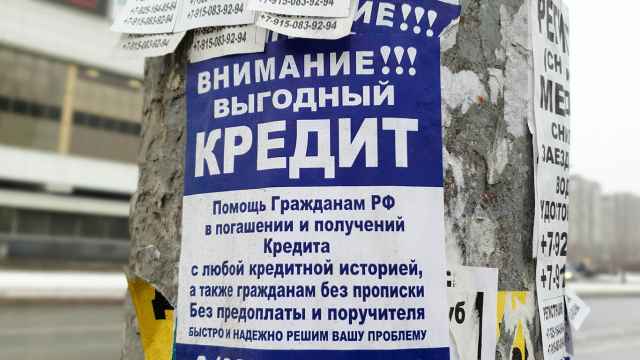
The volume of non-performing loans across Russia’s banking sector reached 10.4 trillion rubles ($131 billion), according to Central Bank data.
Overdue debts owed by companies and individual entrepreneurs grew by 1.9 trillion rubles ($23.9 billion) between January and September alone.
Analysts at the Kremlin-aligned Center for Macroeconomic Analysis and Short-Term Forecasting (TsMAKP) warned in February that the surge in bad loans could signal the start of a “latent banking crisis.”
Bankers, including executives at state-owned lenders, had already started raising concerns privately as early as last summer, when large corporate borrowers started missing payments, Bloomberg reported at the time.
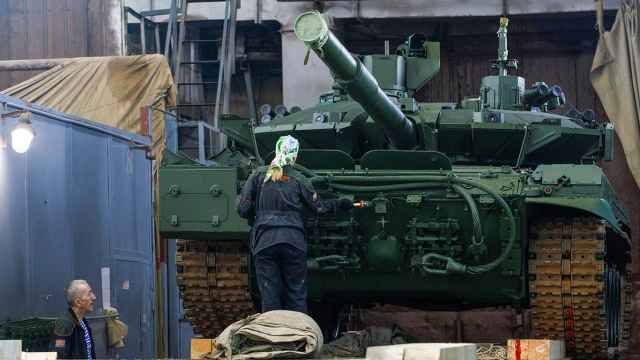
The ensuing wave of defaulted payments also affected defense manufacturers, which analysts estimate may have received more than 20 trillion rubles ($252 billion) in bank loans to finance wartime production.
Many of these loans were part of a state scheme to create “off-budget” military investment, said Craig Kennedy, a former Bank of America vice president and expert at Harvard University’s Davis Center for Russian and Eurasian Studies.
These loans effectively function as a second, hidden military budget used to fund the war in addition to the 42 trillion rubles ($530 billion) officially allocated by the federal budget, he said.
However, this requires banks to assume more risk as weak-credit defense manufacturers struggle to service these loans, especially once defense spending is reduced, he added.
“This creates the prospect of a systemically destabilizing pool of toxic debt spreading across the corporate credit markets,” Kennedy added.
Officials in Russia’s financial and economic policy bloc warned President Vladimir Putin late last year that the banking system was coming under pressure from high interest rates and the growing volume of loans linked to wartime spending, a source close to the government told The Washington Post.
According to the source, Putin was warned that the strains could trigger a broader economic crisis in the coming months.
Read this story in Russian at The Moscow Times' Russian service.
A Message from The Moscow Times:
Dear readers,
We are facing unprecedented challenges. Russia's Prosecutor General's Office has designated The Moscow Times as an "undesirable" organization, criminalizing our work and putting our staff at risk of prosecution. This follows our earlier unjust labeling as a "foreign agent."
These actions are direct attempts to silence independent journalism in Russia. The authorities claim our work "discredits the decisions of the Russian leadership." We see things differently: we strive to provide accurate, unbiased reporting on Russia.
We, the journalists of The Moscow Times, refuse to be silenced. But to continue our work, we need your help.
Your support, no matter how small, makes a world of difference. If you can, please support us monthly starting from just $2. It's quick to set up, and every contribution makes a significant impact.
By supporting The Moscow Times, you're defending open, independent journalism in the face of repression. Thank you for standing with us.

Remind me later.