

 | To Our Readers |
The Moscow Times welcomes letters to the editor. Letters for publication should be signed and bear the signatory's address and telephone number. |
For anyone who cares deeply about U.S.-Russian relations, events in Georgia are a great tragedy, as they are for the inhabitants of the region -- the Ossetians, Abkhaz, Georgians and Russians alike. Against the backdrop of this war, the agenda for cooperation with Russia is quickly being thrown into doubt.
Therein the tragedy, because the United States and Russia are major players in the international arena, and so much depends on their ability to work together to solve critical problems. Although tough talk in capitals seems to belie the fact, new models of cooperation -- namely, in nonproliferation policy and in the corporate world -- had until now brought us far away from the Cold War.
Now we are facing the fallout from the war in Georgia, and the Cold War analogy is tempting. But we need to take a clear-eyed look at where our interests lie.
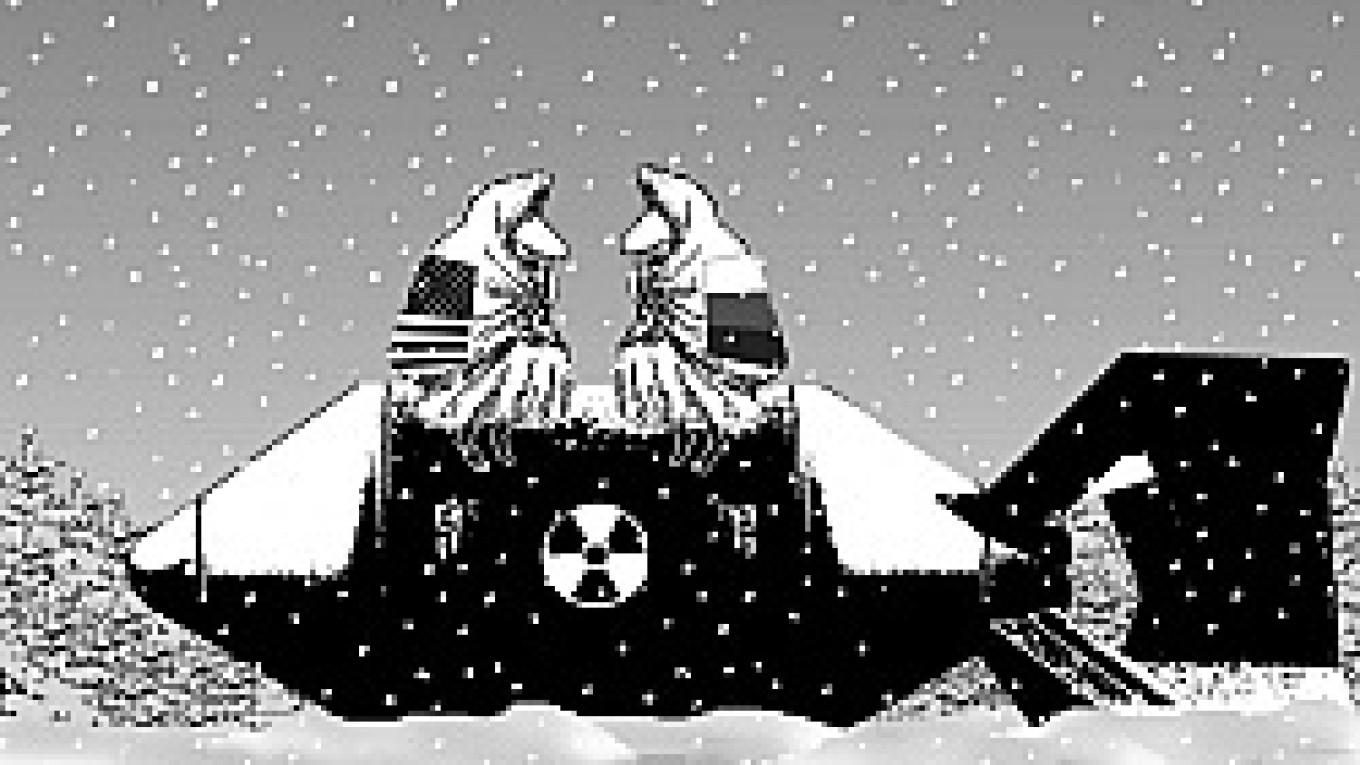
As we sort out the implications of this disaster, safe havens for cooperation still remain. The entire nuclear agenda is in this category, whether we are talking about a potential nuclear weapons program in Iran, the future of nuclear energy, the threat of nuclear terrorism around the world or the necessity of achieving further nuclear reductions in the United States and Russia.
Moscow and Washington have been working to replace the Strategic Arms Reduction Treaty, or START, but this process will have to be accelerated if a replacement is to be ready before the treaty expires in December 2009. To ensure that this process continues, the administration of U.S. President George W. Bush should drop its long-standing opposition to a routine extension of START for five years.
According to existing treaty provisions, this decision must be made by this December, before the Bush team leaves office. The extension would in no way hamper the new U.S. administration from moving quickly to a fresh deal with the Russians, but it would ensure that START will not be trapped in the salvo of post-Georgia recriminations.
Nuclear weapons have nearly always been a haven for continued diplomacy, even when U.S.-Russian relations have deteriorated. But what can be done about conventional weapons, which pose the greatest threat to relations between Georgia and Russia?
Once tensions ease between Russia and Georgia, the two sides will presumably return to the negotiating table to try to resolve the problem that sparked the present conflict -- the existence of the breakaway republics of South Ossetia and Abkhazia. At the same time, the broader question of European security arrangements will have to be addressed, but it is not easy to see how.
No single European institution is perfectly suited to working on this issue. The European Union lacks a seat for the United States, NATO lacks a unified view on its own future, and the Organization for Security and Cooperation in Europe does not have Russia as a full member. The Russians, for their part, claim that they have new ideas about how to organize Europe's security, but their invasion of Georgia doused any spark of interest in hearing them out.
In essence, a new consensus must now be brokered between Russia and its European neighbors, and the United States must have a vital role in the process. Given these requirements, the best choice may be to turn to the Treaty on Conventional Armed Forces in Europe, or CFE. The CFE has led to the destruction of thousands of Cold War-era tanks and conventional weapons systems, and today it regulates deployments of conventional weapons in Europe.
The Russians, it must be said, ceased implementing the agreement one year ago, citing concerns about CFE limits on the Russian armed forces in the flank zones on Europe's periphery, an action that launched a new negotiation about the treaty's future. The Russian invasion of Georgia highlights the rationale for flank limits, so the Russians must now be challenged to make their case for changing the CFE treaty.
CFE is criticized for being overly technical, but perhaps serious technical discussions are a good thing among the parties at this highly charged moment.
These efforts not will succeed without sustained high-level attention. A risky but potentially big payoff strategy is needed, since political transitions are under way in both Russia and the United States. A bilateral presidential commission formed at the highest levels would be one way to go about it. Its mission would be two-pronged: first, to examine how to get relations back on track between the United States and Russia; and second, to provide high-level counsel to the difficult ongoing negotiations.
This commission would be of short duration, no more than six months in length. If they could be convinced to serve, the past presidents of the two countries would lend ideal authority to the effort. This group would include former Presidents Jimmy Carter, George H.W. Bush and Bill Clinton on the U.S. side. The problem, of course, would be an unbalanced situation on the Russian side, since former Presidents Mikhail Gorbachev and Vladimir Putin are Russia's only living past leaders, and Putin is currently serving as prime minister. An answer to this problem may be to invite Putin to serve in ex officio status -- he would sustain the heft of the Russian premiership without unbalancing the commission's deliberations.
Although high-risk, the goal of such a commission would be profound: to salvage the U.S.-Russian relationship so that the two countries can cooperate closely on critical international issues.
Rose Gottemoeller is director of the Carnegie Moscow Center.
A Message from The Moscow Times:
Dear readers,
We are facing unprecedented challenges. Russia's Prosecutor General's Office has designated The Moscow Times as an "undesirable" organization, criminalizing our work and putting our staff at risk of prosecution. This follows our earlier unjust labeling as a "foreign agent."
These actions are direct attempts to silence independent journalism in Russia. The authorities claim our work "discredits the decisions of the Russian leadership." We see things differently: we strive to provide accurate, unbiased reporting on Russia.
We, the journalists of The Moscow Times, refuse to be silenced. But to continue our work, we need your help.
Your support, no matter how small, makes a world of difference. If you can, please support us monthly starting from just $2. It's quick to set up, and every contribution makes a significant impact.
By supporting The Moscow Times, you're defending open, independent journalism in the face of repression. Thank you for standing with us.

Remind me later.