

Revolutions happen silently in bureaucratic circles, without a single shot from enemy forces. One fine day, the head of the government simply signs a document that changes the entire structure of authority. At first, nobody understands exactly what has happened. But during an emergency, when bureaucrats do their best to avoid making decisions, it suddenly becomes clear that one person has appeared who has the power to give orders and is willing to assume responsibility.
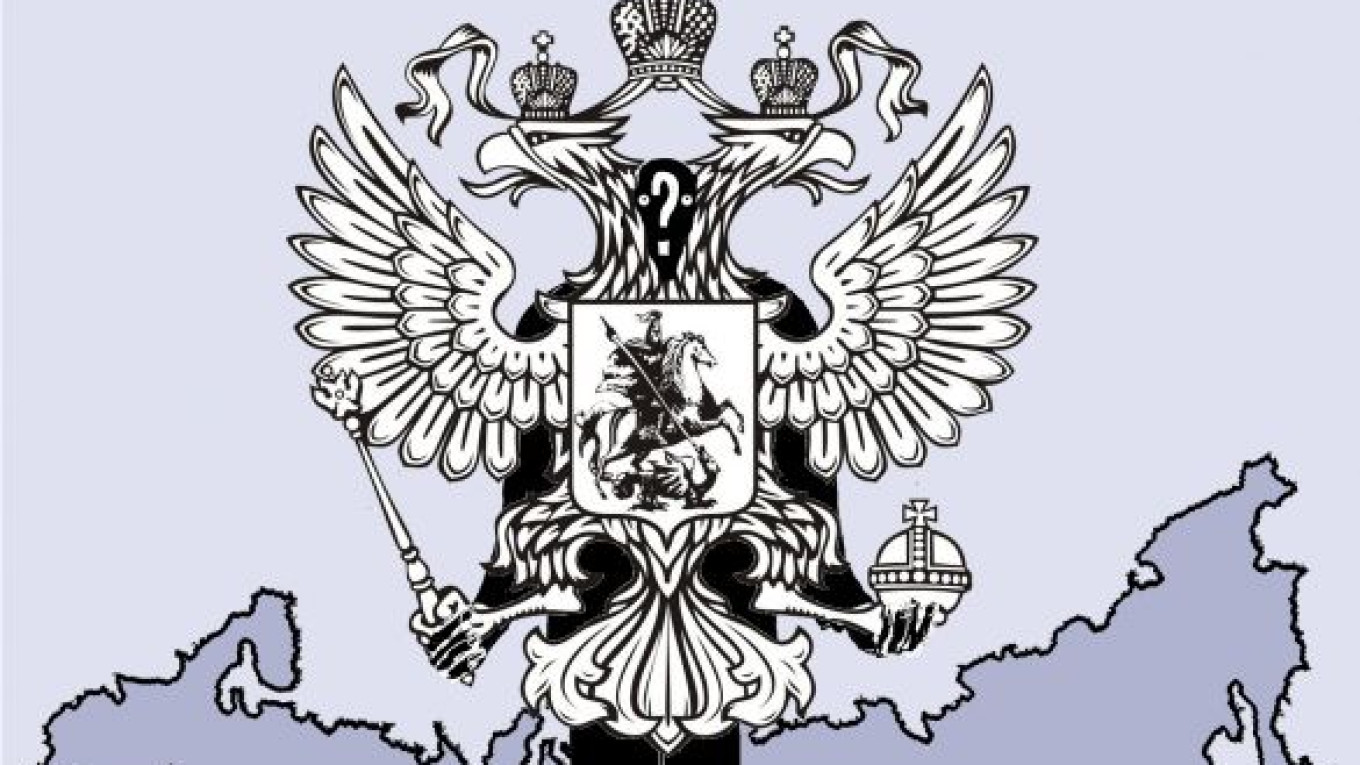
A quiet revolution has been taking place under the shadow of the Kremlin administration, even as Prime Minister Vladimir Putin has rapidly created his All-Russia People’s Front to rally Russians around his re-election effort. President Dmitry Medvedev has signed a decree inconspicuously named “Security Council Questions” that suddenly and unexpectedly grants unprecedented powers to the Security Council secretary. ?
It should be noted that the people who previously held the secretarial post sometimes played very significant roles in state affairs. Former Security Council Secretary Andrei Kokoshin used his position to plan military reforms, and Putin himself, as secretary, prepared to lead the country. But the relative influence of the secretary has always been a function of how closely connected he was to the man at the top. Within the bureaucratic hierarchy itself, the Security Council secretary has always been more of an organizational post. The secretary was responsible for making preparations for Security Council meetings, drafting decisions and writing up pointless doctrines and policy papers.?
Now Medvedev?€™s decree endows the post with an importance almost rivaling the authority of the ruling tandem of him and Putin. Judge for yourself. From now on, the Security Council secretary will be responsible for ?€?the control of Russia?€™s armed forces, other forces, military formations and bodies,?€? according to Medvedev?€™s decree. That is to say the secretary will control not only the armed forces, but also law enforcement and intelligence agencies. Moreover, Medvedev?€™s decree stipulates that the Security Council secretary will ?€?participate in formulating and implementing foreign policy.?€? The secretary will also ?€?make proposals to the Security Council for coordinating the work of federal and regional executive bodies in national emergencies.?€? In effect, the country?€™s siloviki, who previously answered only to the president, now have their own ?€?tsar.?€?
I will hazard to guess that even in the ultra-centralized Soviet state no official held that degree of power. True, certain administrative departments of the Communist Party Central Committee carried a great deal of weight in supervising what are now called the siloviki. But their superiors were Politburo members who in turn answered to Central Committee members. But now the Security Council secretary is a member of the unofficial consultative body consisting of the defense minister, foreign minister and director of the Federal Security Service — all of whose functions the secretary now controls. In effect, he is the first among equals.
In addition, the Security Council itself is now empowered to monitor budgetary spending for defense, national security and law enforcement ?€” fully one-fourth of the national budget. What?€™s more, the Security Council is charged with controlling the government, in part by analyzing a consolidated annual report on its main activities and results. In short, the Security Council will now run the government.
I hate conspiracy theories, but we can only guess at the motives lurking behind this development. It seems highly unlikely that all of this new-found power will be invested in current Security Council Secretary Nikolai Patrushev, who was given the post as a sort of honorable discharge from his previous job as FSB director. Recall that then-President Putin sent him to that post exactly three years ago after Patrushev became locked in a public conflict with then-
Federal Drug Control Service head Viktor Cherkesov. At the time, FSB officials worried about whom Putin would name as his successor. And in his role as Security Council secretary, Patrushev gained notoriety for having made ill-advised statements that Russia?€™s military doctrine would spell out rules for using nuclear weapons in local conflicts and that Moscow was prepared to launch a pre-emptive nuclear strike if necessary. That major gaffe was quietly disavowed by officialdom soon afterward.
Obviously, it would be unwise to hand so much power to a moderately competent political outcast who probably harbors less than tender feelings for the ruling tandem.
People well versed in Kremlin intrigues are convinced that somebody else will soon be appointed Security Council secretary. And that choice will reveal a great deal. It is entirely possible that strengthening the Security Council is part of Putin?€™s election campaign strategy ?€” that he wants a trustworthy person in control of the siloviki to make sure there will be no more political infighting like he had with Patrushev and Cherkesov. But it is difficult to imagine that the national leader, given his obsessive suspicion of everyone around him, would risk giving so much authority to any single person.
It is also possible that Medvedev gave new powers to the Security Council in response to Putin?€™s maneuver of forming the people?€™s front, as a way to score points before his decisive conversation with the prime minister. It is also telling that, having signed the new decree, Medvedev found the courage to threaten the siloviki responsible for failed defense contracts. He essentially told them, ?€?You should understand that at another time half of the people present would have been sent to the labor camps.?€? That gave Putin appointees something to think about.
Finally, it is entirely possible that the post of Security Council secretary is being prepared as a springboard for a new successor. Recall how Putin himself was appointed prime minister in 1999 as a means for demonstrating himself to the people. But that job happens to be occupied at the moment.
With slightly less than a year remaining before the presidential election, the power vertical is becoming a little wobbly. Hopefully, we?€™ll be able to get through the next year without a small, winnable war or apartment building bombings.
Alexander Golts is deputy editor of the online newspaper Yezhednevny Zhurnal.
A Message from The Moscow Times:
Dear readers,
We are facing unprecedented challenges. Russia's Prosecutor General's Office has designated The Moscow Times as an "undesirable" organization, criminalizing our work and putting our staff at risk of prosecution. This follows our earlier unjust labeling as a "foreign agent."
These actions are direct attempts to silence independent journalism in Russia. The authorities claim our work "discredits the decisions of the Russian leadership." We see things differently: we strive to provide accurate, unbiased reporting on Russia.
We, the journalists of The Moscow Times, refuse to be silenced. But to continue our work, we need your help.
Your support, no matter how small, makes a world of difference. If you can, please support us monthly starting from just $2. It's quick to set up, and every contribution makes a significant impact.
By supporting The Moscow Times, you're defending open, independent journalism in the face of repression. Thank you for standing with us.

Remind me later.