

The conditions were part of a six-point legally binding document that Georgia will have to sign for an international peace plan to work. The document was agreed upon by Medvedev and French President Nicolas Sarkozy, who made a lightening visit to the Kremlin to mediate the talks, and presented to reporters after more than four hours of talks.
Sarkozy then left for Tbilisi to ask Georgian President Mikheil Saakashvili to agree to the deal.
"If the Georgian side will really be ready to sign this and withdraw troops to their initial positions [and] follow through on everything that is stated in these principles, then a path to the gradual normalization of the situation in South Ossetia will be open," Medvedev said at a joint news conference after the talks.
"The matter depends on Georgia now," Medvedev said.
Under the other three conditions, Georgia must agree not to use force, to allow humanitarian aide into the conflict zone and to agree to the start of international talks on the future status of South Ossetia and Abkhazia.
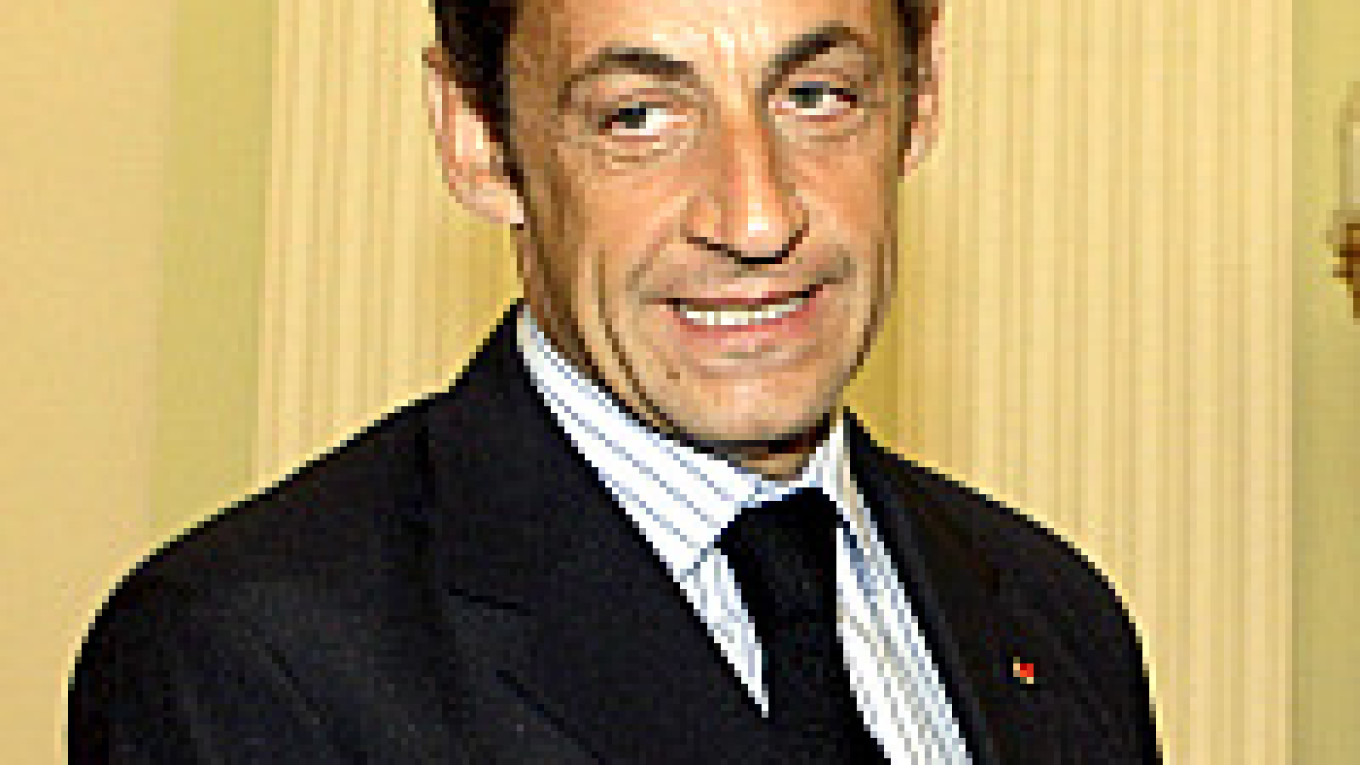
Sarkozy, who in his usual manner gestured heavily during the news conference, said the plan they had come up with might not seem like much but that the most important task was to stop the fighting and bloodshed.
"It's not that I wasn't brave enough. It's much easier to write an editorial than to bring people closer," he said.
Medvedev defended Russia's use of force and said many more people would have died if Russia had not intervened. "Our peacekeepers are continuing to perform their duties and will continue to perform their duties because they are a key factor for upholding security in the Caucasus," Medvedev said.
He reverted to the tough rhetoric usually heard from his mentor, Prime Minister Vladimir Putin, using the words like "bastards" and "hoodlums" at the news conference. (A recent public opinion poll found that Putin remains hugely popular because of his earthy language.)
Sarkozy said Europe was ready to send peacekeepers to Georgia if all involved parties agreed. "Could Europe get involved in a peacekeeping mission? Europe is available to do that, of course," he said.
Sarkozy took pains to be seen as a fair arbiter, saying he sent his Foreign Minister Bernard Kouchner to meet refugees in North Ossetia. Before his visit to Moscow, Sarkozy met with German Chancellor Angela Merkel, and he said the two of them see eye to eye. Medvedev is scheduled to meet with Merkel later this week in Sochi, where he is scheduled to go on a working vacation.
Medvedev said the people of Abkhazia and South Ossetia should be allowed to decide themselves whether they want to be part of Georgia. "The Ossetians and the Abkhaz must respond to that question taking their history into consideration, including what happened in the past few days," he said.
Sarkozy and Medvedev had been scheduled to address reporters after less than two hours of talks, but a Kremlin spokesman announced that it had been delayed because the talks were continuing. A member of the French delegation said soon after that Putin had arrived for lunch with Medvedev and Sarkozy. The two presidents addressed reporters three hours later, while Putin chose not to attend.
When asked why the talks went so long, a senior Russian diplomat who participated in the meeting said only that the leaders had agreed on everything long before they emerged to speak with reporters and had in the remaining time "told jokes about women." The diplomat did not smile as he spoke, and it was unclear whether he was joking.
From the Kremlin, Sarkozy headed for Tbilisi where he was prepared to spend the night talking to Saakashvili. "The night is young," he said.
France holds the European Union's rotating presidency and is leading mediation efforts between Russia and Georgia. Shortly before meeting Sarkozy, Medvedev ordered a halt to fighting by Russian troops.
France is well-positioned for the mediation effort because it was of the countries that resisted U.S. calls to put Georgia and Ukraine on track to join NATO by giving them a Membership Action Plan in April.
Complicating the situation, however, Moscow has turned down the idea of direct talks with Saakashvili. "Saakashvili can no longer be our partner, and it would be better if he stepped down," Foreign Minister Sergei Lavrov said Tuesday. "He didn't even think about remorse and constantly says he's right in killing our citizens and peaceful people and ordering women and children be run over by tanks."
Many South Ossetians hold Russian passports.
Lavrov said there were many people in Georgia other than Saakashvili with whom Russia could negotiate.
Also Tuesday, Medvedev called EU foreign policy chief Javier Solana to thank the EU for its role in trying to return peace to the region.
The U.S. envoy to the region, Matthew Bryza, welcomed the end of military action in Georgia, saying at a news conference in Tbilisi that it marked a "return of common sense and genuine concern for humanity."
U.S. President George W. Bush earlier accused Russia of trying to topple Georgia's government and demanded that Russia stop the fighting, which he said put its relations with the West in jeopardy.
"Russia has invaded a sovereign neighboring state and threatens a democratic government elected by its people. Such an action is unacceptable in the 21st century," Bush said.
Lavrov, who has several times in recent days declared that Saakashvili must go, said Tuesday that Russia would not try to topple him.
A Message from The Moscow Times:
Dear readers,
We are facing unprecedented challenges. Russia's Prosecutor General's Office has designated The Moscow Times as an "undesirable" organization, criminalizing our work and putting our staff at risk of prosecution. This follows our earlier unjust labeling as a "foreign agent."
These actions are direct attempts to silence independent journalism in Russia. The authorities claim our work "discredits the decisions of the Russian leadership." We see things differently: we strive to provide accurate, unbiased reporting on Russia.
We, the journalists of The Moscow Times, refuse to be silenced. But to continue our work, we need your help.
Your support, no matter how small, makes a world of difference. If you can, please support us monthly starting from just $2. It's quick to set up, and every contribution makes a significant impact.
By supporting The Moscow Times, you're defending open, independent journalism in the face of repression. Thank you for standing with us.

Remind me later.