

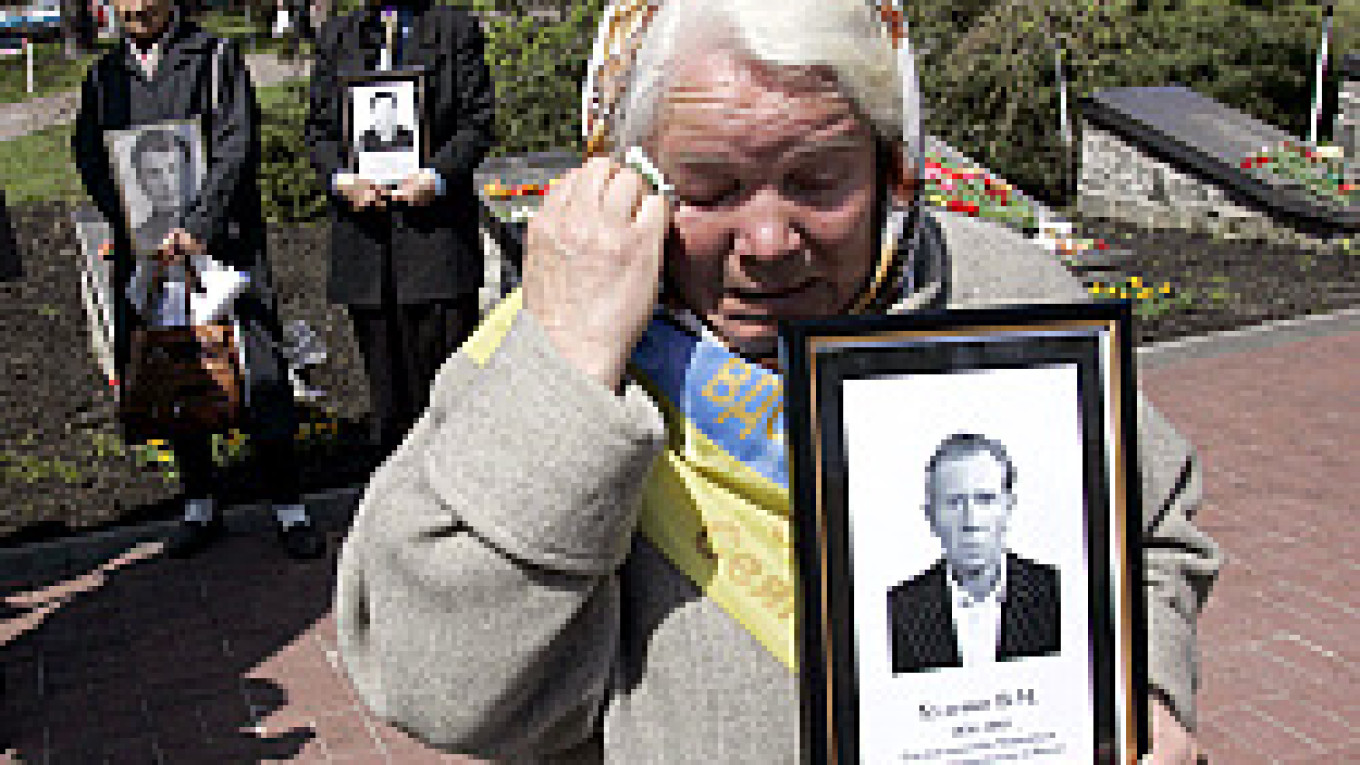
Many of the 3,000 marchers expressed particular dismay over the government's policy of assigning recent university graduates to work in areas contaminated by the explosion.
Reactor No. 4 at Chernobyl, in what is now northern Ukraine, exploded on April 26, 1986, spewing radiation over a large swath of the former Soviet Union and much of northern Europe in the world's worst nuclear accident.
Belarus, downwind from the plant, was severely affected. Statistics about illness in the contaminated parts of Belarus ?€” about 23 percent of its territory ?€” are kept under wraps by the government. Protesters said the government was denying help to people affected by the disaster, including those who were sent in to clean up radioactive fallout.
Kasya Markouskaya, 23, has been ordered to spend two years in Buda-Koshelyovo, a contamination-area town, when she graduates this spring.
"My situation is little different from that of a slave who has been forced to do dangerous work," she said. If she refuses, she will be stripped of her diploma or required to reimburse the state for her education. When she entered the university, there were no such strings attached.
Deputy Prime Minister Alexander Kosinets said Friday that if the work assignments were canceled, the region would be left without the doctors, teachers and other specialists it needs.
In Kiev, meanwhile, dozens of mourners laid flowers at a memorial to victims of the accident. Ukrainian President Viktor Yushchenko prayed and lit candles before dawn Saturday to mark the precise time the reactor exploded.
A Message from The Moscow Times:
Dear readers,
We are facing unprecedented challenges. Russia's Prosecutor General's Office has designated The Moscow Times as an "undesirable" organization, criminalizing our work and putting our staff at risk of prosecution. This follows our earlier unjust labeling as a "foreign agent."
These actions are direct attempts to silence independent journalism in Russia. The authorities claim our work "discredits the decisions of the Russian leadership." We see things differently: we strive to provide accurate, unbiased reporting on Russia.
We, the journalists of The Moscow Times, refuse to be silenced. But to continue our work, we need your help.
Your support, no matter how small, makes a world of difference. If you can, please support us monthly starting from just $2. It's quick to set up, and every contribution makes a significant impact.
By supporting The Moscow Times, you're defending open, independent journalism in the face of repression. Thank you for standing with us.

Remind me later.