

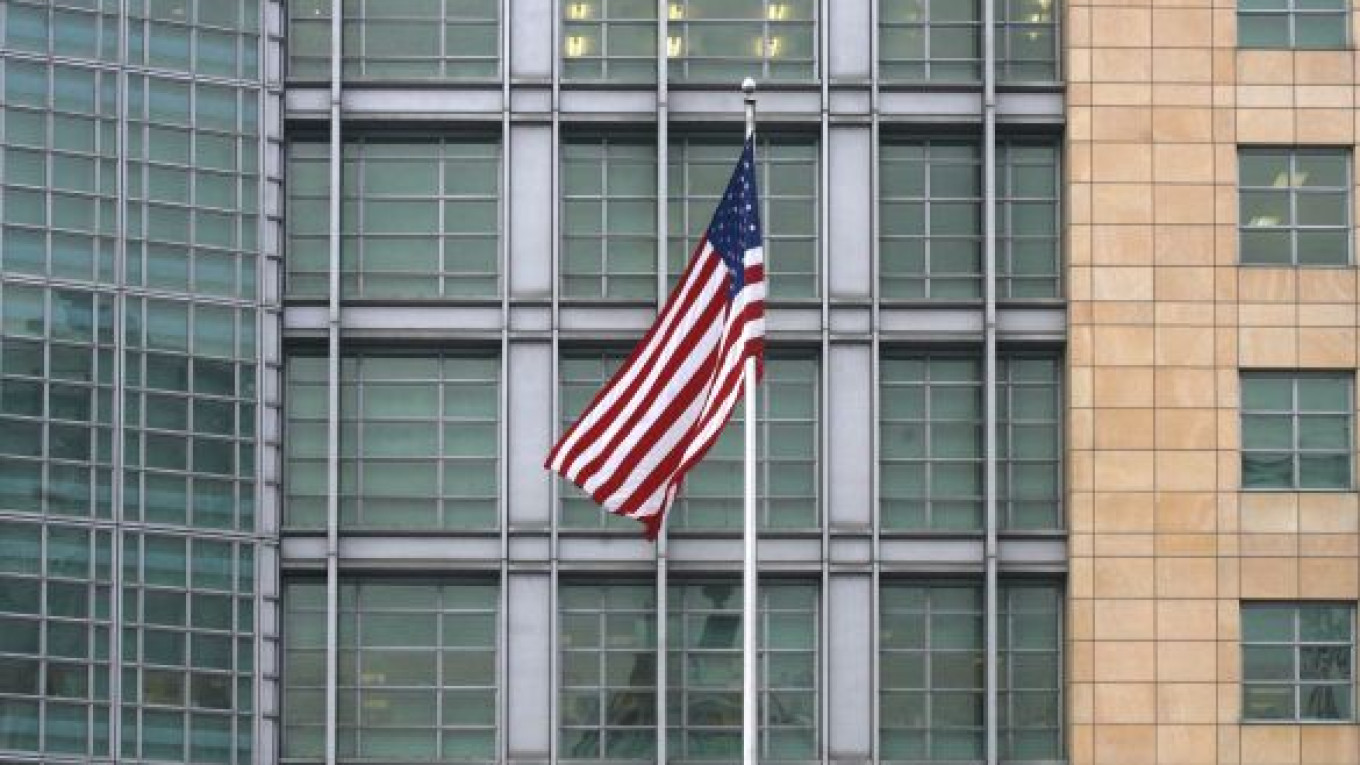
The U.S. Commercial Service is sending more trade officers to Russia as part of an effort to help American companies gain more business in fast-growing markets, as it reduces staff in slower-growing markets.
That could mean expansion of commercial sections at the U.S. Embassy in Moscow and the consulate in St. Petersburg. In addition, a trade desk could appear at the Yekaterinburg consulate.
The U.S. Embassy in Moscow had no comment Friday. But figures the embassy shared with The Moscow Times last month suggested an increase in U.S. business activity amid the reset in U.S.-Russian ties.
The U.S. Commercial Service, a federal agency within the U.S. Commerce Department, helped 177 U.S. companies enter Russia or increase their sales here during fiscal year 2011 that ended Sept. 30, an embassy source said. That compares with 155 companies that used help from the U.S. Commercial Service in the previous fiscal year, the source said.
The current two commercial offices in Russia offer a "full range of services to assist U.S. firms interested in developing market opportunities or increasing their business in Russia," the embassy says on its website.
These fee-based services include identifying local agents and distributors for U.S. goods and services, arranging tailored appointments for U.S. businesspeople and customized market research.
"Our specialists provide counseling to U.S. firms in all industry sectors seeking new opportunities or facing obstacles, as well as Russian firms looking for U.S. partners," the website says.
There are currently three inquires from Russian companies posted on the U.S. Commercial Service's website seeking cooperation with American businesses.
One is from a manufacturer of construction materials that wants a deal with U.S. suppliers of a production line. Two other companies would like to buy technologies and equipment for recycling used industrial and motor oils and the used plastic components of computer hardware and cartridges.
The U.S. government is moving employees to higher-priority markets like Russia from trade desks at U.S. embassies in seven countries, from Switzerland to Venezuela. It is the biggest overhaul since President Barack Obama took office.
Officers working to promote U.S. exports in Algeria, Ecuador, Kazakhstan, Libya, Senegal, Switzerland and Venezuela also will be moved to such markets as China, Brazil, Mexico, Turkey, India and South Africa, according to the Commerce Department.
"Our goal is to ensure that U.S. companies have the support they need in markets with the greatest opportunity for U.S. exports, and where demand for our services is overwhelming," Thomas Moore, a deputy assistant secretary with the U.S. Commerce Department's International Trade Administration, said yesterday in an e-mail.
Seven officers and 40 local staff jobs will shift. The moves will save $6.6 million based on fiscal year 2010 costs, according to the Commerce Department.
The last comparable repositioning of the U.S. Commercial Service took place under President George W. Bush in 2007 and 2008, when personnel in consulates were moved from developed markets to faster-growing economies in Asia, Africa and South America, according to the Commerce Department. The service has staff in more than 100 U.S. cities and 75 countries helping U.S. companies get started in exporting and expanding their markets.
Doubling Exports
The embassy changes will aid Obama's drive to double exports to $3.14 trillion by 2015 from $1.57 trillion in 2009, according to the department. The agency plans to have officers in neighboring countries provide services in the nations it's leaving, according to a Commerce Department official, who spoke on condition of anonymity. Some tasks may also be absorbed by economic officers who deal with issues such as business and finance laws, according to the agency.
Cutting staff in markets such as Libya will hurt the United States, even if the trade-off is adding staff in larger emerging markets, said Chuck Dittrich, vice president of regional trade initiatives at the National Foreign Trade Council and executive director of the U.S.-Libya Business Association in Washington. Opportunities for U.S. companies in Libya, which holds the largest oil reserves in Africa, are greater than ever after the ouster of leader Moammar Gadhafi in October, he said.
Return on Investment
"It's a really bad idea," Dittrich, who served as chief of staff to the director general of the commercial service during the George H.W. Bush administration, said in an interview. "It shouldn't be a zero-sum game of reducing in one country to put more in another. The value of these commercial officers in a country has a huge return on investment."
Dittrich said the officers are often responsible for writing research on opportunities in a market, helping find distributors for American-made products and connecting U.S. companies with trade fairs where they can attract customers.
The nine offices that will be closed in nations where the Commerce Department will keep at least one desk are in Melbourne, Australia; Vancouver, Canada; Wuhan, China; Alexandria, Egypt; Florence, Italy; Nagoya and Sapporo, Japan; Tijuana, Mexico; and Vladivostok, Russia. A multilateral development bank office in Tunis, Tunisia is also closing.
The United States exported $22 billion in goods to Switzerland last year through November, an 18 percent increase from the same period in 2010, according to data compiled by the Commerce Department. The United States exported $11.2 billion to Venezuela and $5.5 billion to Ecuador.
The closing will hurt business development in Ecuador, Cristian Espinosa, executive director of the Ecuadorean-American Chamber of Commerce in Quito and the country's former chief trade negotiator with the United States, said in a phone interview. The chamber was notified last week that the trade desk will close in the third week of March, he said.
"We see this as an important loss," he said.
(MT, Bloomberg)
A Message from The Moscow Times:
Dear readers,
We are facing unprecedented challenges. Russia's Prosecutor General's Office has designated The Moscow Times as an "undesirable" organization, criminalizing our work and putting our staff at risk of prosecution. This follows our earlier unjust labeling as a "foreign agent."
These actions are direct attempts to silence independent journalism in Russia. The authorities claim our work "discredits the decisions of the Russian leadership." We see things differently: we strive to provide accurate, unbiased reporting on Russia.
We, the journalists of The Moscow Times, refuse to be silenced. But to continue our work, we need your help.
Your support, no matter how small, makes a world of difference. If you can, please support us monthly starting from just $2. It's quick to set up, and every contribution makes a significant impact.
By supporting The Moscow Times, you're defending open, independent journalism in the face of repression. Thank you for standing with us.

Remind me later.