

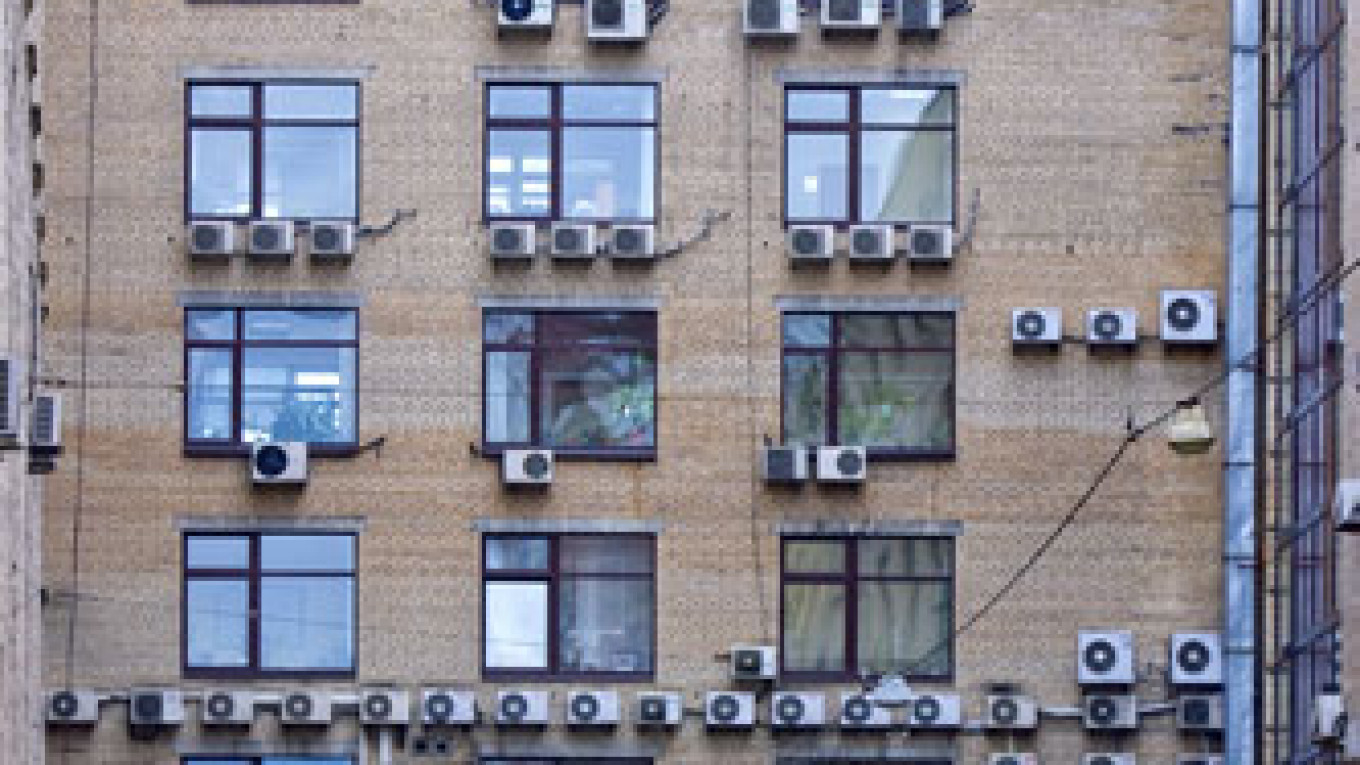
The heat and smog are gone, but many people have made a purchasing decision for next summer: to buy an air conditioner.
Still, they all face a vexing problem. There are very few air conditioners for sale these days.
Stocks of air conditioners and fans have been depleted since early July, when frenzied customers bought any cooling device they could find. In August, when the stifling heat was aggravated by biting smog, desperate buyers could not even find relief at the city's appliances markets, where traders had sold out their last stocks at inflated prices.
But a month after the heat finally receded, major retailers' shelves that used to contain them are either empty or have been filled with electrical heaters — demand for which is up because September kicked off with unusually low temperatures.
So what's the problem?
For one, it takes more than a day to produce an air conditioner, and two to three months will pass between the time that an order is placed and the unit reaches a store, industry representatives said.
"The units sold during the summer heat were those ordered in May," said Vitaly Boryets, a senior supervisor for air conditioners at Panasonic Russia.
He said the production cycle was the same for all major producers, most of which are located in China, Japan or South Korea.
Those May orders, Boryets said, were "very cautious."
After all, private air conditioners are a luxury item for most Russians. Few households have them, and prices for the most popular — split-systems with separate cooling units outside the apartment — begin at 7,000 rubles ($230) and can reach more than 30,000 rubles ($1,000).
Unlike commercially ordered devices for offices and industrial facilities, demand for household air conditioners has proved very volatile. "The market depends totally on the weather," said Artyom Kushneryov, deputy director of the Association of Climate Industry Businesses, an industry group.
Apart from the fact that nobody predicted the fires and the heat, this summer's shortage can also be blamed on last year's weather and economic conditions, Kushneryov said.
Last year saw both the climax of the economic crisis and a cool summer, resulting in a roughly 40 percent drop in sales in the country's total air conditioning market compared with the previous year, he said.
As a result, industry representatives decided at a meeting of the business association in January that 2010 orders for the country should be just 10 percent to 15 percent more than 2009 orders.
"That's how we went into this year," Kushneryov said in an interview.
When demand exploded during the summer heat, both producers and retailers scrambled to find air conditioners. "We not only sold everything we had, but we also sold all our old stock left over from 2009," Panasonic's Boryets said.
Eldorado, the consumer electronics chain, sold 120,000 fans in its Moscow stores in July alone, spokesman Sergei Pavlov said.
Yulia Sorokina, a spokeswoman for the M.Video chain, explained that stocks ran out at the end of July after being hastily replenished from extra supplies hauled west from the Urals and Siberia.
"Then it was just impossible to get anything more," she said.
Industry insiders interviewed for this article agreed that consumer orders for air conditioners would go up significantly after this summer's soaring sales.
"Rising incomes and living standards plus the fear of more hot summers will result in robust business," said Tigran Hovhannisyan, a senior analyst at UralSib.
He said the growth potential was big because so few households own air conditioners.
An increase in air conditioners also poses a challenge to the authorities because they gobble up a lot of electricity. During this summer's heat wave, electricity consumption jumped by 10 percent in Moscow, and some regions outside the capital suffered power shortages during peak times, said Vladimir Chuprov, an energy expert with Greenpeace Russia.
"This largely destroys energy savings achieved thanks to the warmer climate during the winter heating season," he said.
In addition, at least in Moscow, the situation is complicated by local bureaucracy. To place an air conditioner's external unit on the outside wall of a Moscow apartment building takes up to six months, and obtaining the necessary permits can cost up to 100,000 rubles ($3,250), national media reported last month.
While Hovhannisyan conceded that the permit problem might pose a barrier, other industry experts said the reports were exaggerated.
Kushneryov from the Association of Climate Industry Businesses said permits in some city districts cost just 20,000 rubles ($650) and are valid for the entire side of an apartment building.
He added that it is usually legal to place units on a balcony, where permits are not needed.
While most industry players are banking on an increase in orders next year, Boryets of Panasonic said the increase would probably not pass 10 to 20 percent because many consumers are skeptical that the heat wave will repeat itself next summer.
"In the end, people might just decide to save the money," he said.
A Message from The Moscow Times:
Dear readers,
We are facing unprecedented challenges. Russia's Prosecutor General's Office has designated The Moscow Times as an "undesirable" organization, criminalizing our work and putting our staff at risk of prosecution. This follows our earlier unjust labeling as a "foreign agent."
These actions are direct attempts to silence independent journalism in Russia. The authorities claim our work "discredits the decisions of the Russian leadership." We see things differently: we strive to provide accurate, unbiased reporting on Russia.
We, the journalists of The Moscow Times, refuse to be silenced. But to continue our work, we need your help.
Your support, no matter how small, makes a world of difference. If you can, please support us monthly starting from just $2. It's quick to set up, and every contribution makes a significant impact.
By supporting The Moscow Times, you're defending open, independent journalism in the face of repression. Thank you for standing with us.

Remind me later.