

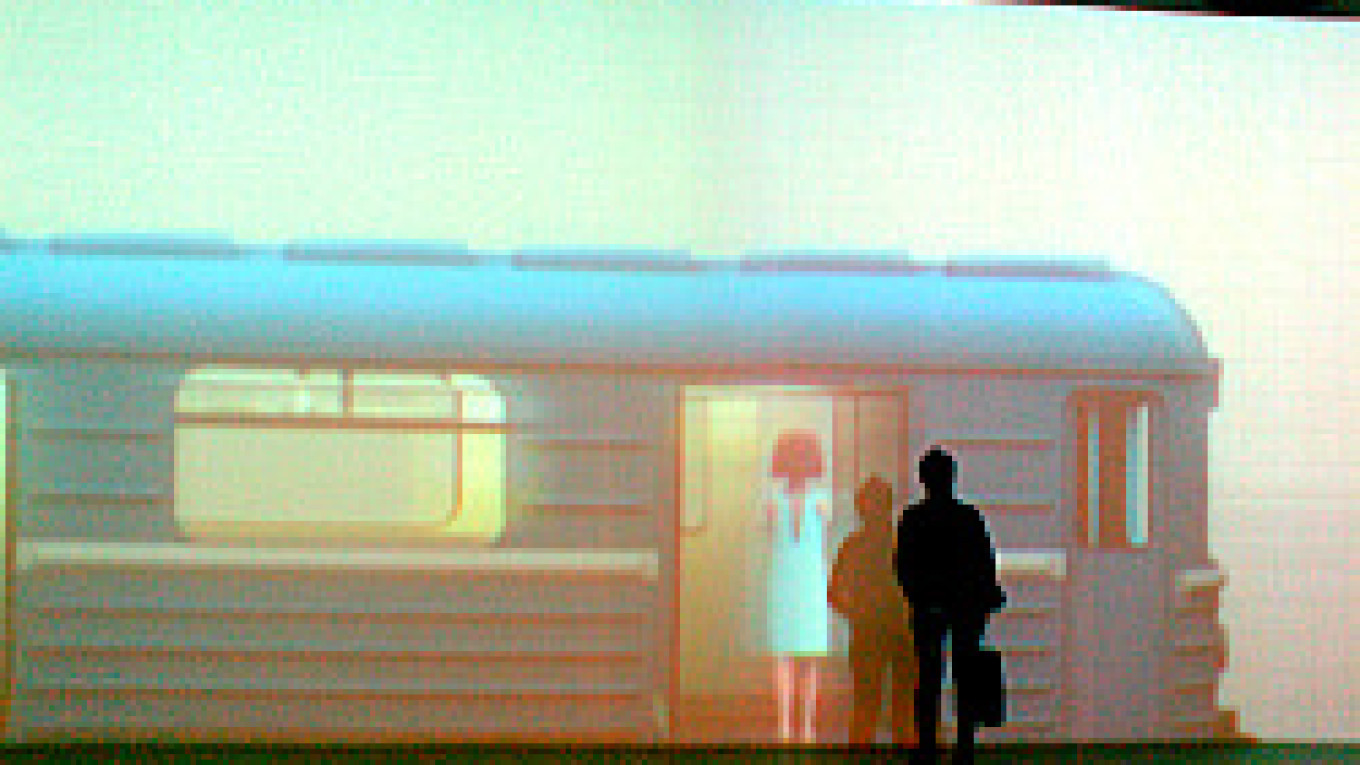
Put together from scratch in a month, it features works from 22 young and relatively unknown Russian artists created specially in a makeshift on-site studio.
Baibakov, the daughter of a top manager at Norilsk Nickel, already has an impressive art pedigree, having studied at Columbia University and the Courtauld Institute, curated exhibitions in London and Moscow and managed her family's art collection. But in a space last occupied by the all-stars of the powerful Gagosian Gallery in September, none of this counts as laurels to rest on.
"I really felt like I had something to prove -- the standards of evaluation for me are much higher, the level of expectation is there," she said in an interview. "People don't really trust often what young curators are going to come up with."
 Baibakov Art Projects |  |
| |
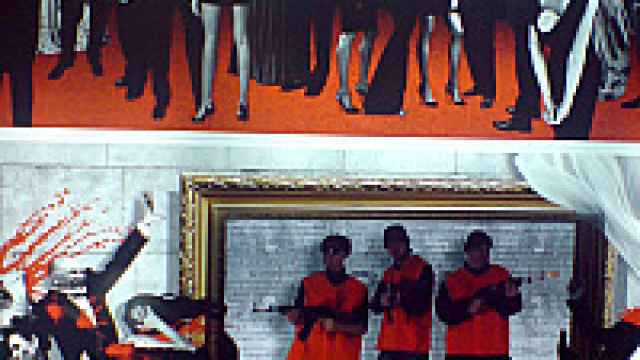
The only explicitly political piece comes from comic-strip agitationists and recent Kandinsky Prize laureates PG Group. Their montage "The Purge (Part 1)" depicts Russian nouveau-riche dignitaries tricked into attending a gala opening only to be massacred with machine guns by the group's balaclava-clad members.
Herself one of PG's victims, Baibakov instructed her artists to avoid contemporary themes or trends and focus instead on what the project affords. "I said 'No Putin, no Medvedev' [and] I didn't have to say no black squares," she explained. "We're moving forward, and I'm interested in proactive behavior, creating rather than reacting to. The only way to do that is through new media and through concepts that are universally applicable."
Though it's difficult -- and probably unfair -- to imagine much here appearing in Gagosian's next catalogue, the show is extremely effective as a whole. Many of the artists incorporated its theme into their usual oeuvre, such as with Rostan Tavasiev's stuffed animals, Irina Korina's installations or PG's piece. The most successful works, however, take full advantage of the space, literally and metaphorically building themselves into it.
 Baibakov Art Projects | |
| |
The piece represents Gutkina's interest in Moscow's changing landscape. "When they're building or restoring something, they cover it up with that kind of big cloth. There's all sorts of noises going on under it, but you don't know what the final result is going to be."
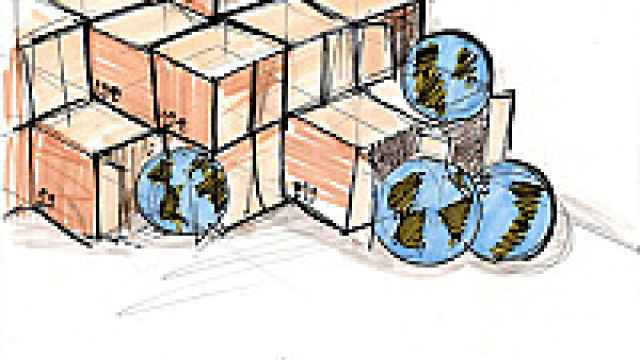
Kostya Novikov and Ivan Plusch's folding wooden box "One Square Meter of Living Space" at the other end of the floor is a more sardonic take, inspired by plans to convert the factory into luxury flats. "Land here is very expensive," Novikov said. "So when two people stand in the center of this installation, they pull the rope and the sides enclose them in their own personal square meter."
Baibakov herself admits that she knows neither how long the project can last -- subject largely to the machinations of the real estate market and financial crisis -- nor what the next exhibition will be, though a Jean-Michel Basquiat retrospective is penned in for March. But the expiry date is key to her vision.
"We don't have any intentions to build a permanent collection. We're interested in doing cool, young, new projects that'll be engaging and multidisciplinary," she said. "When you have a space for too long, it becomes a little stale."
A Message from The Moscow Times:
Dear readers,
We are facing unprecedented challenges. Russia's Prosecutor General's Office has designated The Moscow Times as an "undesirable" organization, criminalizing our work and putting our staff at risk of prosecution. This follows our earlier unjust labeling as a "foreign agent."
These actions are direct attempts to silence independent journalism in Russia. The authorities claim our work "discredits the decisions of the Russian leadership." We see things differently: we strive to provide accurate, unbiased reporting on Russia.
We, the journalists of The Moscow Times, refuse to be silenced. But to continue our work, we need your help.
Your support, no matter how small, makes a world of difference. If you can, please support us monthly starting from just $2. It's quick to set up, and every contribution makes a significant impact.
By supporting The Moscow Times, you're defending open, independent journalism in the face of repression. Thank you for standing with us.

Remind me later.