

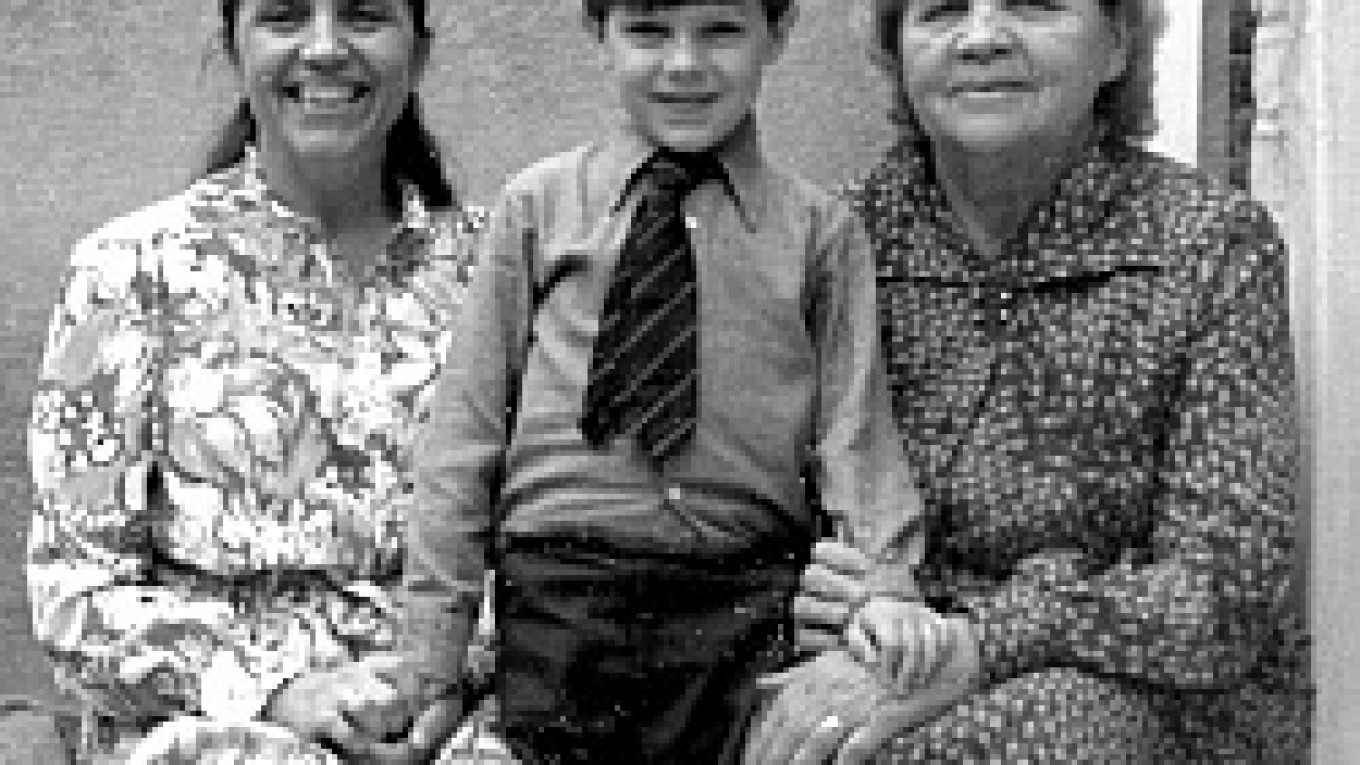
But the rest of her story is anything but common. Her fiance was Mervyn Matthews, a young British academic who had been expelled from the Soviet Union after a flirtation with the KGB had ended in his refusal to betray his country. But, refusing to bow to the "evil juggernaut," he began a five-year campaign to get Mila out.
Mervyn and Mila's story of love and separation forms the central part of "Stalin's Children," written by their son, Owen Matthews. But there is much more to the book than that: It is an epic journey through the lives of three generations of his family, whose lives were buffeted, shaped and nearly broken by Russia's turbulent 20th century.
The story begins with the author's grandfather, Boris Bibikov. A commissar and firm believer in the Soviet project of creating a new man and a new world, he threw himself into the industrialization drive of the 1920s with a passion. He led the construction of the Kharkiv tractor factory in record time, urging the workers on with the force of his words and his own physical efforts.
But he believed too strongly in the openness of ideological debate that would create this new world. When he backed Sergei Kirov's plan, in defiance of Stalin, to slacken the pace of collectivization in 1934, he marked his own card as an "enemy" in the eyes of those who would carry out the purges with fanatical paranoia. After her husband's arrest in 1937 and execution, which was not confirmed until decades later, Bibikov's wife was sent to the gulag. Their two daughters, Lenina and Lyudmila, or Mila, who were 11 and 3 respectively, became orphans and were sent to a prison for underage offenders.
 Owen Matthews Stalin's Children: Three Generations of Love and War By Owen Matthews Bloomsbury 308 pages ?17.99 |  |
| |
In the years that followed, they survived disease, malnourishment and the violence and confusion of World War II. Adrift on a barge fleeing the German advance, scrubbing floors for extra scraps of food, digging trenches for the Red Army -- at times they seem to have survived by will alone. Matthews quotes Josef Stalin: "I believe in one thing only: The power of the human will."
This phrase becomes the book's leitmotif. While working at the Institute of Marxism and Leninism in Moscow, Mila met Mervyn in 1964, when he was employed as a researcher at the British Embassy. The two fell in love and agreed to marry. But after being wined, dined and charmed by the KGB, Mervyn refused to betray his country and was expelled from the Soviet Union. There could be no return, and Mila was refused an exit visa.
Back in England, Mervyn pursued his academic career at Oxford but devoted the majority of his time to getting Mila out. He buttonholed MPs and public figures, traveled to foreign countries to try to give letters to visiting Soviet officials and even cooked up a scheme to exchange some of Lenin's letters for his fiancee. All in vain. In the meantime, his academic career was left in tatters by his at times overzealous pursuit and his decision not to publish a book for fear of prejudicing his case in the eyes of the Soviet authorities. His fight for Mila was taking its toll on his professional and personal life.
But his will was not broken. The couple kept their hope alive with reams of letters: Mervyn's in the spare prose of a shy Welshman, Mila's full of passion and pain -- "I have gone mad with love," she wrote during the first months of their separation. Her elegiac prose rails at the senseless cruelty of the authorities' obstinacy. "Why don't we just build a hut for ourselves at the end of the world far from all the evil and cruelty and hatred?" She urged Mervyn to show that "our love is stronger than their hate."
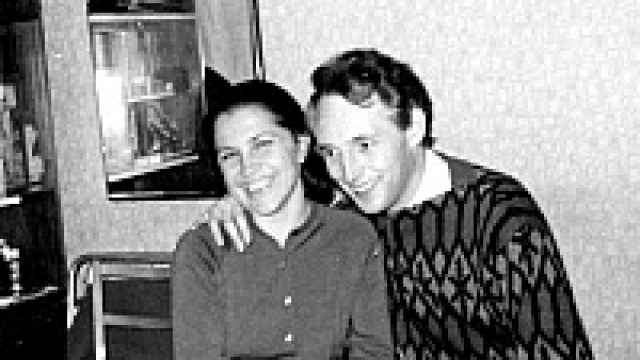 Owen Matthews Mila and Mervyn, the author's parents, fell in love in Russia before Mervyn was expelled. They kept in touch through letters until they were reunited in 1969. | |
| |
Matthews peppers his relatives' stories with accounts of his own time in Moscow as a young reporter in the 1990s, including a stint at The Moscow Times from 1995 to 1997. He draws parallels between the violence, confusion and despair, but also the hope, determination and strength of spirit that he found, and the Russia his relatives were familiar with.
As a city reporter, Matthews witnessed firsthand the chaotic '90s and all their extremes -- two shady businessmen gunned down in broad daylight, his own beautiful young ex-girlfriend raped and murdered at a remote metro station.
His trips into what he calls the "filthy underbelly" of 1990s Moscow reveal another side of the city to that of the rapacious businessman and cynical moneymakers. His stories of teenage prostitutes and glue-sniffing beggar children seep off the page with an overpowering pungency.
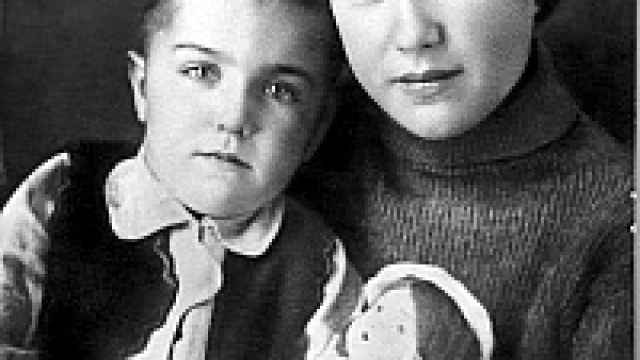 Owen Matthews Mila and her sister Lenina at a children's home in 1938. | |
| |
"These [runaway] kids ... were scruffy and emaciated but irrepressibly friendly and cocky, even though under constant threat from marauding homosexuals who tried to rape them, the police who periodically rounded them up, and American missionaries who brought them food and made them pray to Jesus."
The material Matthews has to work with is without doubt extraordinary, but his writing proves more than worthy of it. He paints his pictures with the broad strokes of a novelist, without losing the delicate precision of a historian.
He writes about himself with self-deprecation, almost irony. There is certainly something of his father in Matthews' writing -- this understated style leads him to play down his own bravery in reporting the Russian army's onslaught in Chechnya.
Like a true reporter he lets the events speak for themselves: He and his family were witnesses, observers of the maelstrom of events in a country lurching along almost beyond control.
Indeed, a theme that runs throughout the book is Matthews' growing respect for his father. "If I have realized anything in writing this book, it is that my father is a deeply honorable man." Matthews states that he is unsure he could have rejected the KGB's advances if it meant separation from his wife. "I would have considered the cause of my personal happiness supreme above all others."
But as a writer, Matthews seems to have inherited more from his mother, which comes out in the letter extracts that are included in the book. They both write with a searing depth of emotion, combined with a touching sincerity and genuine warmth.
I was drawn into the prose, which simply dances along. While reading it, it felt like what was before me was not words and letters, but pictures, flashing images of a past era, a world depicted with such vividness that it would be possible to step in and look around.
This is without doubt one of the most convincing and absorbing accounts of 20th-century Russia. Buy it, devour it, then give it to someone you know. Whether an expert or someone new to the topic, they'll thank you for it.
A Message from The Moscow Times:
Dear readers,
We are facing unprecedented challenges. Russia's Prosecutor General's Office has designated The Moscow Times as an "undesirable" organization, criminalizing our work and putting our staff at risk of prosecution. This follows our earlier unjust labeling as a "foreign agent."
These actions are direct attempts to silence independent journalism in Russia. The authorities claim our work "discredits the decisions of the Russian leadership." We see things differently: we strive to provide accurate, unbiased reporting on Russia.
We, the journalists of The Moscow Times, refuse to be silenced. But to continue our work, we need your help.
Your support, no matter how small, makes a world of difference. If you can, please support us monthly starting from just $2. It's quick to set up, and every contribution makes a significant impact.
By supporting The Moscow Times, you're defending open, independent journalism in the face of repression. Thank you for standing with us.

Remind me later.