

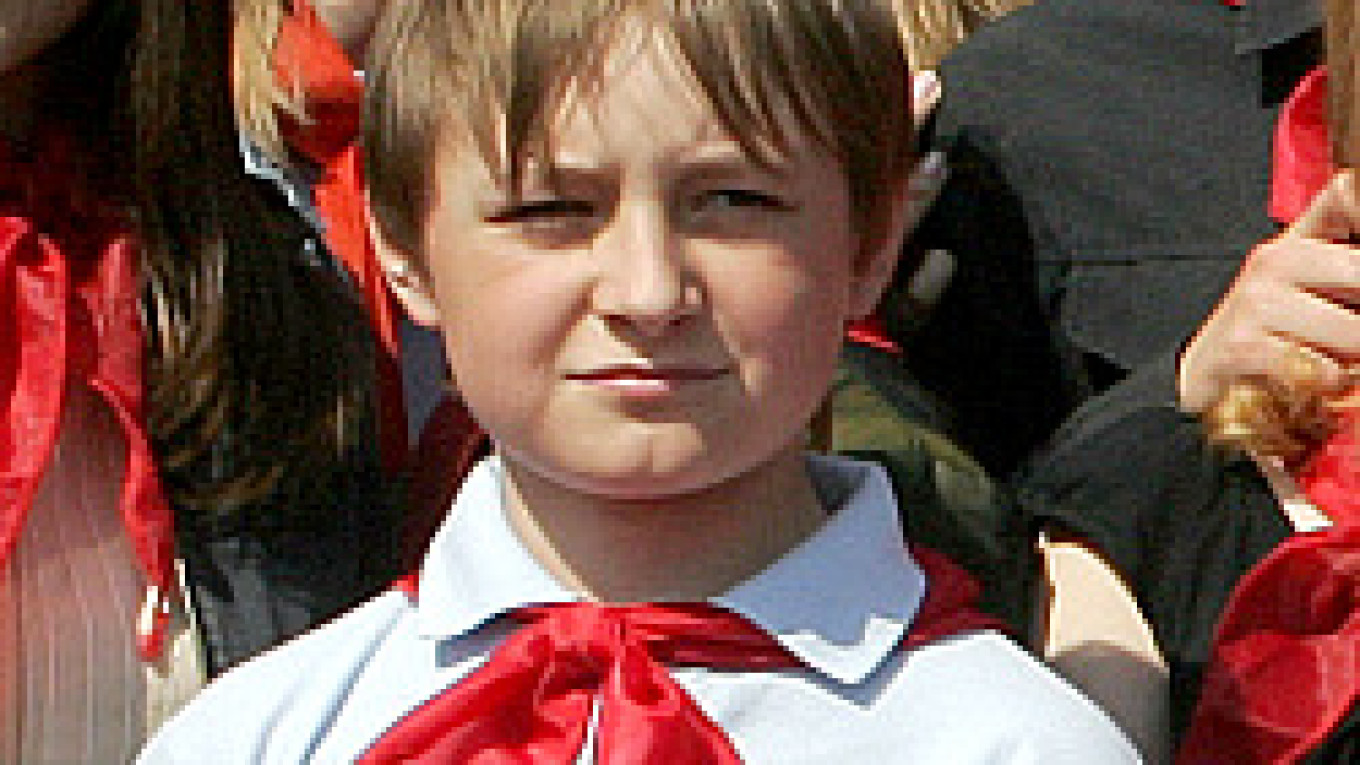
But there was a brighter side. Many clubs flourished under the auspices of the Pioneers where kids pursued hobbies ranging from photography to architecture to creative writing.
One such club was Caravella, organized by journalist Vladislav Krapivin. Under his leadership, children developed skills in journalism, fencing and seamanship. The Pioneers' flagship magazine, unimaginatively called "Pioneer," sponsored Krapivin's team, which in turn served as the magazine's staff. Krapivin wrote several books of fiction about his experiences with the kids; one of them, "The Lullaby for the Brother," was made into a film and enjoyed wide success in the 1980s.
Such groups, usually run by a charismatic leader, tended to lay the ground for future friendships and life-changing decisions. What kids did wasn't actually that important; after all, building sailboats was rather impractical (rich people with private yachts were something from bourgeois fiction back then). But the ties held. Caravella exists to this day, run by Krapivin's proteges, and if the Russian blogging community is any indication, Krapivin's books and ideas remain very popular.
A distinct streak of Pioneer "shop talk" can also be found in Nikolai Nosov's novellas. Perhaps best known for his stories about Neznaika, Nosov also wrote for a somewhat older audience. Two books stand out: "A Merry Family," where kids build a chicken hatchery, and the more ambitious "Vitya Maleyev at School and at Home," where Pioneers build an apiary from scratch. The book went into detail about the technical processes involved, including some rather complex experiments performed by the characters.
Many Pioneer-sponsored clubs fell apart after the demise of the Soviet Union. But some live on, run by enthusiasts; after all, there will always be people who love working with kids. Recently, I saw a bunch of high-schoolers fencing with heavy imitation swords in the courtyard of a local school, an institution that has kept some of the best Pioneer traditions. When the principal spotted them, he told them to stop. "It's dangerous," he said. "You know what? There are helmets and balaclavas in the school storage room. Take them and fight with them. It would be safer."
A Message from The Moscow Times:
Dear readers,
We are facing unprecedented challenges. Russia's Prosecutor General's Office has designated The Moscow Times as an "undesirable" organization, criminalizing our work and putting our staff at risk of prosecution. This follows our earlier unjust labeling as a "foreign agent."
These actions are direct attempts to silence independent journalism in Russia. The authorities claim our work "discredits the decisions of the Russian leadership." We see things differently: we strive to provide accurate, unbiased reporting on Russia.
We, the journalists of The Moscow Times, refuse to be silenced. But to continue our work, we need your help.
Your support, no matter how small, makes a world of difference. If you can, please support us monthly starting from just $2. It's quick to set up, and every contribution makes a significant impact.
By supporting The Moscow Times, you're defending open, independent journalism in the face of repression. Thank you for standing with us.

Remind me later.