

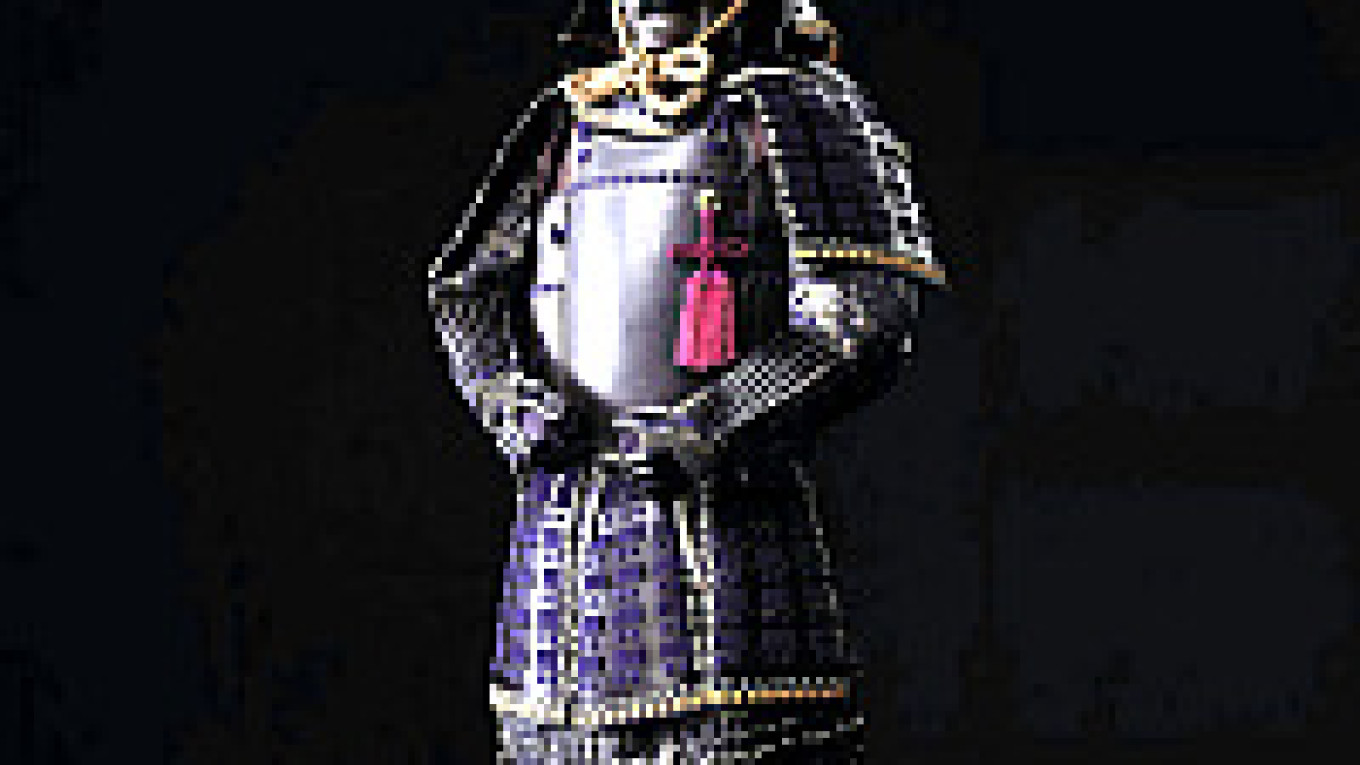
Anyone wandering the exhibition's display of weaponry and artwork dating from the 15th to the 18th century assembled from private Japanese collections can trace the history of the samurai.
By most accounts, samurais first appeared in Japan in the eighth century and were made up of runaway peasants and hunters who served the interests of the emperor, fighting the tribes that lived on the outskirts of the Japanese archipelago. They were akin to Cossacks and spent their lives in endless crusades and clashes with the local clans that vehemently fought to protect their territories.
But the next four centuries marked a violent period in Japan's history, and samurais became de facto defenders of the Japanese provinces from robbers and pirates, in the process developing a unique code of ethics called "Bushido," or the code of the "Path of the Warrior".
The defining features of this code were purity and clarity of speech, depth of thought, sincerity of emotions and experiences, self-sacrifice, discipline and faith. "A samurai must first of all always remember, day and night, that he will die. That is his most important task. If he remembers this, he will avoid misfortunes and become an exceptional person," says one of the famous books of Bushido.
In one hall of the museum, a solemn voice utters words of samurai wisdom. "If a samurai values his life, he is a worthless warrior," the voice explains, "Only absence of attachment to the end result will allow one to reach his goal."
As samurais gained a special place in Japanese society, their way of life, armor and weapons found a special place in culture. Artisans created exquisite artifacts that were as much objects of art as necessities for the samurais in fulfilling their duties. A Japanese armor piece would rarely be created by one person, more often an amalgamation of efforts by the master artist and tailors, tanners and varnishers.
A samurai's facemask, or Menpo, which protected the face below the eyes from bow arrows, was always handmade, replicating the exact shape of a warrior's face. Sword masters would spend years creating blades of different thickness and length, using special methods of forging multiple layers of metal. These swords were extremely valuable, and once a sword was sold the creator could feed his family for a long time.
The exhibit was organized by Georgy Aistov, the chairman of the Moscow House of Artists and founder of "Ethnolife," a festival that urges people to explore their roots and practice patience, acceptance of other religions and cultures, and lead a healthy lifestyle.
Dressed in a black robe, Aistov personally presented the exhibit, gesticulating excitedly in front of a collection of Samurai armors.
"In Japanese culture, the armor of one's ancestors serves as the spiritual guardian of the house, bad spirits are afraid of it and, therefore, stay away from the house," he explained. "Inside each armor piece, there are writings and mantras, which have special meaning for the warrior and his family."
The idea behind the project is to show the way of a life of warriors whose code of ethics was admirable and whose conscience was clear, he said. "How many of you would be willing to die for your honor or the honor of people dear to you?" he asked. "Well, these warriors did."
Not everyone was so impressed. Although awed by the beauty of the warrior relics, Elena Dunskaya, a Moscow poet and playwright, said it was striking that the artists were celebrating war with their talents.
Most artists are inspired by things of beauty, she said, but "these artists were inspired by weapons used to destroy other humans."
"Art of War" runs through Jan. 14 at the Museum of the East, located at 12A Nikitsky Bulvar. Tickets are 100 rubles. For more information, call 691-02-12 or visit the museum's web site at http://www.orientmuseum.ru
A Message from The Moscow Times:
Dear readers,
We are facing unprecedented challenges. Russia's Prosecutor General's Office has designated The Moscow Times as an "undesirable" organization, criminalizing our work and putting our staff at risk of prosecution. This follows our earlier unjust labeling as a "foreign agent."
These actions are direct attempts to silence independent journalism in Russia. The authorities claim our work "discredits the decisions of the Russian leadership." We see things differently: we strive to provide accurate, unbiased reporting on Russia.
We, the journalists of The Moscow Times, refuse to be silenced. But to continue our work, we need your help.
Your support, no matter how small, makes a world of difference. If you can, please support us monthly starting from just $2. It's quick to set up, and every contribution makes a significant impact.
By supporting The Moscow Times, you're defending open, independent journalism in the face of repression. Thank you for standing with us.

Remind me later.