

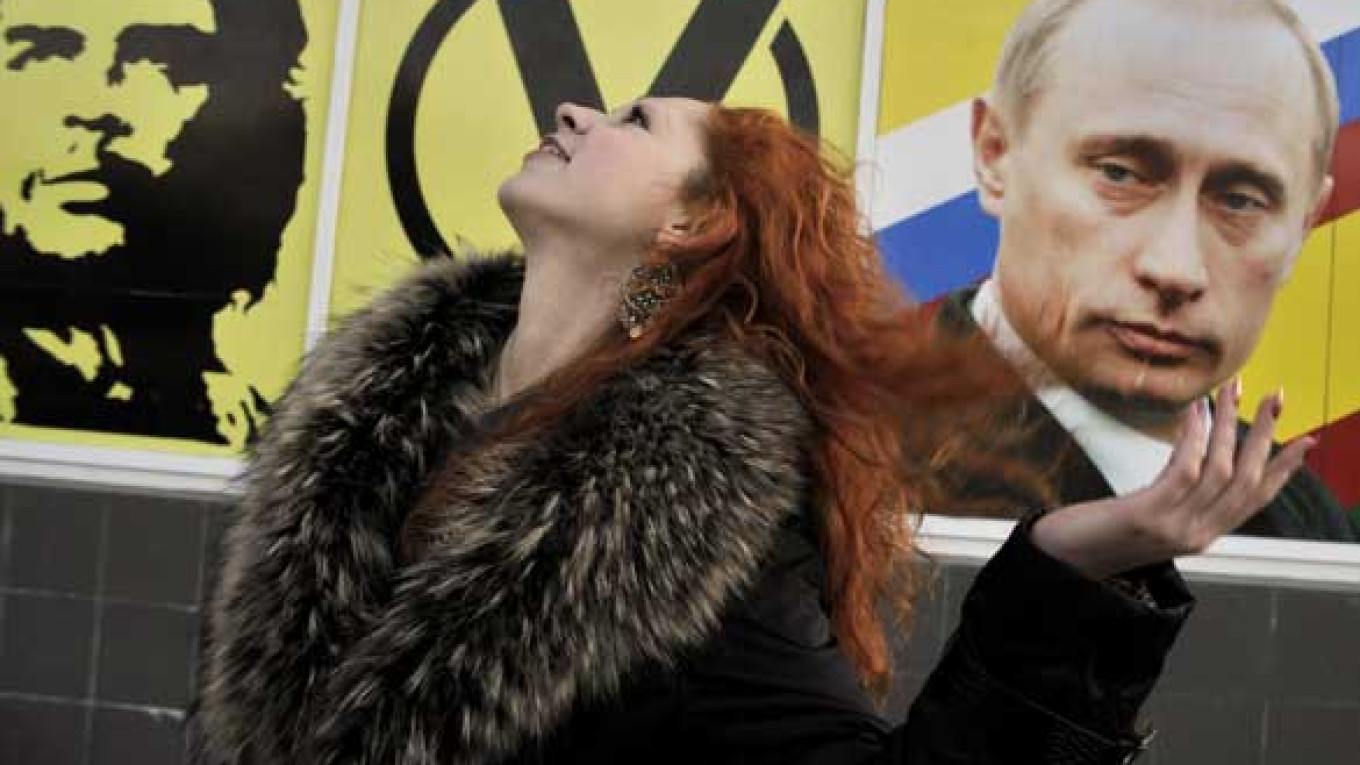
TIRASPOL, Moldova — Soaring statues of Vladimir Lenin, portraits of the city's most productive workers adorning a square, red flags fluttering in the wind during a Communist demonstration.
Nowhere is Soviet-style communism as alive as in Transdnestr, Moldova's tiny breakaway republic that dreams of joining Russia but is recognized by no one.
Come to this impoverished, bleak region and take a voyage to the past complete with hammer-and-sickle emblems, aging Soviet tanks and gloomy security officials who are likely to "accompany" foreigners wherever they go.
But don't be fooled: the hamburgers, fashion boutiques and exotic travel agencies that you will also discover here could not be found in the Soviet times. Today, Transdnestr is a surreal mix of the communist regime and its mortal enemies: wild capitalism and Orthodox Christianity.
This sliver of land twice the size of Luxembourg is home to some 550,000 people — Russians, Ukrainians and Moldovans. It has proclaimed itself an independent republic, but is not recognized as such by anyone else, including Russia. The region dreams of being absorbed by Russia, even it shares no border with it.
The mainly Russian-speaking province used to be part of Soviet Ukraine but became part of Moldova, a region that was annexed from Romania shortly before World War II. Fearful that Moldova would reunite with Romania after the Soviet collapse and clamp down on the use of the Russian language, Transdnestr broke away in 1992 in a war that killed some 1,500 people.
Transdnestr is a haven for weapons and drug smuggling, according to Western agencies. Local residents say anything is on sale here, from women trafficked abroad and forced into prostitution to gasoline and cars exported from Romania and sold at a profit in Ukraine.
Some images here are straight from a communist theme park.
In a bow to a Soviet tradition, brides in heavy makeup and dazzling white gowns climb on top of a lonely green World War II Soviet tank on the city's main square to pose for photos, paying tribute to their grandfathers' victory in the war.
Tired women in headscarves clutching empty plastic bottles line up to buy farm milk on a street corner, while commuters return home from work on rusty trolleybuses.
Giant black-and-white portraits of the region's best-performing workers, including the regional president and the mayor of Moscow, are hung on a main square to stimulate others for fruitful work. Portraits of President Igor Smirnov decorate the rooms of government officials and even private hotel receptions.
But some things are clearly surreal.
You can observe black-robed Orthodox priests bless a Soviet-style, red-bannered military parade marking the 1917 Revolution that launched an era of vicious, state-sponsored aetheism.
Shop windows are filled with brand-name jeans, computers and state-of-the-art cell phones. Travel agencies offer tours to anywhere from Thailand to Egypt, while barely dressed models advertise mattresses and luxury cars from billboards.
A short walk from a huge statue of Lenin overlooking a main square in the capital, Tiraspol, impoverished pensioners sell old coats and potted plants to supplement their meager monthly pensions of about $70.
And if you miss Western-style fast food while you're here, don't worry. Right across the street from the pensioners, you can join better-off residents treating themselves to hamburgers and french fries at Andy's Pizza.
Getting There: You can get to Transdnestr either from Ukraine or from Moldova. Neither countries require short-stay visas for U.S. and European Union citizens. One option is to fly to the Ukrainian port city of Odessa and then take a bus or a cab to Tiraspol. The two-hour ride should cost you no more than $50. You can also fly to the Moldovan capital, Chisinau, and take a cab or bus into Transdnestr. The one-hour ride should cost about $10.
At the border: Officially, you don't need a visa or a special invitation to travel to Transdnestr, since the country is not recognized by anyone. But customs and law enforcement officials, suspicious of rare Western tourists, might give you trouble at the border. Prepare to give them the address of the hotel where you'll be staying or tell them of any other travel arrangements you have made to prove that you are not there to cause trouble. If they are still reluctant to let you in, $20 usually solves the problem.
Money: Make sure to bring enough cash with you. As Transdnestr is not officially recognized, local banks are unlikely to have ATMs or accept credit cards or traveler's checks. The region has its own currency, the Transdnestr ruble, which is unrecognized internationally. A number of currency-exchange offices are available in the capital, Tiraspol, where you can exchange dollars, euros, Russian rubles or Moldovan lei. But those foreign currencies may also be acceptable to taxi drivers and small shops until you have a chance to exchange money.
Getting around: Young people tend to understand and speak some English, though you might have difficulties finding a common language with the older generation. But that is part of the fun, isn't it?
A Message from The Moscow Times:
Dear readers,
We are facing unprecedented challenges. Russia's Prosecutor General's Office has designated The Moscow Times as an "undesirable" organization, criminalizing our work and putting our staff at risk of prosecution. This follows our earlier unjust labeling as a "foreign agent."
These actions are direct attempts to silence independent journalism in Russia. The authorities claim our work "discredits the decisions of the Russian leadership." We see things differently: we strive to provide accurate, unbiased reporting on Russia.
We, the journalists of The Moscow Times, refuse to be silenced. But to continue our work, we need your help.
Your support, no matter how small, makes a world of difference. If you can, please support us monthly starting from just $2. It's quick to set up, and every contribution makes a significant impact.
By supporting The Moscow Times, you're defending open, independent journalism in the face of repression. Thank you for standing with us.

Remind me later.