

"The armed action was carefully planned and coordinated, supported from abroad ... aiming at a takeover of power in the region, with further destabilization of the situation in the rest of Uzbekistan and Central Asia as a whole," the commission said in a statement issued late Tuesday, though it offered no evidence.
Uzbek government troops fired on thousands of protesters in the eastern city of Andijan on May 13, after militants freed inmates from a prison and occupied a government building.
The Uzbek government blamed the violence on Islamic radicals and denied that troops had fired on unarmed civilians, but witnesses said the troops shot without warning at peaceful demonstrators and ambushed people trying to flee.
The government says 176 people died in the unrest, but human rights groups say up to 750 people were killed. The U.S. State Department has said it believes hundreds died.
Uzbekistan has flatly rejected Western calls for an international investigation, saying that Uzbek authorities would conduct their own probe and present a detailed report to United Nations and European officials.
"A preliminary study of the tragic events ... has uncovered individual cases of negligence and irresponsibility by law enforcement and local authorities," said the parliamentary commission, which is loyal to Uzbek President Islam Karimov.
In an effort to deflect Western criticism, Uzbekistan has invited foreign diplomats to monitor its investigation of the Andijan events.
The United States has refused to participate in the observer group, which includes diplomats from Russia, China, Iran, India, Pakistan and the four other Central Asian nations. Washington says the probe cannot be seen as a substitute for an independent international investigation.
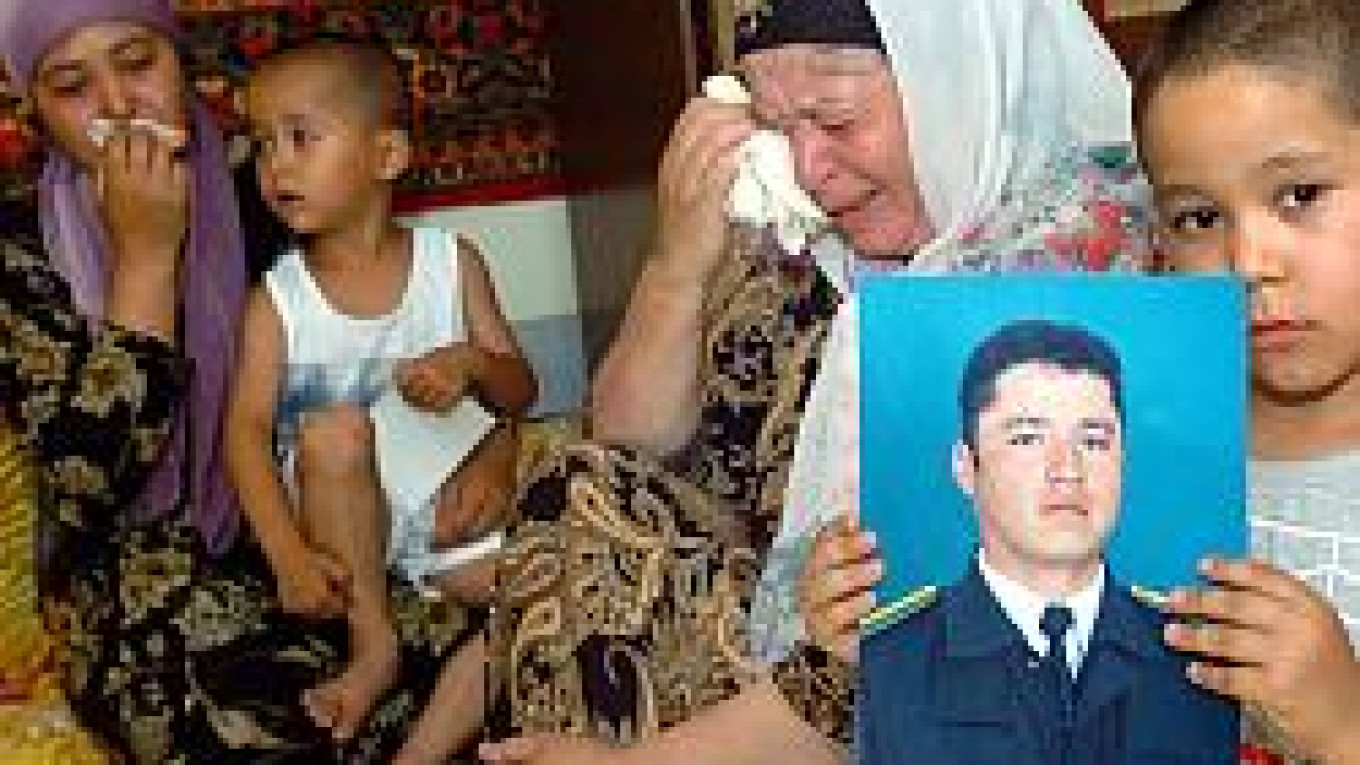
On Tuesday, relatives of the police officers killed in the violence welcomed guests to ritual meals of meat and rice in their courtyards 40 days after the uprising, while relatives of dead protesters stayed behind closed doors for fear of retribution from the security services.
For most mourners in Andijan, the commemorations of those killed were held in secret.
The mother of a 20-year-old man shot at the city's central Babur Square said that a few close family members would gather indoors to remember her son.
The woman, who did not identify herself for fear of reprisals, said her son had joined the protest because he had not been paid his salary for the last six months.
Relatives of dead police and security officers were allowed to mourn in public.
Adil Khashimov said his 30-year-old son, Mashal, had been part of a three-person unit responding to a distress call about an overnight attack on a police unit.
All three were gunned down, Khashimov said. "My son died a hero, protecting people, protecting the republic from Islamic radicals," he said.
A Message from The Moscow Times:
Dear readers,
We are facing unprecedented challenges. Russia's Prosecutor General's Office has designated The Moscow Times as an "undesirable" organization, criminalizing our work and putting our staff at risk of prosecution. This follows our earlier unjust labeling as a "foreign agent."
These actions are direct attempts to silence independent journalism in Russia. The authorities claim our work "discredits the decisions of the Russian leadership." We see things differently: we strive to provide accurate, unbiased reporting on Russia.
We, the journalists of The Moscow Times, refuse to be silenced. But to continue our work, we need your help.
Your support, no matter how small, makes a world of difference. If you can, please support us monthly starting from just $2. It's quick to set up, and every contribution makes a significant impact.
By supporting The Moscow Times, you're defending open, independent journalism in the face of repression. Thank you for standing with us.

Remind me later.