

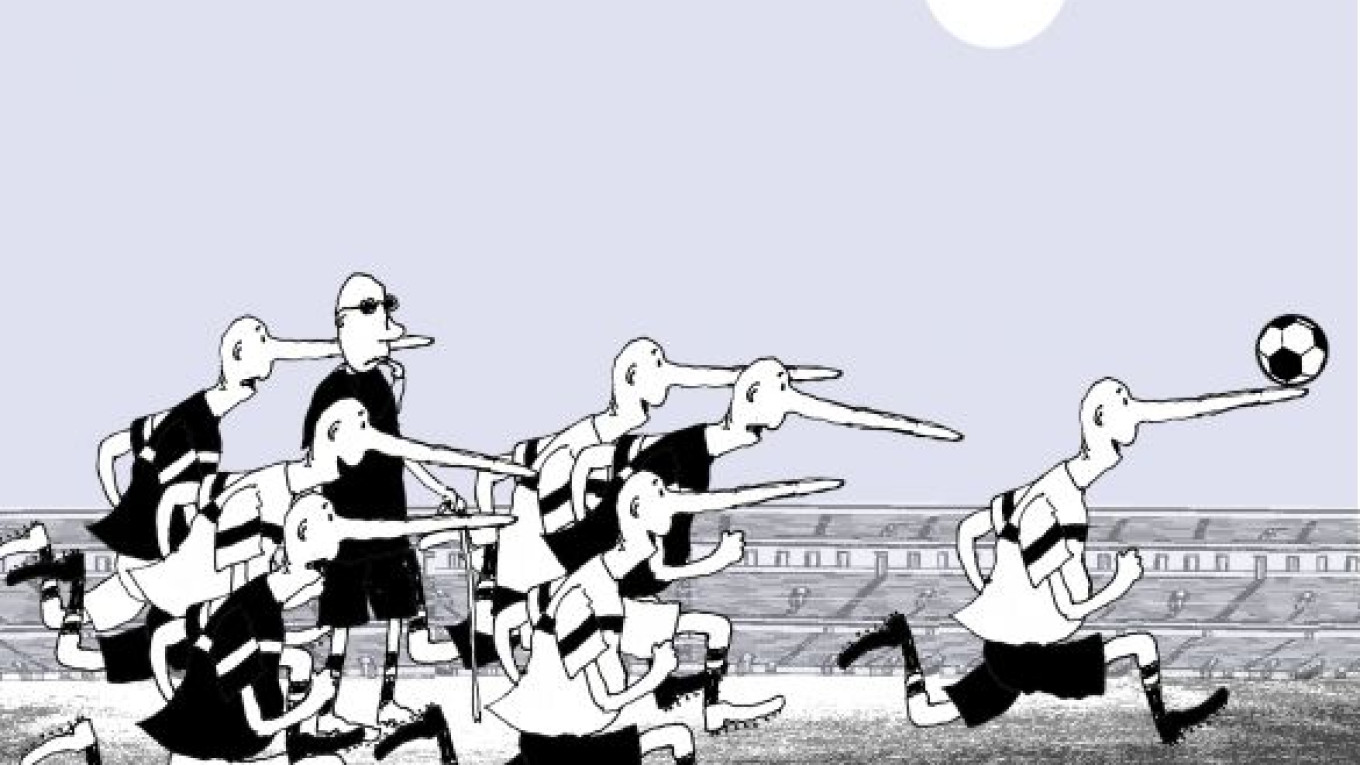
Shortly before halftime in the World Cup elimination match between England and Germany on June 27, the English midfielder Frank Lampard had a shot at goal that struck the crossbar and bounced down onto the ground, clearly over the goal line. The goalkeeper, Manuel Neuer, grabbed the ball and put it back into play. Neither the referee nor the linesman, both of whom were still coming down the field — and thus were poorly positioned to judge — signaled a goal, and play continued.
After the match, Neuer gave this account of his actions: “I tried not to react to the referee and just concentrate on what was happening. I realized it was over the line, and I think the way I carried on so quickly fooled the referee into thinking it was not over.”
To put it bluntly: Neuer cheated, and then boasted about it.
By any normal ethical standards, what Neuer did was wrong. But does the fact that Neuer was playing football mean that the only ethical rule is: “Win at all costs”?
In football, that does seem to be the prevailing ethic. The most famous of these incidents was Diego Maradona’s goal in Argentina’s 1986 World Cup match against England, which he later described as having been scored a little with the head of? Maradona? and a little with the? hand of God. Replays left no doubt that it was the hand of Maradona that scored the goal. Twenty years later, he admitted in a BBC interview that he had intentionally acted as if it were a goal, in order to deceive the referee.
Something similar happened last November, in a game between France and Ireland that decided which of the two nations went to the World Cup. The French striker Thierry Henry used his hand to control the ball and pass to a teammate, who scored the decisive goal. Asked about the incident after the match, Henry said: “I will be honest, it was a handball. But I’m not the ref. I played it. The ref allowed it. That’s a question you should ask him.”
But is it? Why should the fact that you can get away with cheating mean that you are not culpable? Players should not be exempt from ethical criticism for what they do on the field, any more than they are exempt from ethical criticism for cheating off the field — for example, by taking performance-enhancing drugs.
Sports today are highly competitive, with huge amounts of money at stake, but that does not mean it is impossible to be honest. In 1996, Liverpool striker Robbie Fowler was awarded a penalty for being fouled by the Arsenal goalkeeper. He told the referee that he had not been fouled, but the referee insisted that he take the penalty kick. Fowler did so, but in a manner that enabled the goalkeeper to save it.
Why are there so few examples of such behavior from professional footballers? Perhaps a culture of excessive partisanship has trumped ethical values. Fans don’t seem to mind if members of their own team cheat successfully. They only object when the other side cheats. That is not an ethical attitude. (Though, to their credit, many French football followers, from President Nicolas Sarkozy down, expressed their sympathy for Ireland after Henry’s handball.)
Yes, we can deal with the problem to some extent by using modern technology or video replays to review controversial refereeing decisions. But, while that will reduce the opportunity for cheating, it won’t eliminate it, and it isn’t really the point. We should not make excuses for intentional cheating in sports. In one important way, it is much worse than cheating in one’s private life. When what you do will be seen by millions, revisited on endless video replays and dissected on television sports programs, it is especially important to do what is right.
How would football fans have reacted if Neuer had stopped play and told the referee that the ball was a goal? Given the rarity of such behavior in football, the initial reaction would no doubt have been surprise. Some German fans might have been disappointed. But the world as a whole — and every fair-minded German fan too — would have had to admit that he had done the right thing.
Neuer missed a rare opportunity to do something noble in front of millions of people. He could have set a positive ethical example to people watching all over the world, including the many millions who are young and impressionable. Who knows what difference that example might have made to the lives of many of those watching?
Neuer could have been a hero, standing up for what is right. Instead, he is just another footballer who is very skillful at cheating.
Peter Singer, professor of bioethics at Princeton University and laureate professor at the University of Melbourne, is author of “Practical Ethics, One World” and “The Life You Can Save.” © Project Syndicate
A Message from The Moscow Times:
Dear readers,
We are facing unprecedented challenges. Russia's Prosecutor General's Office has designated The Moscow Times as an "undesirable" organization, criminalizing our work and putting our staff at risk of prosecution. This follows our earlier unjust labeling as a "foreign agent."
These actions are direct attempts to silence independent journalism in Russia. The authorities claim our work "discredits the decisions of the Russian leadership." We see things differently: we strive to provide accurate, unbiased reporting on Russia.
We, the journalists of The Moscow Times, refuse to be silenced. But to continue our work, we need your help.
Your support, no matter how small, makes a world of difference. If you can, please support us monthly starting from just $2. It's quick to set up, and every contribution makes a significant impact.
By supporting The Moscow Times, you're defending open, independent journalism in the face of repression. Thank you for standing with us.

Remind me later.