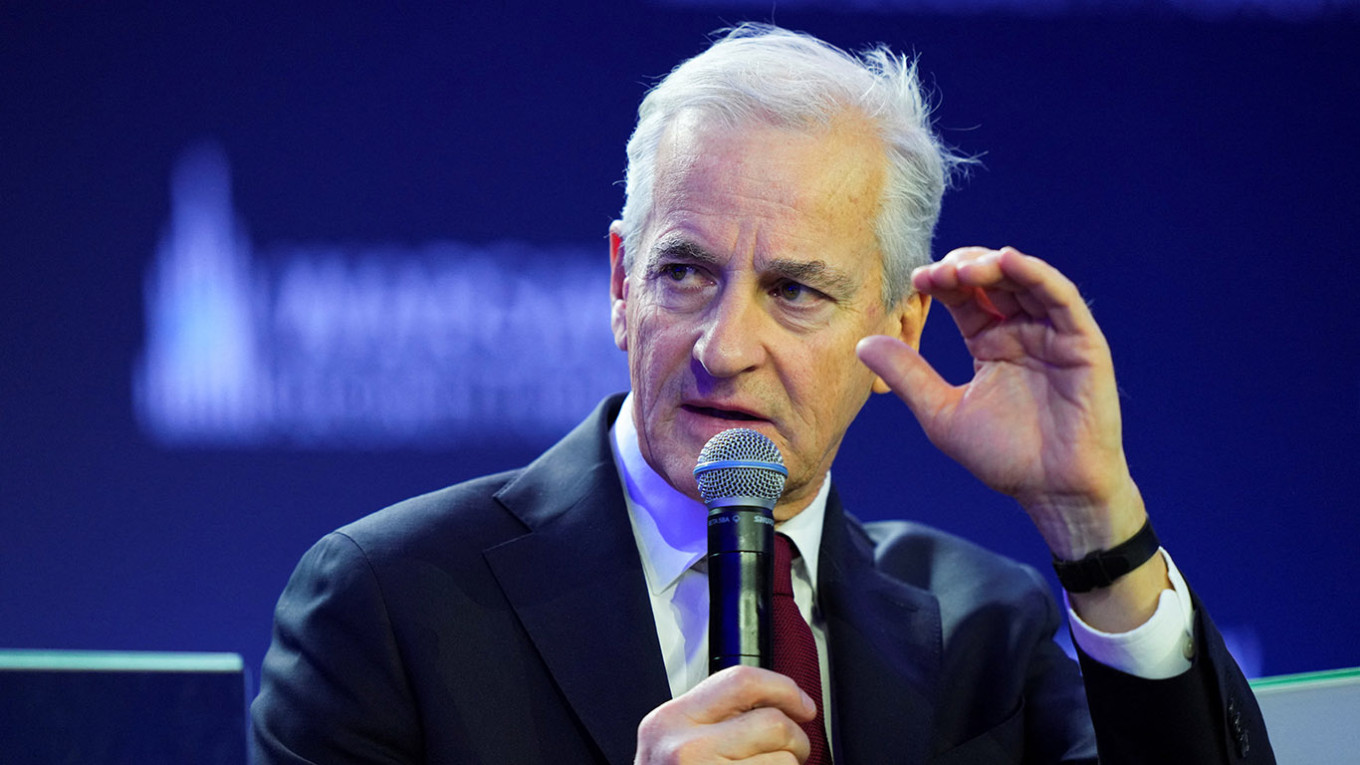
Norwegian Prime Minister Jonas Gahr Støre on Wednesday defended his and Finnish President Alexander Stubb's phone call the day before with Russia's Vladimir Putin, saying it was meant to ensure the Kremlin heard the views of European leaders about ending the war against Ukraine.
Tuesday's phone conversation marks the first time a leader from one of Ukraine's European allies spoke to Putin since French President Emmanuel Macron's phone call with the Russian president in July 2025.
Both Finland and Norway said their leaders were speaking as representatives of their respective countries and did not speak on behalf of Europe as a whole. Still, the phone call with Putin was met with criticism from some European leaders.
Danish Prime Minister Mette Frederiksen said she was “very skeptical” of the initiative and did not believe Russia wants peace with Ukraine or Europe.
Støre told the public broadcaster NRK he and Stubb were "focused on looking forward, what must happen for this war to not continue endlessly for months, with people dying ... and it is even more difficult to find a solution."
"I don't think [Putin] will change his mind, but he gets to hear our position very clearly," Støre added. "I am worried that some of these messages do not reach him when the Americans talk to him."
Norway, the prime minister said, is looking for ways to de-escalate the conflict, including ending attacks on energy infrastructure in Russia and Ukraine, as well as putting a stop to strikes on ships exporting Ukrainian grain.
But Støre also emphasized that Ukraine was unlikely to ever sign a peace agreement that would recognize its occupied regions as Russian territory.
"Whether they can take the current frontline as a reality and as a starting point, that is a different question," he told NRK.
"And the big question is what kind of security guarantees can there be for [Ukraine] after a peace deal? Putin recognizes that this is the big question," Støre added.
Earlier, Russian Foreign Minister Sergei Lavrov said Tuesday's call offered nothing new on the Ukraine conflict and that European countries were simply seeking to insert themselves in negotiations being led by the United States.
Reuters contributed reporting.
A Message from The Moscow Times:
Dear readers,
We are facing unprecedented challenges. Russia's Prosecutor General's Office has designated The Moscow Times as an "undesirable" organization, criminalizing our work and putting our staff at risk of prosecution. This follows our earlier unjust labeling as a "foreign agent."
These actions are direct attempts to silence independent journalism in Russia. The authorities claim our work "discredits the decisions of the Russian leadership." We see things differently: we strive to provide accurate, unbiased reporting on Russia.
We, the journalists of The Moscow Times, refuse to be silenced. But to continue our work, we need your help.
Your support, no matter how small, makes a world of difference. If you can, please support us monthly starting from just $2. It's quick to set up, and every contribution makes a significant impact.
By supporting The Moscow Times, you're defending open, independent journalism in the face of repression. Thank you for standing with us.

Remind me later.