“Russia and Serbia — brothers forever!”
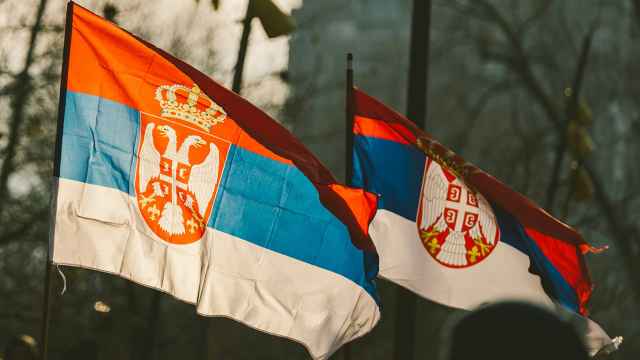
This slogan could once be seen on billboards and murals everywhere in Serbia. The intertwined Serbian and Russian flags, with the same colors arranged in a different order, looked so similar that people in Russia often confused them.
Then there was the historical affection for the “Russian brothers.” The Russian White emigres of the 1920s left behind not only descendants, some of whom still speak beautiful Russian, but also their mark on the country's art and architecture. Yet on the morning after the parliamentary elections, the future of the brotherhood looked increasingly uncertain.
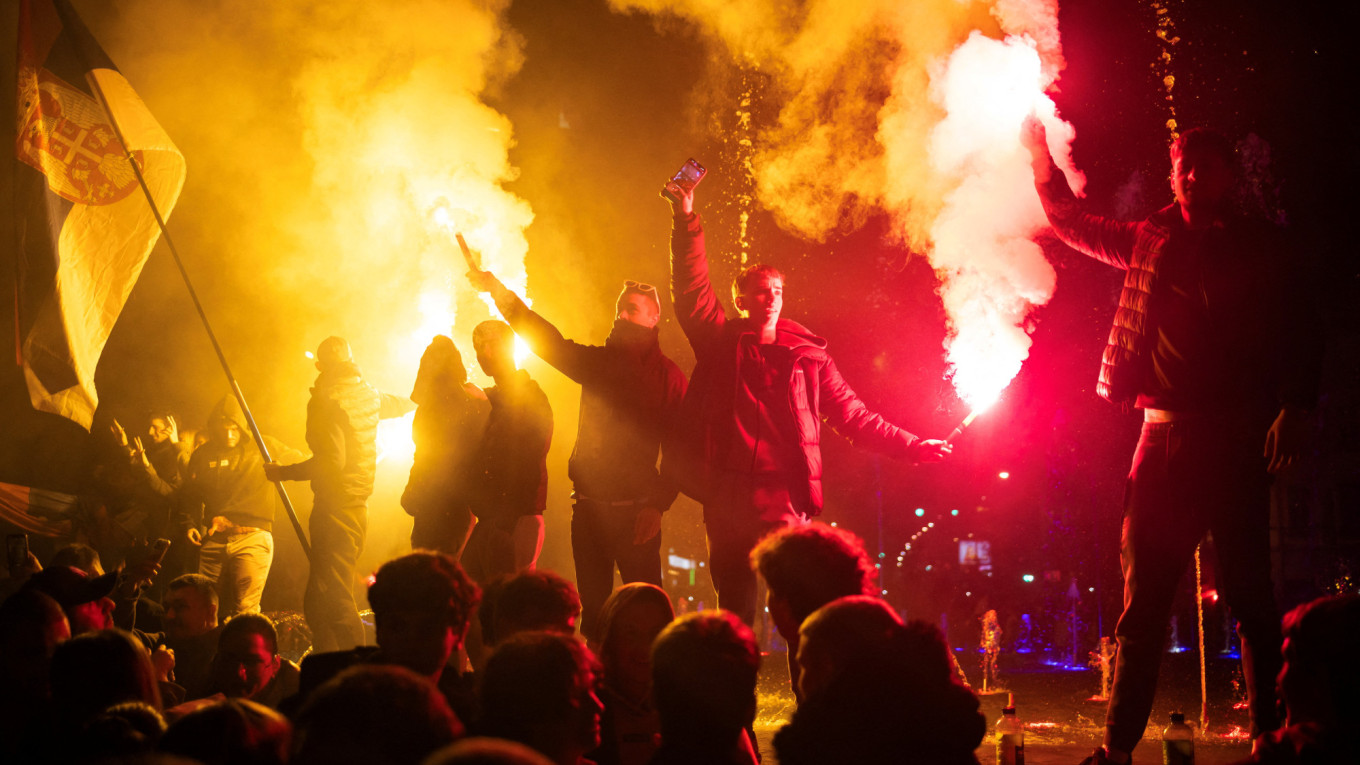
On October 20, Serbia held snap parliamentary elections. Snap elections have been frequent here since 2012, when the Serbian Progressive Party (SNS) defeated the Democratic Party, which had governed, either alone or in coalition, since the 2000 Bulldozer Revolution that overthrew Slobodan Milošević.
Aleksandar Vučić quickly became the face of the SNS. First as prime minister — Serbia has a semi-presidential system — and then president, before resigning in September, a year before the end of his second term. The party was simply known as Vučić's party, and his resignation was intended to facilitate a political reshuffle similar to the one in Russia in 2011. While he could not remain president after serving two terms, the governing party or coalition could appoint the same person prime minister as many times as it liked.
The snap elections themselves became necessary because the protests simply would not die down. Two years ago, a canopy collapsed at the recently renovated railway station in Novi Sad, killing 16 people, including a child.
The protests became known as student protests, although they involved far more than students at local universities. In fact, the name caught on after police broke up a memorial gathering organized by students from the University of Belgrade for the victims of the disaster.
Students played an important role in the movement, both symbolically and organizationally. Many events were conceived and discussed in university classrooms. And although most activists belonged to what could broadly be described as Serbia's educated class, the movement also included or received support from substantial numbers of bikers, military veterans, farmers and workers.
It was a genuinely nationwide movement bringing together everyone who had grown tired of corruption and the dominance of the SNS, without joining which it was difficult to get a job even as a village mail carrier.
Voter turnout was unprecedented in the history of modern Serbia. According to preliminary figures available when this article was being prepared, it reached 68.78%.
The results were equally astonishing. According to the preliminary results published by the Republic Electoral Commission (RIK), the SNS-led coalition, “Aleksandar Vučić — United Serbia,” won 39.28% of the vote. “The Student List,” a coalition of the leaderless student movement and several opposition parties, received 52.55% (2,215,901 votes).
No other parties entered parliament apart from small ethnic minority parties, which are exempt from the 3% electoral threshold.
Predictions remained uncertain until the very last moment. Pro-government sources forecast victory for Vučić, while independent sources favored the students. The betting odds on Polymarket also fluctuated, favoring Vučić on the final day before the election.
The first figures released by the RIK likewise favored the ruling party. Protests and unrest were expected: police cordons appeared on Belgrade's streets, and gendarmerie units were brought in.
In his concession speech, Vučić made a point of suggesting that the students owed their victory to foreign forces. He was referring primarily to European politicians, who had repeatedly expressed their interest in fair elections and sent a substantial delegation of observers. Russia and the Commonwealth of Independent States, incidentally, had also sent observers.
Vučić also predicted that Serbia would introduce visas for Russian citizens in the spring, following Montenegro, which was set to introduce them on November 1.
Panic broke out among Russian émigrés. According to official figures alone, there are around 60,000 of them in Serbia, not counting those who make regular visa runs.
Russia's first reaction came from Kremlin spokesman Dmitry Peskov — and it was remarkably reasonable.
After praising Vučić's contribution to Russian-Serbian relations and noting that he remained active in politics, Peskov expressed hope that the victorious Student List would work constructively to develop relations further.
“We hope this political force will understand that cooperation with Russia is in Serbia's interests,” he said. Given Putin's dislike of popular “Maidan” uprisings and the earlier negative remarks about students supposedly being manipulated by Russia's foreign adversaries, this was an exceptionally positive response.
But Russia's true attitude will become clear through its actions.
The first test will be the sale of Serbia's oil and gas company NIS to the Hungarian company MOL. After the United States imposed sanctions on Gazprom and Gazprom Neft, which own NIS, questions arose not only about Serbia's ability to purchase Russian oil but also about its ability to refine oil at the country's only refinery, in Pančevo. There were concerns that the country could face a crippling fuel crisis.
It became clear that NIS would have to be either nationalized, which Vučić did not want, or sold. Negotiations have dragged on and are still continuing, while the latest deadline for implementing sanctions against NIS has once again been postponed.
The second test is the contract under which Serbia buys Russian gas for 318 euros per thousand cubic meters. That is extremely cheap: Hungary pays almost double that and Slovakia almost three times as much.
However, the contract expires on December 31, 2026. The price under the next contract will reveal a great deal about Russia's true attitude to the election result.
I would not rule out, however, that the gas price will also depend on whether the newly elected opposition puts pressure on Gazprom over the sale of NIS.
There is less certainty about whether Moscow’s greatest fear will come to pass: that the Student List might join European sanctions against Russia in pursuit of EU membership, as Montenegro did.
On the one hand, the head of the list, well-known cardiologist Ilija Srđanović, stated unequivocally in a recent interview with the BBC's Serbian service that they had no intention of introducing sanctions against Russia.
Incidentally, he took the same position on Kosovo as Vučić — that it is Serbian territory.
On the other hand, the figures representing the Student List are not yet confirmed candidates for parliamentary positions. That is still to come and when it does, the new lawmakers will not be professional politicians.
Rather, they are people who enjoy public respect. Among them are doctors, lawyers, athletes, musicians, environmental activists and trade union leaders. Only one, Dejan Šoškić, has served as governor of the National Bank of Serbia.
The student movement is far from homogeneous. It includes both people who criticized Vučić for delaying Serbia's accession to the EU and those who criticized him for wanting to join the EU at all, as well as for “giving away” Kosovo.
There is also a degree of wariness toward the EU among the wider public. On the one hand, access to free trade and a common labor market would be welcome. On the other, there are concerns that European competitors would drive Serbian farmers and producers out of business.
As for Russia, even those who condemn the war in Ukraine struggle to be outwardly hostile. Historical memories of Russia's assistance in Serbia's struggle for independence play a role in this, as does gratitude toward the cultural and economic contributions of White Russian émigrés and an entirely pragmatic appreciation of cheap Russian gas.
Thus, there is little reason to expect the new government to worsen Russian-Serbian relations, at least in the near future.
Unless, of course, Russia itself destroys the relationship that already exists.
A smaller but much more painful issue is the position of Russian emigres in Serbia.
The first handful of emigrants who arrived after the Russian protests of 2011–2012 were received more than warmly by Serbs. That did not, however, prevent some of them from encountering obstacles or even being denied the right to reside in the country after some emigres signed an anti-war letter in March 2022 and others participated in anti-war demonstrations.
Some lost their temporary residence permits. Those with permanent residency faced long waits for citizenship. Others are still waiting.
Those who arrived after the war began were greeted no less warmly by the authorities, provided they had not participated in the protests mentioned above.
Among ordinary citizens, however, a certain tension eventually emerged, mostly concerning everyday matters and differences in mentality.
The arrival of Russian emigres drove up rent and property prices sharply, while cafes in major cities also became more expensive. Serbs found Russians cold and unsociable and were offended by their lack of Serbian language skills. Some cafes opened by Russians initially did not even have menus in Serbian, nor did their waiters speak the language.
Gradually, these sources of friction have begun to fade. Yet the ease of obtaining legal residency, which largely helped Serbia become home to the second-largest diaspora of Russian relocants, proved deceptive.
On the one hand, the Serbian authorities were delighted to see IT companies springing up across the country, serving clients throughout Europe and even worldwide. They welcomed both the tax revenues generated by the newcomers and Serbia's transformation into a regional IT hub.
In their enthusiasm, they quickly cut the number of years foreigners had to have lived in Serbia to obtain permanent residence from five years to three. There was even a proposal to grant citizenship after just one year to highly qualified specialists, including IT professionals.
But the EU strongly objected, unhappy with the liberalization. The initiative was shelved and people who obtain permanent residency must now wait another three years before applying for citizenship.
Citizenship approvals were effectively frozen after the war began, only resuming in 2024-25. Some people remain stateless to this day, having renounced their Russian citizenship in accordance with the law, only for their Serbian citizenship applications to remain in limbo.
Meanwhile, around 100 passports were granted through a citizenship-by-merit procedure, which imposes no requirements beyond a decision by the authorities themselves. As journalists discovered, many of those passports went to people with ties to the Kremlin.
What happens now? Will the new government tighten the rules for obtaining legal residency, or liberalize them? Will it finally grant citizenship to stateless people, or will it begin rejecting applicants?
Most likely, nothing will happen in the immediate future, simply because the newly elected opposition now faces far more pressing issues.
First, a nationwide movement and a political party are two different things. Having won the election, the student movement will have to turn its attention to building a functioning party.
Given its diversity, this will be difficult. I would not be surprised if the Student List gradually splits into groups and factions within parliament, representing very different political views.
Second, the new leadership must form a government and carry out the reforms of the courts, prosecutors' offices and the security services, as promised in the students' election platform. Other promises must also be fulfilled, including fighting corruption and ending the practice of awarding government and public-sector jobs on the basis of party affiliation.
Third, the new leadership must establish its foreign policy. Serbia has four main relationships to consider: with the EU, its largest trading partner; China, which is responsible for almost all infrastructure construction; the United States, which could help resolve the Kosovo question; and, finally, Russia.
Vučić skillfully balanced on all four of these chairs. Will the Student List be able to do the same?
As already mentioned, the Student List is a collection of respected intellectuals and public figures. They may be well suited to serving as parliamentarians, passing laws and overseeing the government. But serving as ministers and heads of government agencies requires an entirely different set of skills.
Do you now understand why the new authorities are unlikely to have much time for the problems of Russian emigres for at least the next year or year and a half?
Of course, some processes already underway may finally move forward. The authorities might, for example, resolve the problem of stateless people. But otherwise, they will most likely leave things as they are.
And after that? So much could happen that there is little point in trying to predict it.
A Message from The Moscow Times:
Dear readers,
We are facing unprecedented challenges. Russia's Prosecutor General's Office has designated The Moscow Times as an "undesirable" organization, criminalizing our work and putting our staff at risk of prosecution. This follows our earlier unjust labeling as a "foreign agent."
These actions are direct attempts to silence independent journalism in Russia. The authorities claim our work "discredits the decisions of the Russian leadership." We see things differently: we strive to provide accurate, unbiased reporting on Russia.
We, the journalists of The Moscow Times, refuse to be silenced. But to continue our work, we need your help.
Your support, no matter how small, makes a world of difference. If you can, please support us monthly starting from just $2. It's quick to set up, and every contribution makes a significant impact.
By supporting The Moscow Times, you're defending open, independent journalism in the face of repression. Thank you for standing with us.

Remind me later.