
Russia has deepened a crackdown on European companies in response to Europe's support for Ukraine, while largely sparing U.S. firms as Moscow courts business ties with Washington, Russian officials and U.S. businesspeople said.
Of the 20 foreign-owned firms President Vladimir Putin has placed under temporary administration since U.S. President Donald Trump's inauguration in January 2025, only three were linked to the United States, with the rest controlled by European companies, a Reuters analysis of official data shows.
A person close to Russian financial regulators said that it is not in Moscow's interest to take a tough line on American companies while business negotiations with Washington are underway.
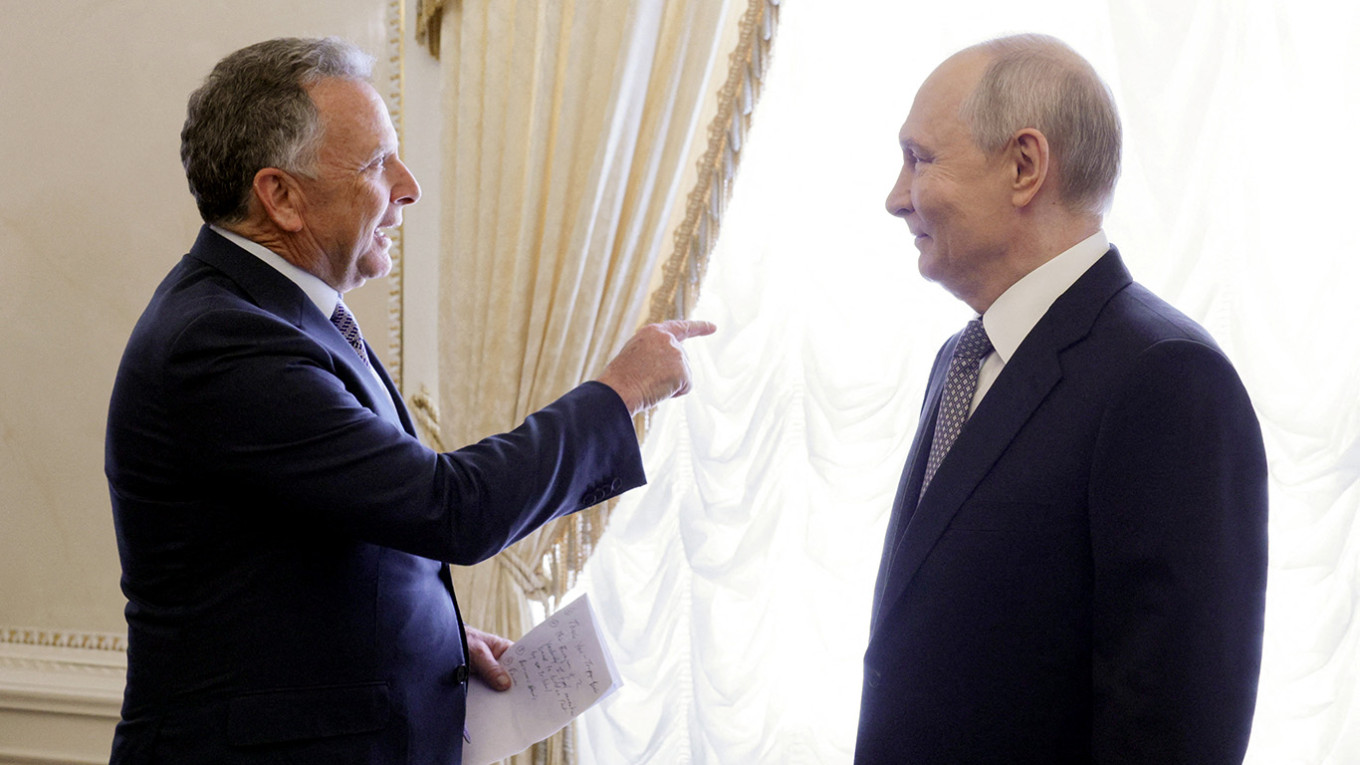
U.S. special envoy Steve Witkoff met with Putin in St. Petersburg on Wednesday for talks aimed at resolving the war in Ukraine. Russian news agencies reported that Putin told Witkoff he was interested in restoring economic ties with the United States.
Ukraine and its allies have voiced concerns that the U.S. is backing away from its support of Kyiv, and Trump has criticized Ukrainian attacks on Russian oil refineries even as European leaders have lined up behind Ukrainian President Volodymyr Zelensky.
Russia, citing Europe's wartime support for Ukraine and involvement in "direct battlefield hostilities," has taken control of the local units of Swiss food group Nestle and retailers Auchan and Metro since last month.
Last week, the Kremlin seized control of the local assets of four smaller companies from France, Germany, Sweden and Belgium.
"Their country of origin was one of the factors taken into account in making the decision," Kremlin spokesman Dmitry Peskov said, adding that these countries were involved in "illegal expropriations of Russian property."
Nestle, which said in September it would take steps to protect its rights in Russia, declined to comment further. The other companies did not respond to requests for comment.
A spokesperson for Switzerland's State Secretariat for Economic Affairs said that the available information supported the perception that more European than U.S. firms were being targeted.
The White House did not respond to a request for comment. Commenting on the report after its publication, the Kremlin said that U.S. companies were better treated than their European rivals because of Trump's efforts to achieve peace in Ukraine.
"The American administration is doing a lot to help bring about a peaceful settlement. The European capitals are doing nothing to help while doing a lot to prolong the military action," Peskov told reporters.
Russia's relations with the Trump administration, meanwhile, have warmed. The U.S. announced a deal this month to buy Russian diesel, and other deals, including those on gas, have been discussed at meetings in recent months.
Trump also signed an executive order on Saturday waiving key sanctions and tariffs on Russian goods.
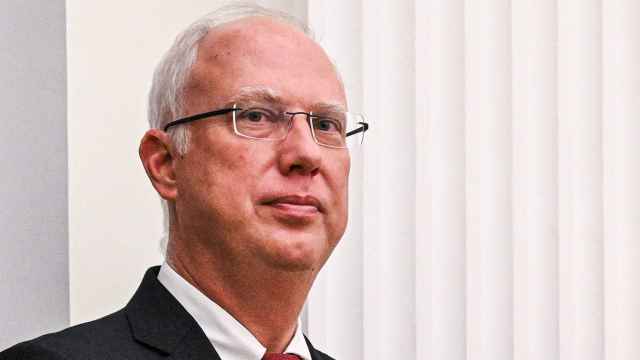
Russian negotiator Kirill Dmitriev, a U.S.-educated investment banker who heads the Russian Direct Investment Fund (RDIF) and has pushed in talks for the return and expansion of American firms, hailed the move as a "historic moment."
Trump's envoys Witkoff and Jared Kushner have used the prospect of multibillion-dollar deals with Russia as an incentive to push Putin toward a peaceful settlement since the start of peace talks in the Saudi capital, Riyadh, in February 2025.
Dmitriev said last week that Russia and the U.S. would soon announce new joint initiatives that could move ahead before the war ends. The U.S. has previously signaled that deals are unlikely while the conflict continues.
One person familiar with the situation said that some Russian officials who do not support peace efforts could still push for the Kremlin to seize more American firms.
The RDIF's only current partnership with a U.S. company is a joint investment with New York-listed Titan International in a tire factory in Volgograd.
Another person familiar with the situation said Dmitriev has in private highlighted this as an example of a thriving U.S. business in Russia.
Titan did not respond to a request for comment.
Trump's commitment to economic cooperation with Russia and ongoing talks have helped protect the interests of American companies, two U.S. businesspeople in Moscow said.
American Chamber of Commerce Russia President Robert Agee said in December last year that European firms in Russia were less optimistic than American ones, citing European foreign policy. The chamber estimates there are around 300 U.S. firms remaining in Russia.
"We have Trump, and they don't, and our hopes are linked to him," Agee told Russian media last year. Agee and the chamber declined to comment further for this story.
Russia did target some mid-sized U.S. firms during its property redistribution drive after the start of the war. One report estimated that the Kremlin seized more than $50 billion worth of private property from both Russian and foreign owners.
The European Commission in Brussels declined to comment on the number of EU firms being targeted relative to U.S. ones, but said the recent asset seizures were without due process and amounted to "forced expropriation in all but name."
"This follows a clear pattern of economic retaliation," a Commission spokesperson told Reuters, adding that the moves showed "Russia is not a safe environment for business."
"The EU has measures in place to respond. We can sanction those profiting from forced expropriations," the spokesperson added.
A Message from The Moscow Times:
Dear readers,
We are facing unprecedented challenges. Russia's Prosecutor General's Office has designated The Moscow Times as an "undesirable" organization, criminalizing our work and putting our staff at risk of prosecution. This follows our earlier unjust labeling as a "foreign agent."
These actions are direct attempts to silence independent journalism in Russia. The authorities claim our work "discredits the decisions of the Russian leadership." We see things differently: we strive to provide accurate, unbiased reporting on Russia.
We, the journalists of The Moscow Times, refuse to be silenced. But to continue our work, we need your help.
Your support, no matter how small, makes a world of difference. If you can, please support us monthly starting from just $2. It's quick to set up, and every contribution makes a significant impact.
By supporting The Moscow Times, you're defending open, independent journalism in the face of repression. Thank you for standing with us.

Remind me later.