Russian businesses continued to scale back investment in the third quarter as falling profits, weak demand and economic uncertainty weighed on spending plans, a Central Bank survey of 11,500 companies showed.
The balance between companies reporting an increase in investment and those reporting a decline turned negative, according to the survey. It was also negative in the first quarter, when fixed capital investment plunged 14.3% year on year, its steepest fall since 2009 and during the pandemic in 2020.
The Economic Development Ministry forecasts investment will fall 5.4% this year, following a 9.9% decline in the first half.
A shortage of internal funds was cited as an obstacle to investment by 26.7% of respondents, followed by uncertainty about Russia’s economic situation at 25.8% and insufficient demand at 20.8%.
“There isn’t enough money or demand,” economist Dmitry Polevoy said.
Russian companies recorded combined profits of 13 trillion rubles ($154.7 billion) in the first seven months of the year, down 15.7% from a year earlier and the weakest result for the period since 2020. One in three companies was loss-making.
An increase in corporate profit tax that took effect in 2025 has added to the pressure on businesses’ finances. Companies’ own funds account for more than half of fixed capital investment, making them its largest source of financing, according to data from state statistics agency Rosstat.
Economic uncertainty, which businesses ranked as their biggest investment obstacle three months earlier, remains another major constraint.
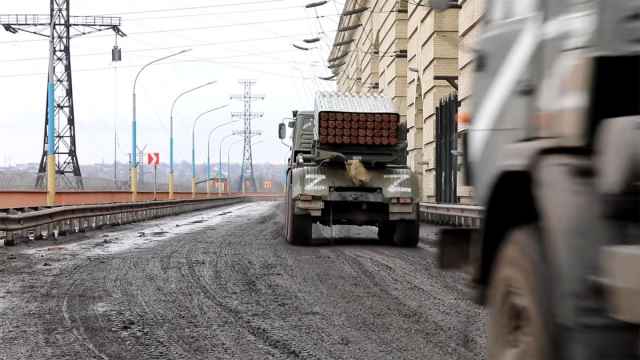
Unpredictable tax increases, rising military spending, Ukrainian drone strikes on refineries, e-commerce warehouses and data centers, asset seizures, criminal prosecutions of business owners and tighter regulation have clouded the outlook for new projects.
“This is normal, pragmatic behavior for a businessperson or investor: if you don’t know what tomorrow will bring, you would rather do nothing at all, rather than invest,” said Igor Nikolayev, chief researcher at the Russian Academy of Sciences’ Institute of Economics.
Vladimir Potanin, the main owner of metals producer Nornickel, has also warned that uncertainty over taxation makes investment planning difficult. Nornickel is among the companies facing a tax on windfall profits.
“If businesspeople don’t understand the rules governing how their income will be taken, it is extremely difficult for them to plan investment,” Potanin said.
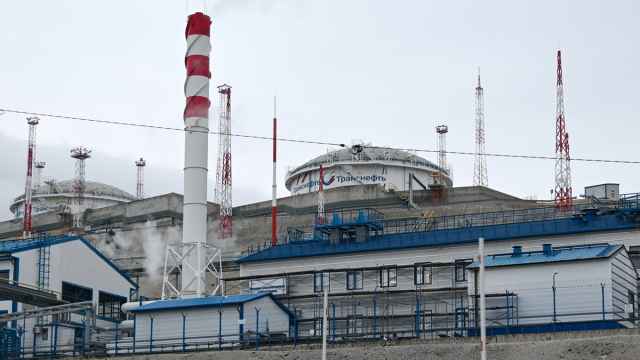
Investment trends varied considerably across industries, the central bank said, with logistics and retail recording notable increases.
Some of that spending may reflect efforts to repair damage from Ukrainian drone attacks. Economic officials have said restoring “temporarily lost capacity” would affect investment activity.
The Russian Academy of Sciences’ Institute of Economic Forecasting has noted investment in areas “linked to minimizing war damage.” In core industries, however, “the situation, by contrast, points to a continued pause in investment,” it said.
Economic Development Minister Maxim Reshetnikov has acknowledged that his ministry’s forecast for investment to return to growth in 2028 and regain its 2025 level in 2029 is “largely a target scenario.”
Without “additional decisions,” even those figures “will be difficult to achieve,” he said.
With fixed capital investment falling at such a pace, “the economy will not grow,” Nikolayev said.
This article was translated with the help of artificial intelligence and was reviewed by a Moscow Times editor before publication. Learn more about our newsroom's AI policy here.
Read this article in Russian at The Moscow Times' Russian service.
A Message from The Moscow Times:
Dear readers,
We are facing unprecedented challenges. Russia's Prosecutor General's Office has designated The Moscow Times as an "undesirable" organization, criminalizing our work and putting our staff at risk of prosecution. This follows our earlier unjust labeling as a "foreign agent."
These actions are direct attempts to silence independent journalism in Russia. The authorities claim our work "discredits the decisions of the Russian leadership." We see things differently: we strive to provide accurate, unbiased reporting on Russia.
We, the journalists of The Moscow Times, refuse to be silenced. But to continue our work, we need your help.
Your support, no matter how small, makes a world of difference. If you can, please support us monthly starting from just $2. It's quick to set up, and every contribution makes a significant impact.
By supporting The Moscow Times, you're defending open, independent journalism in the face of repression. Thank you for standing with us.

Remind me later.