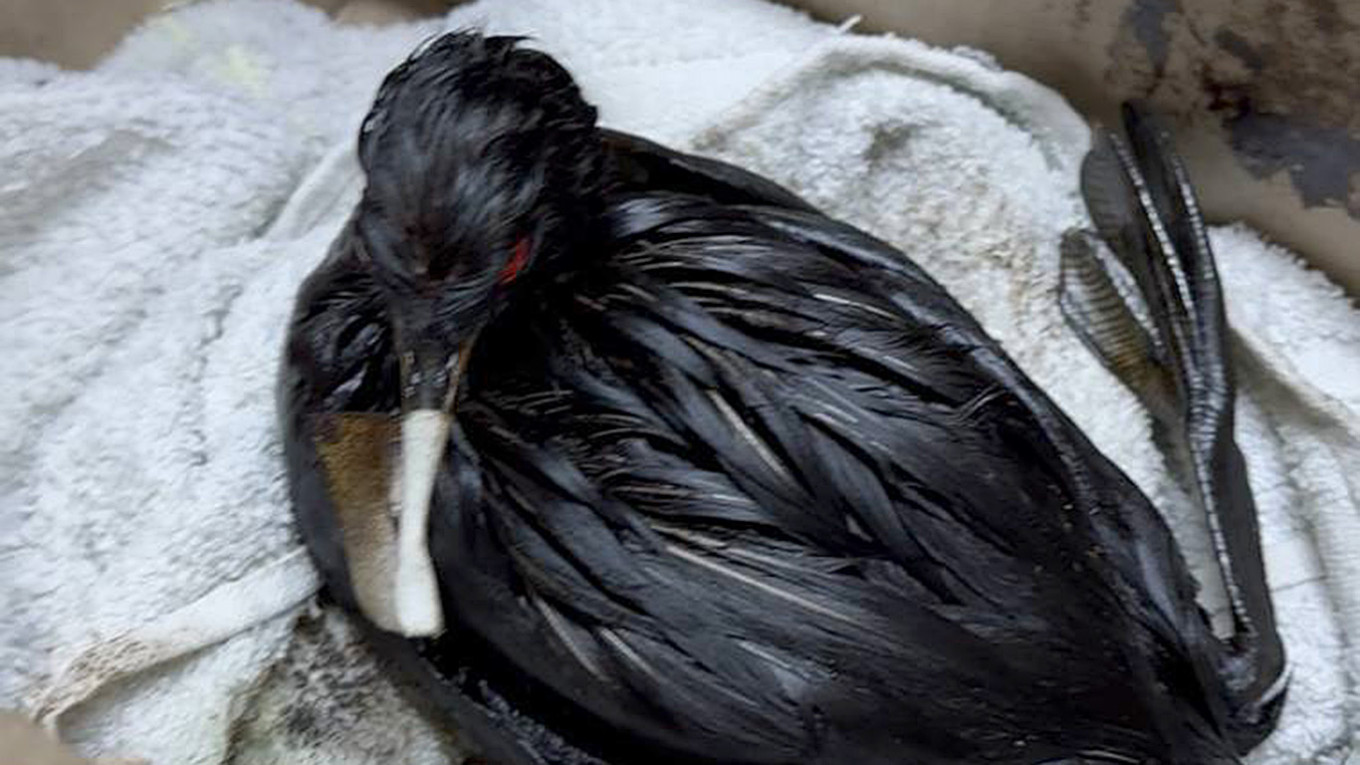
Seabirds covered in oil have been found along Russia’s Black Sea coast following a fire aboard a tanker linked to the country’s so-called shadow fleet, a wildlife rehabilitation center said Monday.
The center in the coastal resort of Anapa said it had begun receiving oil-coated birds from coastal towns and appealed for additional volunteers to help treat and feed them.
The reports came after the Liberia-flagged Aframax Rio caught fire in an attack off the coast of Sochi on Oct. 6. The 247-meter (810-foot) tanker has been linked to Russia’s shadow fleet.
The blaze was extinguished on Oct. 7 and the vessel was then towed to Novorossiysk, about 200 kilometers (124 miles) northwest of Sochi. Workers started pumping oil out of the damaged tanker Monday, according to local reports.
Sochi authorities denied reports of oil-covered birds, saying beach inspections had found no traces of petroleum products.
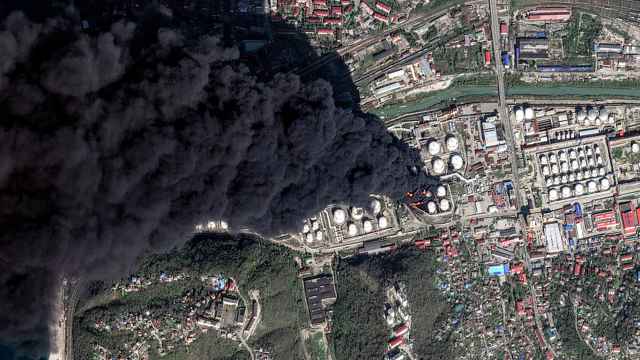
Satellite images, however, showed an expanding oil slick in the days after the fire. A radar image from Saturday showed the slick stretching northwest toward Novorossiysk.
Independent environmentalist Zhora Kavanosyan said Novorossiysk’s chief rescuer Alexei Oderov had confirmed that petroleum products had washed ashore but that he described the scale of the contamination as “nothing catastrophic.”
Meanwhile, Russian transportation and maritime rescue authorities said Tuesday that inspections along the Krasnodar region’s Black Sea coast had found no oil spills.
The latest reports come nearly two years after a major oil spill in December 2024, when two Russian tankers released thousands of tons of heavy fuel oil into the Black Sea after being damaged in a storm in the Kerch Strait. The spill polluted beaches around Anapa and prompted authorities to declare a federal emergency.
A Message from The Moscow Times:
Dear readers,
We are facing unprecedented challenges. Russia's Prosecutor General's Office has designated The Moscow Times as an "undesirable" organization, criminalizing our work and putting our staff at risk of prosecution. This follows our earlier unjust labeling as a "foreign agent."
These actions are direct attempts to silence independent journalism in Russia. The authorities claim our work "discredits the decisions of the Russian leadership." We see things differently: we strive to provide accurate, unbiased reporting on Russia.
We, the journalists of The Moscow Times, refuse to be silenced. But to continue our work, we need your help.
Your support, no matter how small, makes a world of difference. If you can, please support us monthly starting from just $2. It's quick to set up, and every contribution makes a significant impact.
By supporting The Moscow Times, you're defending open, independent journalism in the face of repression. Thank you for standing with us.

Remind me later.