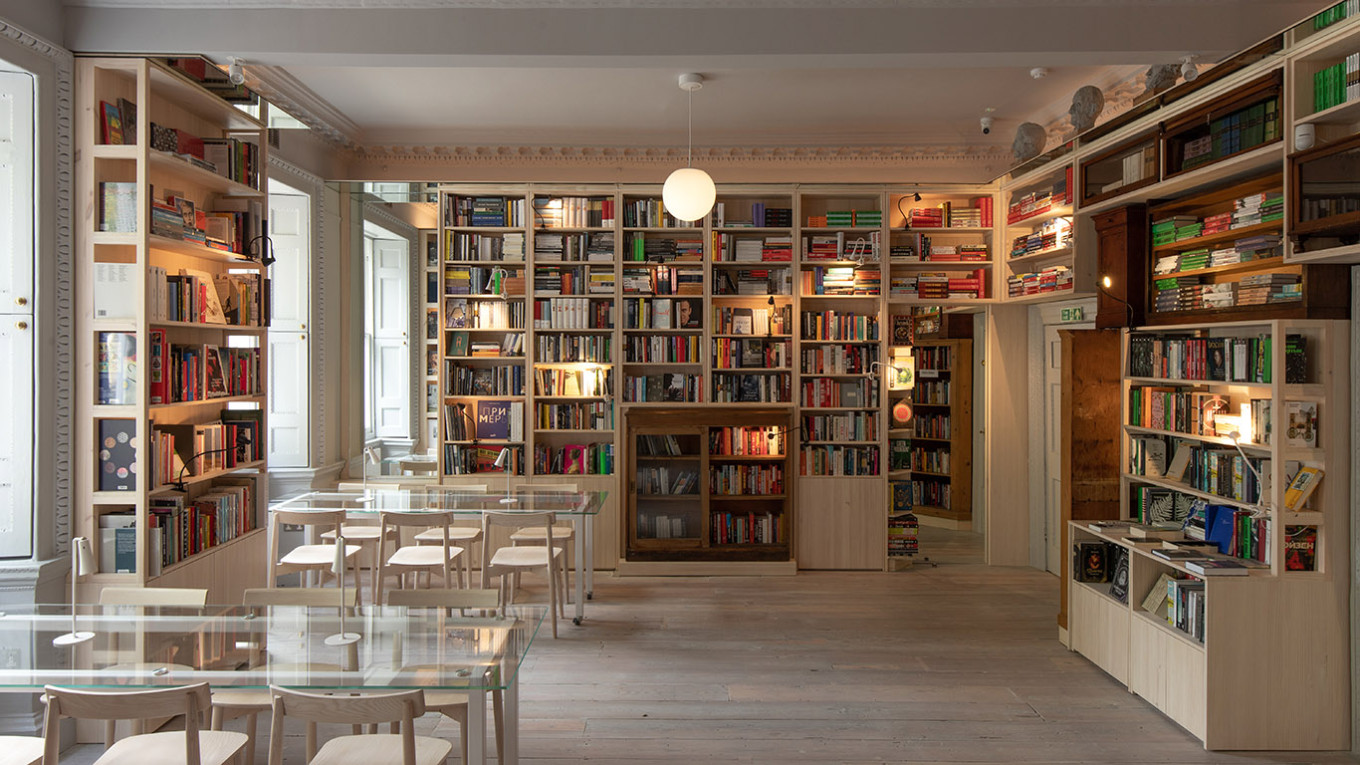
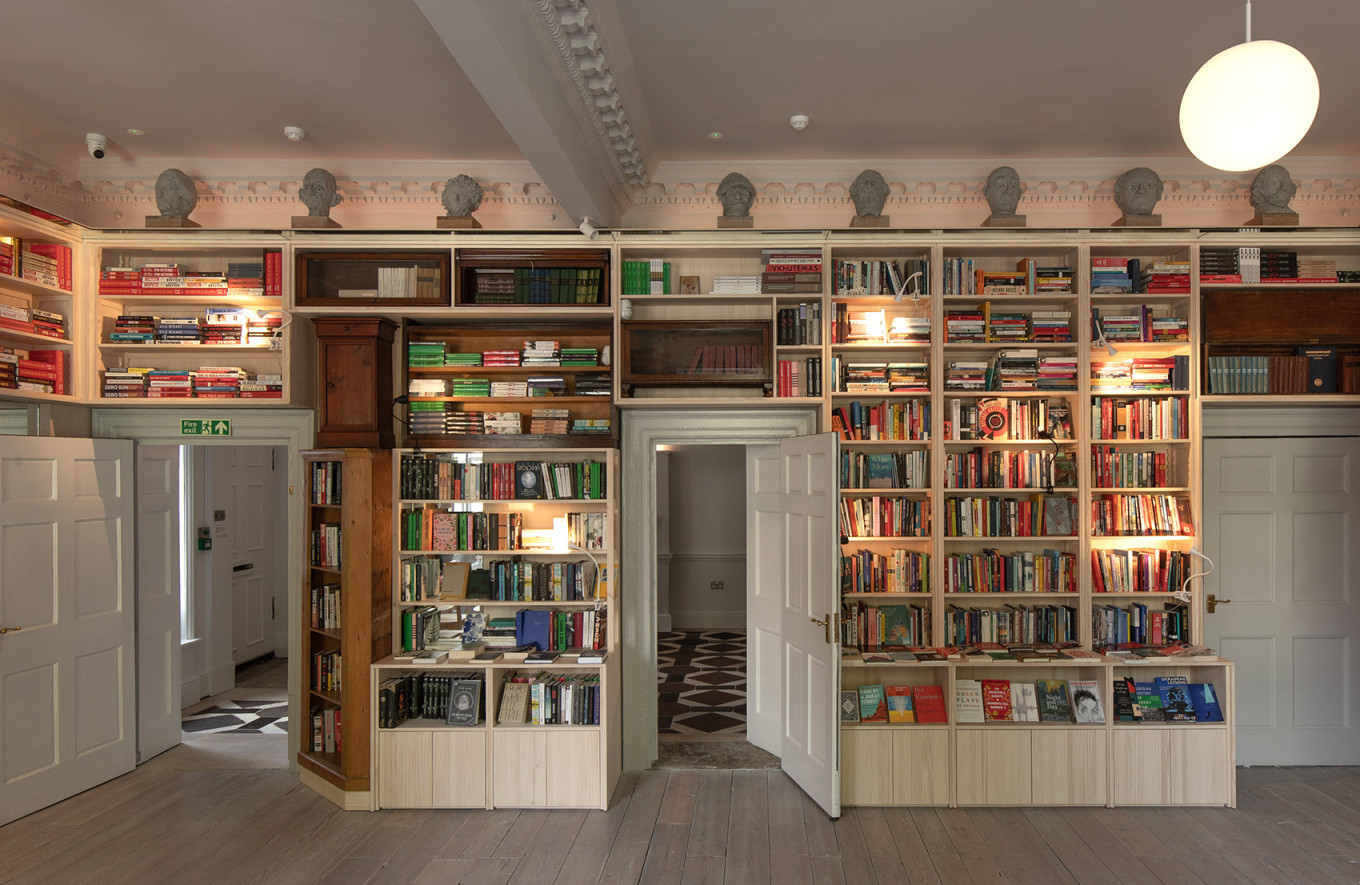
Pushkin House in London has opened a new bookshop designed by Alexander Brodsky, the renowned Russian architect known for projects including the Joseph Brodsky museum in St. Petersburg.
Founded by Russian émigrés in Bloomsbury in 1954, Pushkin House describes itself as a space that “explores and debates” Russian cultures and identities through exhibitions, seminars, lectures and other cultural events.
The renovation comes amid a broader reassessment of the center’s role since Russia’s full-scale invasion of Ukraine in 2022. As its audiences have changed, Pushkin House has expanded its programming to include more Ukrainian and other post-Soviet voices, while examining the hierarchies that have long shaped how Russian culture is presented.
Brodsky, whose work is held in collections including New York’s Museum of Modern Art and London’s Tate Modern, had always insisted that the renovated space should be a working bookstore rather than an art installation, Pushkin House Executive Director Elena Sudakova said.
“His vision as an artist is therefore very much a representation of changes that have been happening here since 2022, a year that has truly catalyzed our programming shift towards reassessment and re-evaluation of cultural thinking that we are a part of,” Sudakova told The Moscow Times. “The open plan of Brodsky’s ground floor bookshop invites visitors to partake in this process.”
Brodsky has a long connection with Pushkin House. In 2017, he created a pavilion in Bloomsbury Square, “Beyond 101 KM: Further Everywhere,” dedicated to 20th-century poets exiled from Soviet cities.
“In hindsight, that pavilion was prophetic,” Sudakova said.
She also recalled early conversations between Brodsky and her predecessor, Clem Cecil, about creating an imaginary bedroom for Russian national poet Alexander Pushkin in the building.
“Brodsky has always insisted that this building is a house and that it must behave like one,” she said.
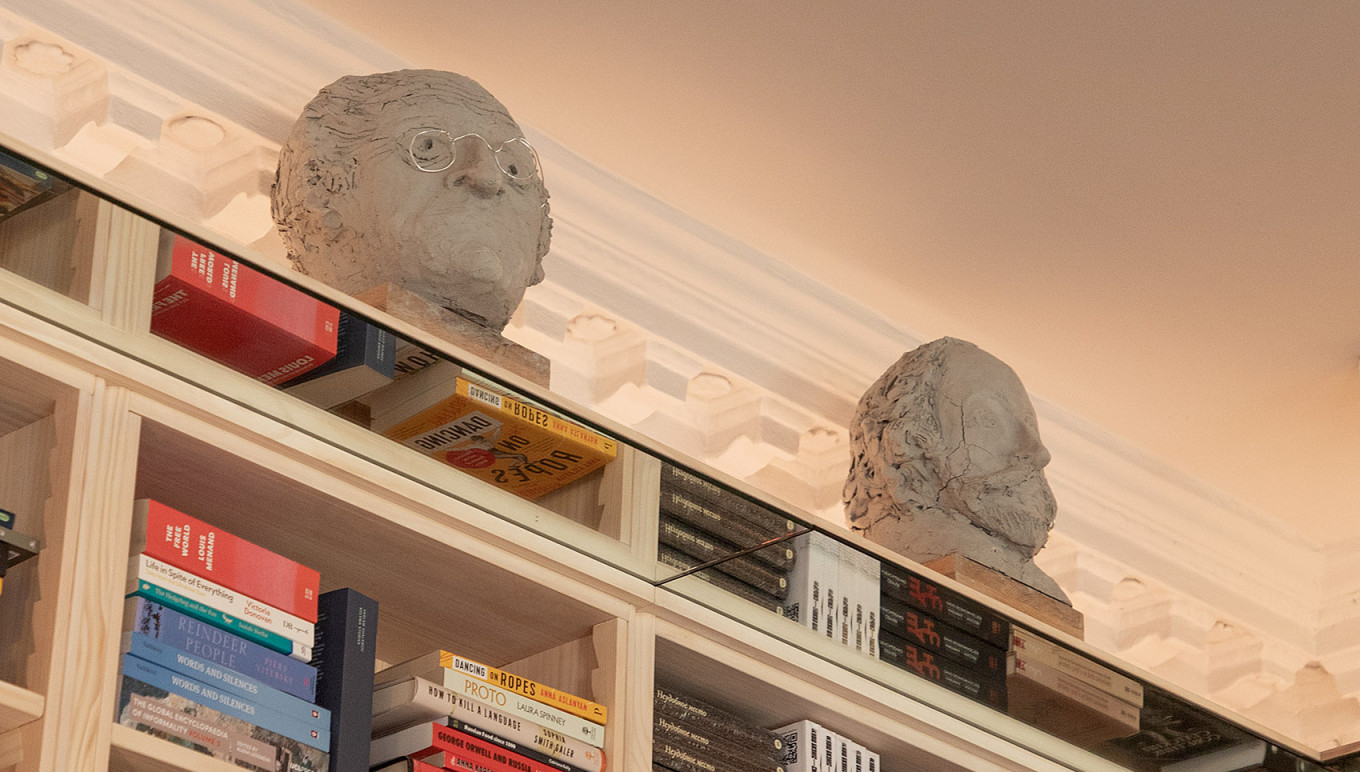
That bedroom has yet to materialize. But two weeks before the interview, Brodsky tested the building’s domestic potential himself, spending the night there while finishing his sculptures without telling the staff, Sudakova said.
Since 2022, Pushkin House’s audiences “have become broader, more diverse, and, in many ways, more invested in the life of the House,” she said.
Creating opportunities for communication and cultural exchange has become a central part of its work.
“Ukrainians have arrived in Britain in significant numbers, alongside Russians leaving the country in the context of war and repression. These are not simply demographic shifts for Pushkin House; they have changed the people who walk through our doors,” Sudakova said.
Visitors include established émigré families and their descendants, recent arrivals from Russia and Ukraine, people from across the wider post-Soviet region, British enthusiasts of Russian culture, students and cultural professionals, she said. Others are Londoners encountering these cultures for the first time.
In the first months of the full-scale war, Pushkin House overhauled its program to provide a platform for Ukrainian artists and anti-war voices. It also used its street-facing billboards to display anti-war works by Russian artists.
“These gestures were deliberately visible — a way of acknowledging the complexity and discomfort of our position rather than retreating from it,” Sudakova said.
In the years that followed, staff began to reflect more deeply on the center’s blind spots and how it was perceived by others.
Sudakova said Pushkin House moved toward a coherent institutional program that includes more active engagement by its audience.
“Our thinking around decolonization has emerged from this process: not as a rejection of Russian culture, but as an attempt to loosen its inherited hierarchies and open it to a wider field of voices, experiences and histories,” she said.
Few institutions like Pushkin House exist in Europe today.
Many Russian state-backed cultural centers across the continent closed after 2022. Those that stayed open, including the Russian Houses in Brussels and Vienna, host programming that reflects official Russian narratives.
Anti-war migrants have meanwhile established several independent cultural centers, but they primarily serve Russian-speaking émigrés rather than for residents of the host countries.
Amsterdam’s Pegasus bookstore is among the independent institutions that worked with Russian culture before the invasion of Ukraine.
A representative for the bookstore said it had never applied for Russian government grants and had long considered “shared values” when deciding which organizations, writers and translators to work with.
“Thus, we already thought carefully about who we are supporting, how we can help to correct imbalances and who we would like to give a voice to,” the representative told The Moscow Times. “After 2022, we did not need to change our strategy because we were always critical when weighing the literature and writers to publish.”
Demand for Russian-language books has nevertheless increased significantly as people who left Russia following the invasion settled abroad. Pegasus has expanded its selection of books published outside Russia known as tamizdat.
Staff said they had also become more vigilant about checking whether authors had expressed support for the war.
“We definitely notice that the local attitude toward Russian culture and literature has changed,” Pegasus said. “Very few translations from Russian are being published. Fortunately, the lacuna of Ukrainian literature is filled in its place. … This is because the paradigm is changing: since 2022, the Netherlands is finally more aware of its Russocentrism.”
At Pushkin House, contemporary fiction in translation is the most popular category among English-speaking book buyers. Readers seek works from Ukraine, the South Caucasus, Central Asia and the Baltic states as well as from Russia.
Bestsellers include Soviet-era dissident literature such as Vasily Grossman’s “Life and Fate,” émigré writing from different generations and books by women from across the post-Soviet world, including Latvian author Nora Ikstena’s “Soviet Milk.”
Russian-language bestsellers include Maria Stepanova’s “Focus,” Alexei Navalny’s memoir “Patriot” and Anton Dolin’s “Bad Russians.” All three are published outside Russia as tamizdat, as their authors are banned in Russia or address subjects that are off-limits there.
“Russian-speaking readers naturally want to understand current events and reflect on the present, but this does not mean that their reading is limited to politics or the war. They continue to buy both classics and contemporary fiction," Sudakova said.
That balance between past and present runs through nearly every aspect of Pushkin House’s work, she said.
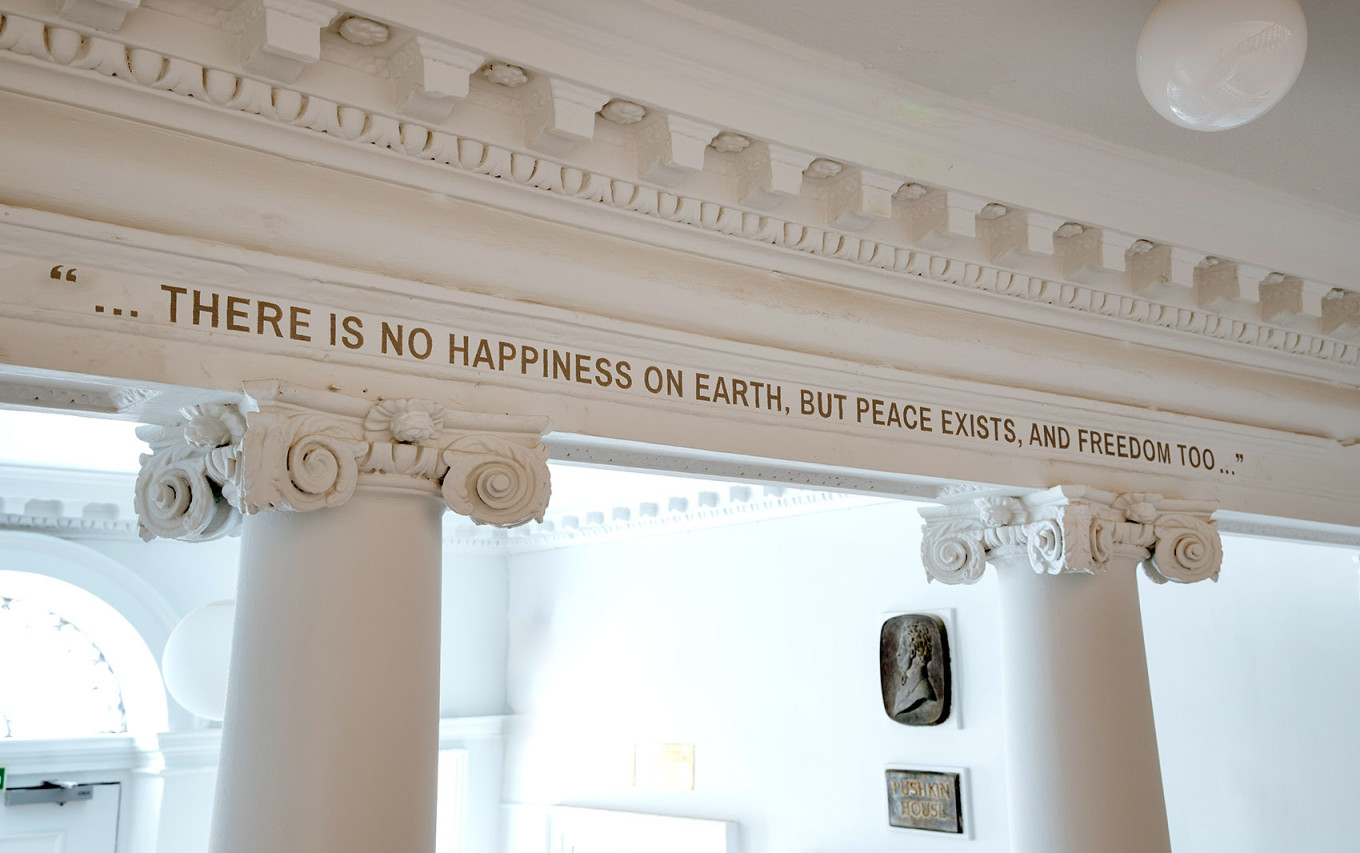
Brodsky’s renovation has also uncovered part of the building’s buried heritage — 18th-century sandstone and marble floors dating to architect Henry Flitcroft’s design in the mid-1740s, long concealed beneath layers of 20th-century cement.
“There is wonderful poetry in this: a Russian architect illuminating British classical heritage,” Sudakova said.
A Message from The Moscow Times:
Dear readers,
We are facing unprecedented challenges. Russia's Prosecutor General's Office has designated The Moscow Times as an "undesirable" organization, criminalizing our work and putting our staff at risk of prosecution. This follows our earlier unjust labeling as a "foreign agent."
These actions are direct attempts to silence independent journalism in Russia. The authorities claim our work "discredits the decisions of the Russian leadership." We see things differently: we strive to provide accurate, unbiased reporting on Russia.
We, the journalists of The Moscow Times, refuse to be silenced. But to continue our work, we need your help.
Your support, no matter how small, makes a world of difference. If you can, please support us monthly starting from just $2. It's quick to set up, and every contribution makes a significant impact.
By supporting The Moscow Times, you're defending open, independent journalism in the face of repression. Thank you for standing with us.

Remind me later.