As the global AIDS epidemic unfolded in the 1980s, Soviet authorities played down the threat and promoted the false claim that the U.S. had created the disease as a biological weapon. As HIV spread, patients faced stigma, secrecy and an ill-prepared health care system. Despite the threat of prosecution, activists started to organize campaigns and raise awareness about the crisis.
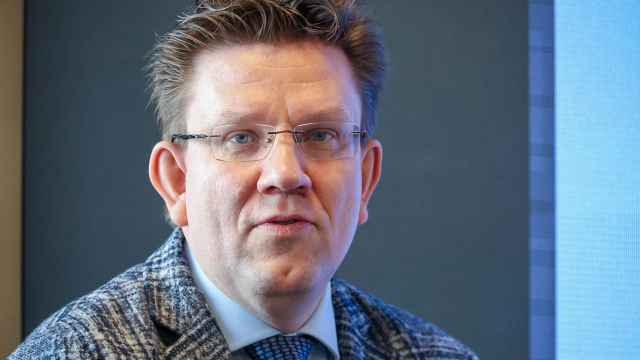
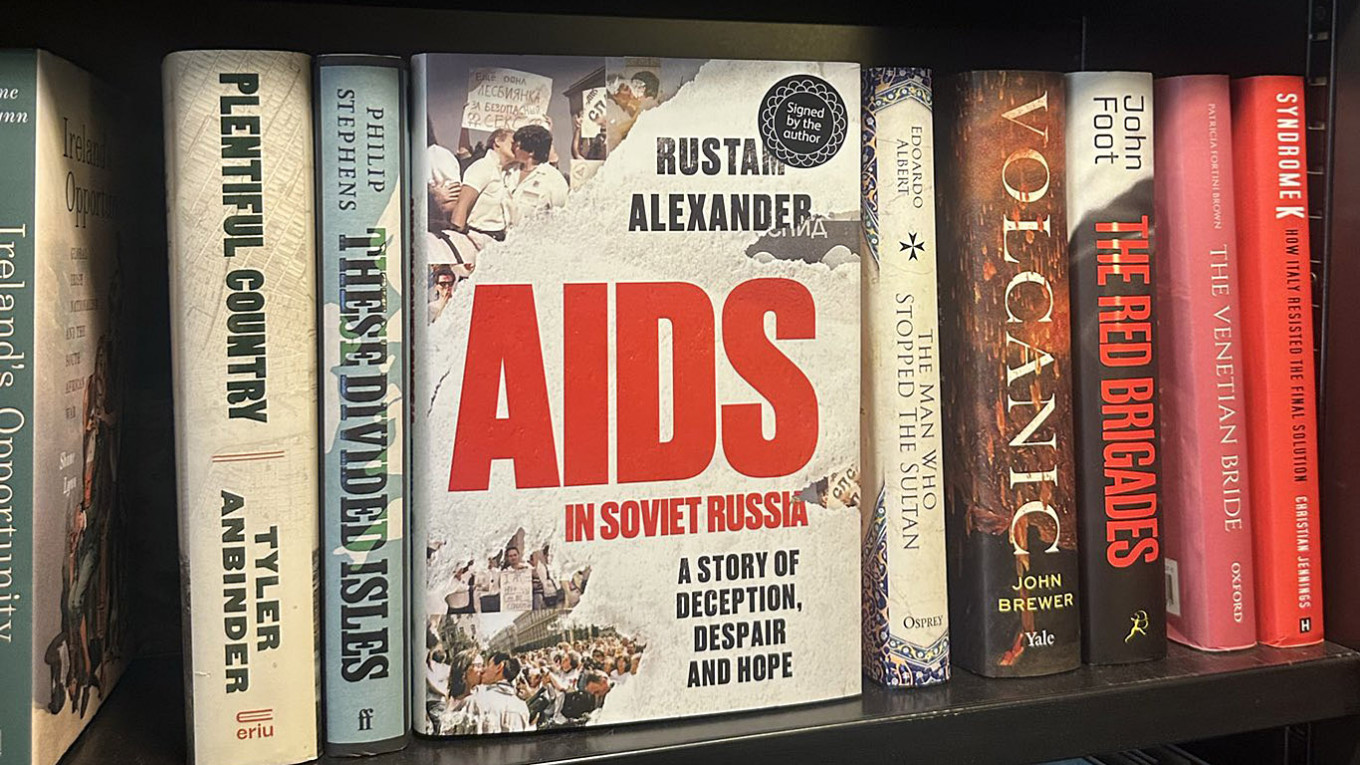
In “AIDS in Soviet Russia: A Story of Deception, Despair and Hope,” Russia-born scholar Rustam Alexander traces the Soviet response to the epidemic through its political, social and queer history. The book has been shortlisted for the Pushkin House Book Prize, which will be announced in London on Sept. 26.
Alexander spoke with Andrew Jack, founder of the prize, about AIDS activism in the late Soviet Union, the decline of HIV prevention under President Vladimir Putin and his next book on Russia’s embrace of antidepressants.
Pushkin House: How did you end up working in Australia?
Rustam Alexander: I was born in Russia and left in the early 2010s for a mix of professional and personal reasons. As much as I liked Russia, I hated the long winter. I also somehow knew that I would probably live abroad — in an English-speaking country. After the annexation of Crimea in 2014, I had a feeling that something was not right and that the situation would only get worse, including for gay people, for freedom of speech, etc. So I got a research scholarship and moved to Australia for a Ph.D. at the University of Melbourne. It was a very good choice, looking back. After completing my Ph.D., I faced a choice between a traditional academic career with its inevitable precarity, and a job outside academia that provided a stable income and gave me time to continue doing research. I chose the latter. The profession I chose made me eligible for Australian permanent residency and ultimately citizenship. I’m passionate about what I do, and I really want to present the results of my research to as many people as I can, especially outside academia. I know that most people find it very difficult to read academic books, and the overwhelming majority cannot afford to buy them either. It is very sad that there is so much interesting, vital information that sits either behind a paywall or somewhere in a university library and is not making the impact it should absolutely be making.
PH: What’s the story of your book?
RA: The idea came to me in 2015-2016. I was watching an interview with Vadim Pokrovsky, Russia’s top AIDS specialist, who sadly passed away recently. He said he personally knew a lot of high-ranking and influential people in Russia who had HIV, but nobody talked about it and the problem was still ignored. Pokrovsky’s words struck me, and I started looking at the materials that I had. I even wrote a first draft. I pitched it to a couple of Russian publishers. Some ignored me, while others said that the topic was interesting but would have a very niche readership and little commercial value. I shelved the project. I finished my thesis which I turned into a book. Then I wrote “Red Closet” and “Gay Lives in Brezhnev’s Russia.” In 2024, reading about the rising HIV rates in Russia, I decided to return to the book project and re-write it in English. Manchester University Press accepted the project with enthusiasm.
What is the key message?
RA: Ignorance, complacency and lies can be deadly when we are dealing with new diseases and epidemics and other threats that may seem insignificant at first — like Covid. I am not saying that only Russia was ignorant, complacent and deceptive during the HIV crisis. Many other countries displayed some combination of these traits, but Russia’s case is an excellent illustration. It’s a subject that has rarely been examined from a social, human, historical and, most importantly, queer perspective. I think the title of the book conveys its central message well. First, the U.S.S.R. sought to deceive the world by claiming that AIDS was a biological weapon created by the United States. When AIDS eventually reached the Soviet Union, it triggered despair. Finally, there was hope: in a society notorious for suppressing human rights and civic activism, ordinary people — and even the beleaguered queer community — mobilized and took matters into their own hands, realizing that they could expect little help from the Soviet leadership busy with perestroika. I am very happy that this book was shortlisted for the Pushkin House Award. I hope it will help bring this research to a broader audience and draw more attention to Russia’s HIV crisis, which, unfortunately, remains profoundly underestimated and is not given proper attention.
PH: What surprised you during your research?
RA: I was surprised to discover that gay and HIV activism existed in the late Soviet Union, despite the fact that the country was far less politically free than the United States. Even under the real threat of criminal prosecution, activists organized campaigns and worked to raise awareness about the emerging AIDS crisis. What struck me most was that, although there were fundamental differences between the Soviet and Western experiences, there were also remarkable similarities. Ultimately, we are all human: people responded to the epidemic with the same fear, resilience and determination to survive. I was also shocked by some of the stories the book tells. One that really stayed with me was about a Soviet sex worker who is believed to have been the first person in the U.S.S.R. to die of AIDS. After her death, her photograph was published in a Soviet newspaper, which I found quite shocking. I was also struck by how little sympathy many Soviet doctors had for people living with HIV, although I am sure they were not unique in that regard and similar examples could be found elsewhere.
PH: What is your view of how HIV is handled in today’s Russia?
RA: Under Putin, it’s a completely different story. At the beginning of this century, Russia had neither the money nor the political will to deal with the epidemic. People living with HIV went to doctors and begged for modern antiretroviral therapy, which had already been widely available in the West for years. They were often denied treatment. There was even a popular song by Zemfira at the time: “You have got AIDS, and it means we will die.” Activists and international pressure eventually forced Putin to recognize HIV as a national priority in 2006. Things improved: funding was allocated, research expanded and access to treatment gradually increased. But in 2012, when Putin decided to return for a third presidential term, he completely reversed course. Determined to stay in power at all costs, he introduced the so-called “gay propaganda” law, cracked down on NGOs, and made HIV prevention work increasingly difficult. Today, the situation is even worse because of the war against Ukraine. The Russian government has shown a shocking disregard for the health and lives of its own citizens, sending many of them to war with little concern for whether they live or die.
PH: What is your next writing project?
RA: It’s a book with the tentative title “Non-Prozac Nation: How Russia Fell in Love with Antidepressants.” It’s the story of how Russians came to embrace antidepressants after rejecting them for many years. I’d rather not say too much about it just yet, as it will be published later this year. But it explores one of those neglected topics that practically screams for attention. Despite its importance, almost nothing has been written about antidepressants as a social and cultural phenomenon in Russia.
This interview was first published by Pushkin House and has been republished with permission. More information about the Pushkin House Book Prize 2026 can be found here.
A Message from The Moscow Times:
Dear readers,
We are facing unprecedented challenges. Russia's Prosecutor General's Office has designated The Moscow Times as an "undesirable" organization, criminalizing our work and putting our staff at risk of prosecution. This follows our earlier unjust labeling as a "foreign agent."
These actions are direct attempts to silence independent journalism in Russia. The authorities claim our work "discredits the decisions of the Russian leadership." We see things differently: we strive to provide accurate, unbiased reporting on Russia.
We, the journalists of The Moscow Times, refuse to be silenced. But to continue our work, we need your help.
Your support, no matter how small, makes a world of difference. If you can, please support us monthly starting from just $2. It's quick to set up, and every contribution makes a significant impact.
By supporting The Moscow Times, you're defending open, independent journalism in the face of repression. Thank you for standing with us.

Remind me later.