
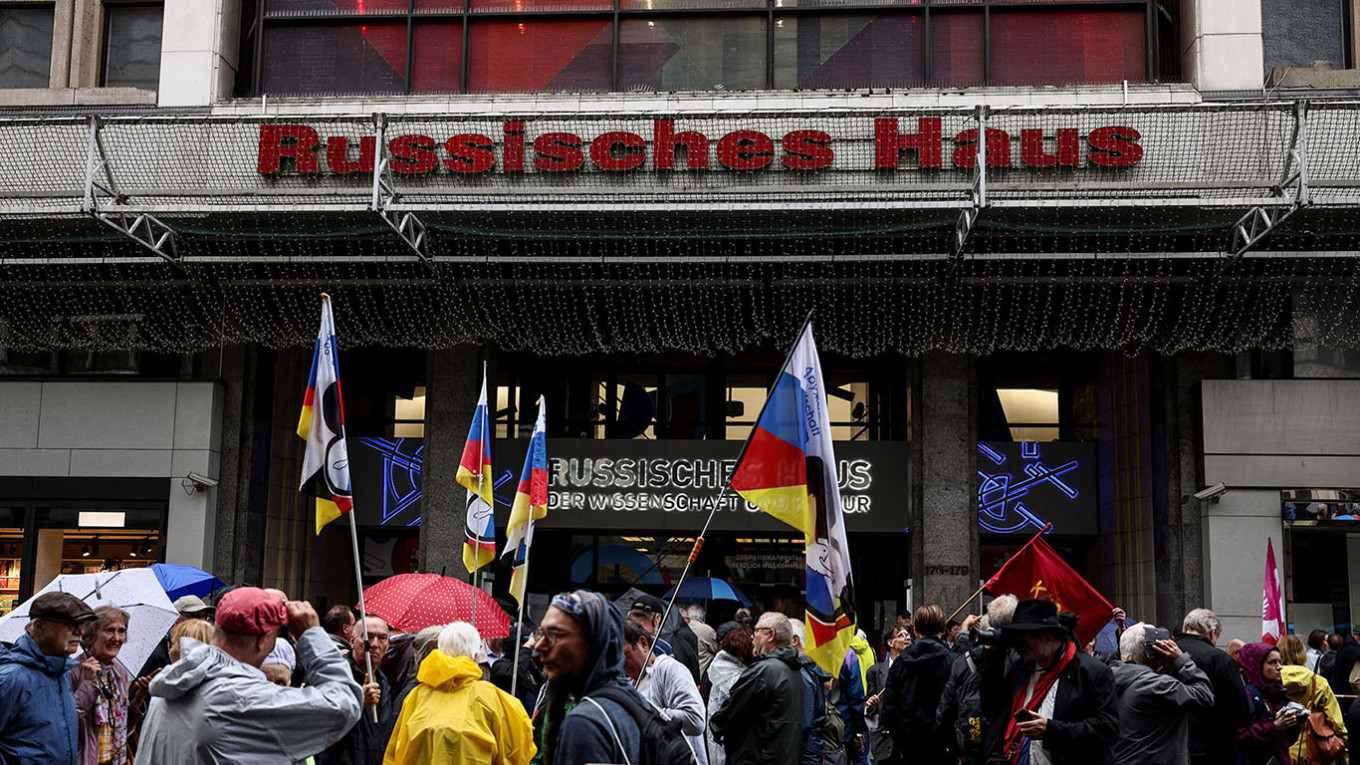
BERLIN — On a rainy Friday evening in Germany’s capital, hundreds of people gathered to protest the government’s announcement that it was terminating the lease of the Russian House, a Russian cultural center owned and operated by Moscow.
Demonstrators called on the government to reverse its decision, end its “russophobia” and stop what they called its constant “aggression” toward Russia.
“It’s the only place left for cultural exchange,” a protester told The Moscow Times, declining to give their name.
Down the street, a dozen or so supporters of Russia’s liberal opposition chanted slogans like “Russia without Putin” and held signs up with phrases like “The Kremlin shouldn’t have an address in Berlin.”
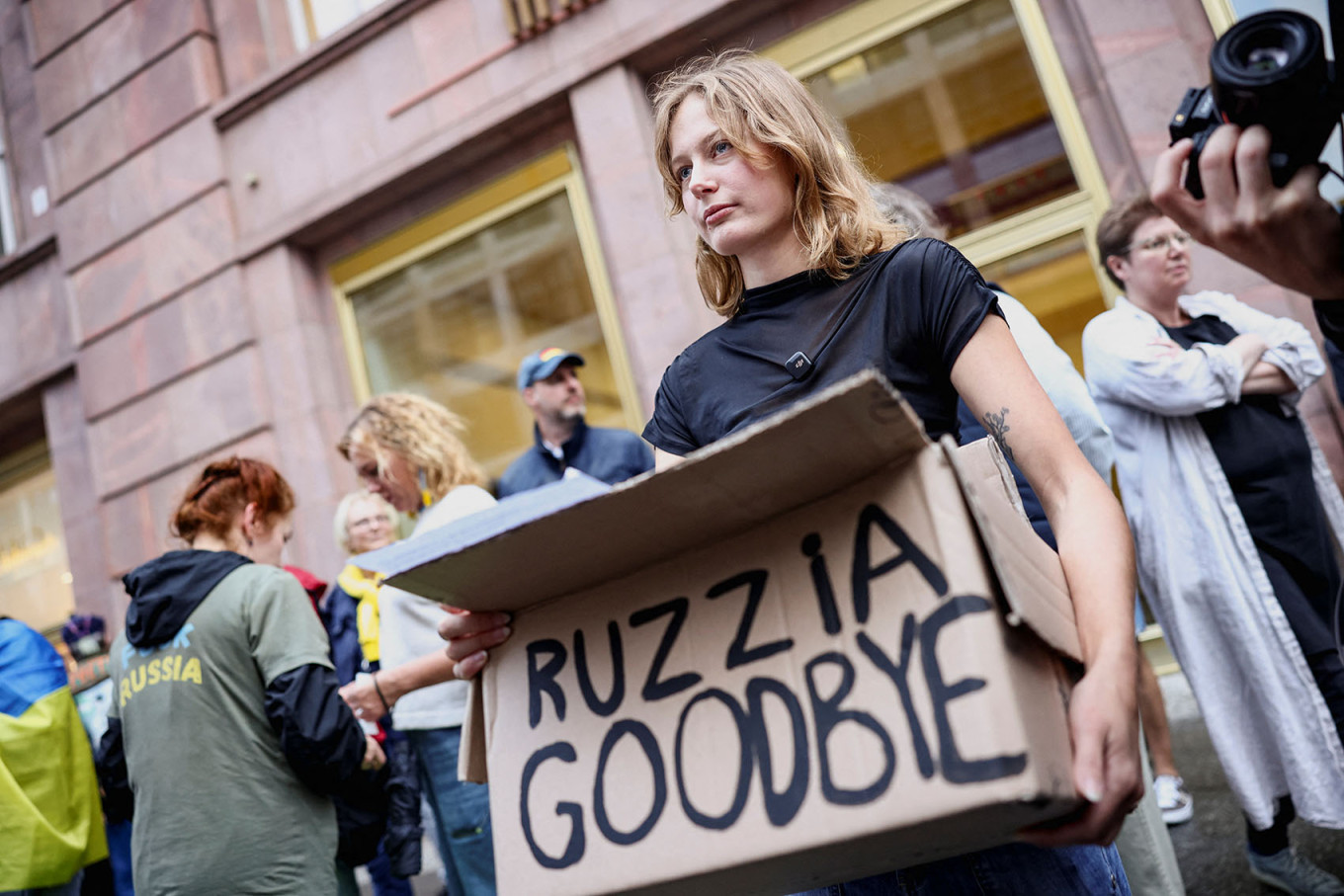
A bit further away, roughly 100 pro-Ukraine activists held up boxes that symbolized suitcases and bore slogans like “Suitcase, train station, Moscow,” and spoke about their efforts to close the Russian House dating back to 2022.
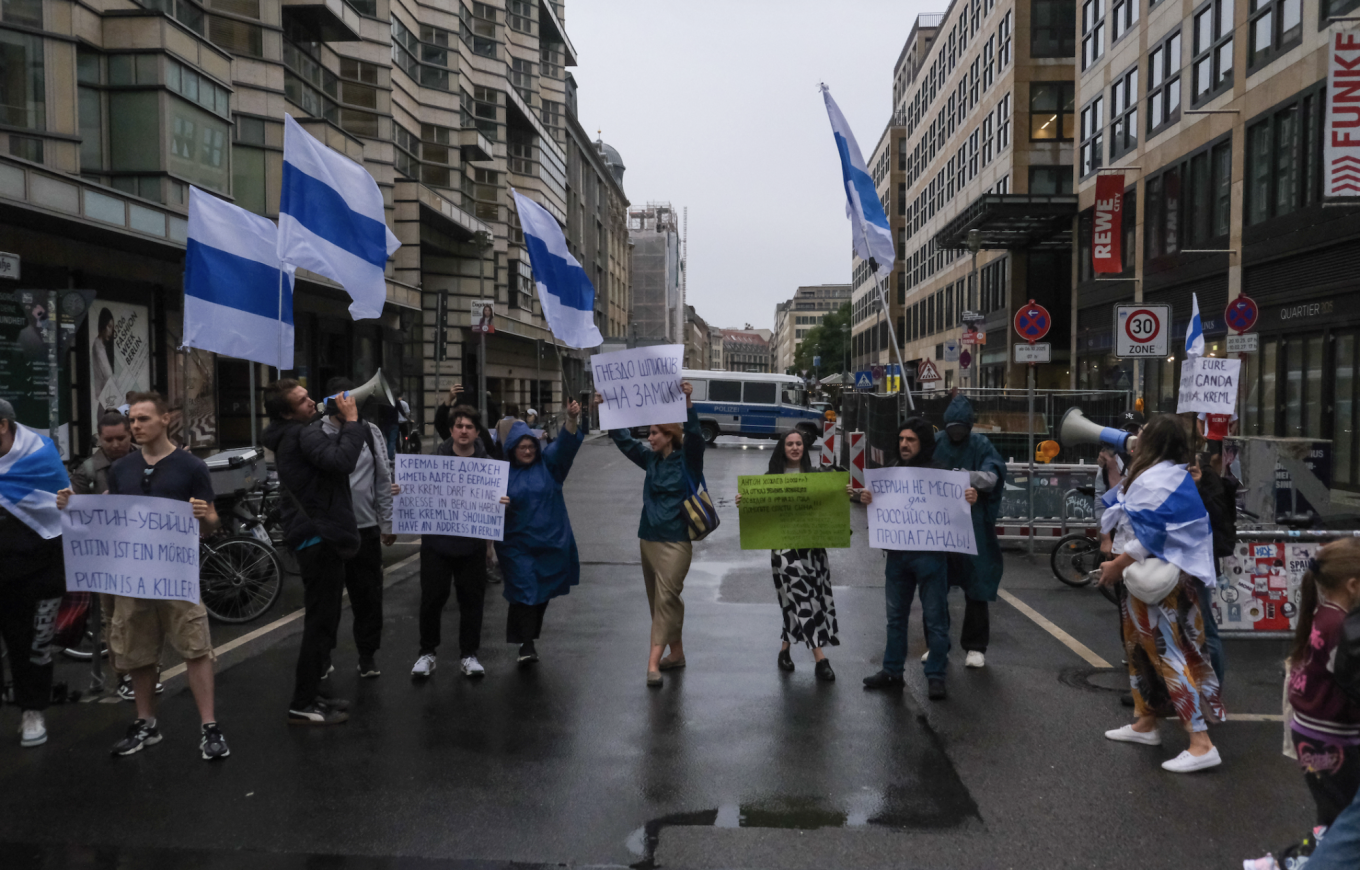
The flurry of demonstrations came after Germany said it would shutter the Russian House after it officially blamed Moscow for an attempted drone attack at Leipzig/Halle Airport in early August.
But closing it, or the bookstore on its premises — places many demonstrators viewed as places of cultural enrichment — may not prove as simple or straightforward as the government’s announcement made it seem.
Several protesters told The Moscow Times that the decision to close the Russian House was politically motivated and “regrettable.”
Shortly after Berlin announced its closure, the Russian government said that it would move to shut down Germany's Goethe-Institut cultural centers — a decision many demonstrators told The Moscow Times was a “different matter.”
What is the Russian House?
Located in Berlin-Mitte, what is now the Russian House opened in East Berlin in 1984 as the House of Soviet Science and Culture, and only later became the Russian House after the Soviet collapse. The seven-story, 30,000-square-meter building has been the subject of fierce debate since at least the start of Russia’s full-scale invasion of Ukraine in 2022.
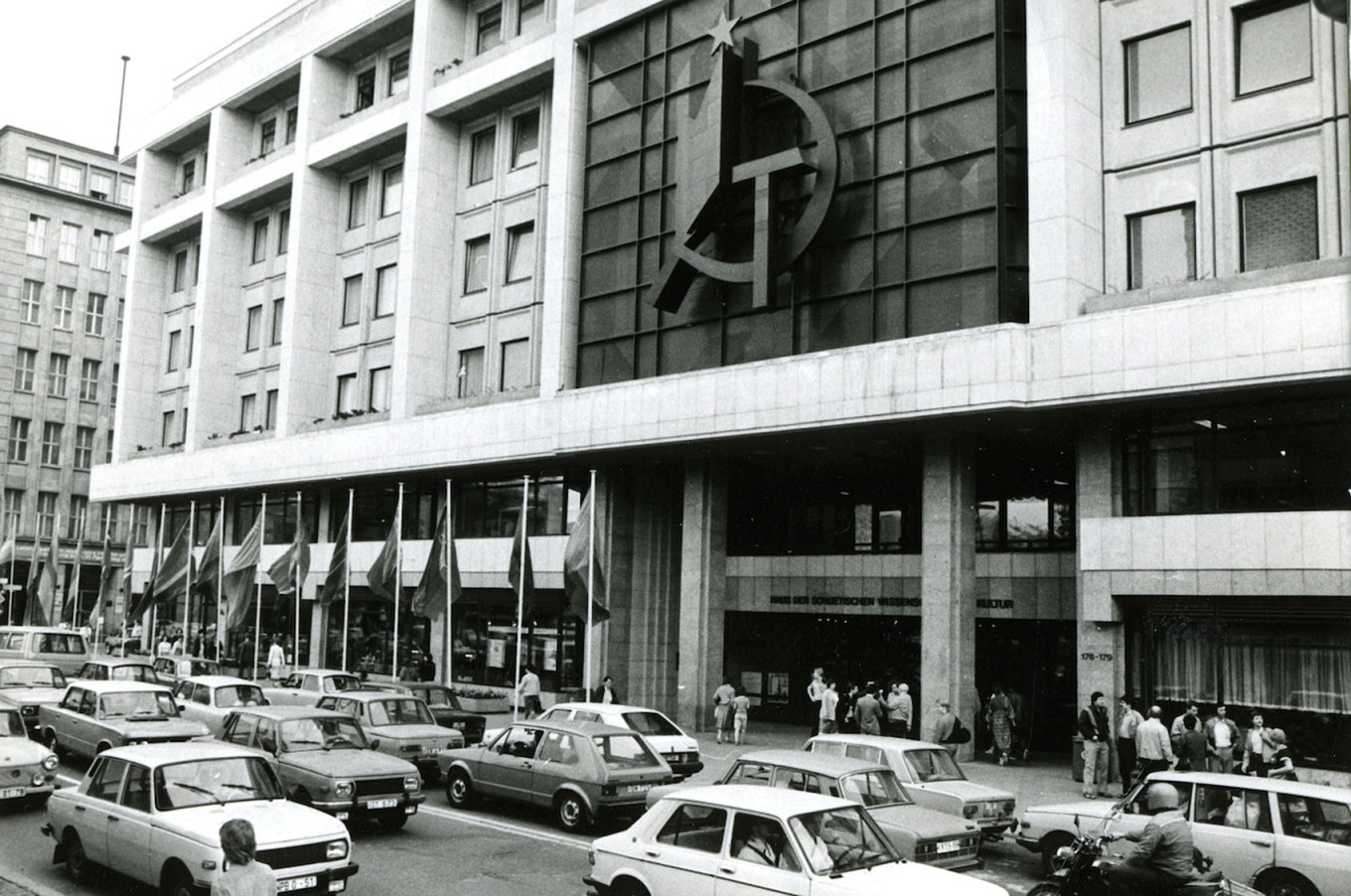
According to its website, the Russian House aims to “familiarize German visitors with important aspects and events in Russian culture and science,” as well as to support Russians in Germany “in preserving and developing their national and cultural identity.”
Organizers say the institution attracts around 200,000 visitors per year to its programming of Russian language courses, film screenings, cultural events, concerts and more.
In July, Director Pavel Izvolskiy told the newspaper nd that the Russian House’s mission was to build bridges between Germans and Russians, a mission it has followed since 1984.
It is operated and owned by Rossotrudnichestvo, the Russian government agency responsible for cultural exchange and foreign aid.
The European Union sanctioned Rossotrudnichestvo in 2022, calling it “the main state agency projecting the Kremlin’s soft power and hybrid influence, including the promotion of the so-called ‘Russkiy Mir’ concept,” and accusing it of organizing “international events aimed at consolidating a wider public perception of the occupied Ukrainian territories as Russian.”
Izvolskiy told nd that Rossotrudnichestvo is not the center’s operator, but “merely ensures” its operation.
But in June 2025, a Munich administrative court ruled that the Russian House was indeed subject to the sanctions placed on Rossotrudnichestvo, meaning that it would only be able to disburse funds for "maintenance operations.” Its German bank account was frozen, meaning all bank transactions must be approved by the German Bundesbank.
Can Germany even close the Russian House?
After the announcement was made, German media pointed out that closing the Russian House would not be as simple as the government made it seem.
Firstly, it is governed by a 2011-2012 intergovernmental treaty on cultural information centers. That treaty is automatically renewed unless terminated, with the current version ending on June 7, 2027.
According to the Frankfurter Allgemeine newspaper, the German government has until Dec. 6 to cancel the agreement.
Furthermore, the building remains the property of the Russian Federation. While the land belongs to Germany, the two governments signed a 2013 agreement which granted Russia its use for 99 years.
The Russian Embassy in Berlin wrote on X last week that the German government had ordered all Russian staff of the Russian House and the Russian consulate in Bonn to leave the country “as quickly as possible.”
However, a source connected to the Russian House told The Moscow Times that there “aren’t actually that many staff members who had moved there [solely for work],” and that many of the staff members have European passports.
Propaganda and espionage
One of the main controversies surrounding the Russian House stems from its 2022 screening of a documentary about the murder of Jews in Belarus which allegedly depicted Ukrainians as Nazis.
Another charge leveled at the Russian House is that the bookstore inside its premises sold bars of soap in the shape of Russian tanks.
“It's time we recognized that this isn't about mutual cultural exchange, but rather Russian war propaganda in Germany,” Green Party MP Robin Wagener, the politician who made that claim, told Deutsche Welle.
Moreover, France in July accused the Russian House of espionage, saying it was “used as a cover by Russian intelligence services.”
“Its energy consumption is significantly higher than what you would expect from a cultural institution,” said Roderich Kiesewetter, a German MP from the center-right Christian Democratic Union party.
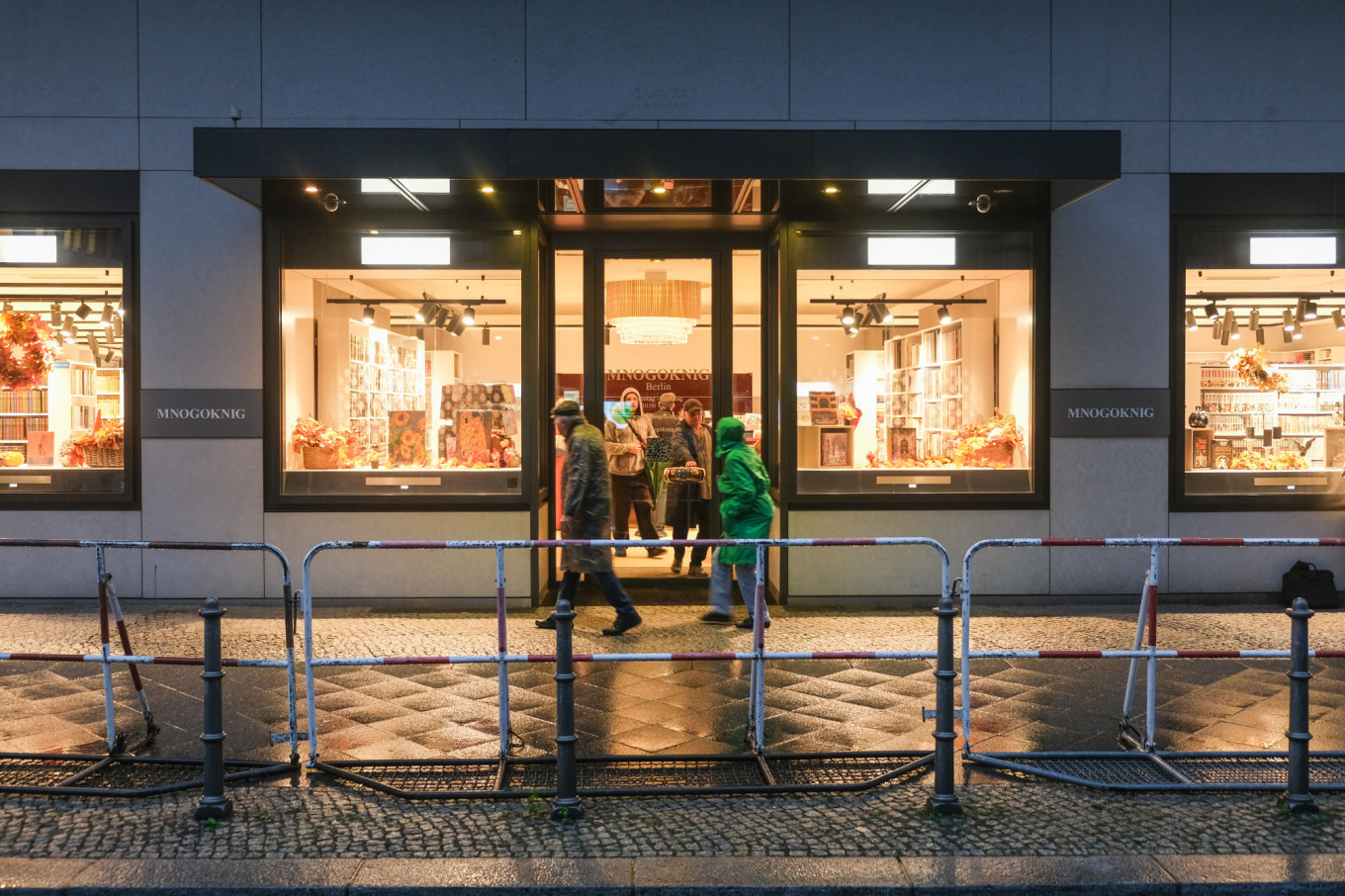
MnogoKnig
MnogoKnig, the bookstore inside the Russian House facing Friedrichstrasse, has also been accused of being an instrument of Russia’s propaganda apparatus for selling soaps and other products that evoke Russia’s war in Ukraine.
Yet the Latvia-based bookstore chain sells books in Russian, Ukrainian, English and other languages, including books banned in Russia such as slain Kremlin critic Alexei Navalny’s “Patriot” and journalist Elena Kostyuchenko’s “I Love Russia.”
The store made headlines last week after Latvia’s State Security Service raided four of the chain’s locations in Riga over alleged violations of EU sanctions.
“German newspapers accused [MnogoKnig] of selling coloring books featuring a T-34 tank, claiming this was Russian propaganda. But this is so far from the truth,” a source close to the Russian House told The Moscow Times, speaking on condition of anonymity. They added that the store also sells books that are banned in Russia.
“As far as propaganda goes, I think if the leadership in Moscow knew about this, they’d be more likely to scold the Russian House in Berlin for not being ‘Z’ enough,” they said, referring to a symbol widely used by pro-war Russians.
A Message from The Moscow Times:
Dear readers,
We are facing unprecedented challenges. Russia's Prosecutor General's Office has designated The Moscow Times as an "undesirable" organization, criminalizing our work and putting our staff at risk of prosecution. This follows our earlier unjust labeling as a "foreign agent."
These actions are direct attempts to silence independent journalism in Russia. The authorities claim our work "discredits the decisions of the Russian leadership." We see things differently: we strive to provide accurate, unbiased reporting on Russia.
We, the journalists of The Moscow Times, refuse to be silenced. But to continue our work, we need your help.
Your support, no matter how small, makes a world of difference. If you can, please support us monthly starting from just $2. It's quick to set up, and every contribution makes a significant impact.
By supporting The Moscow Times, you're defending open, independent journalism in the face of repression. Thank you for standing with us.

Remind me later.