
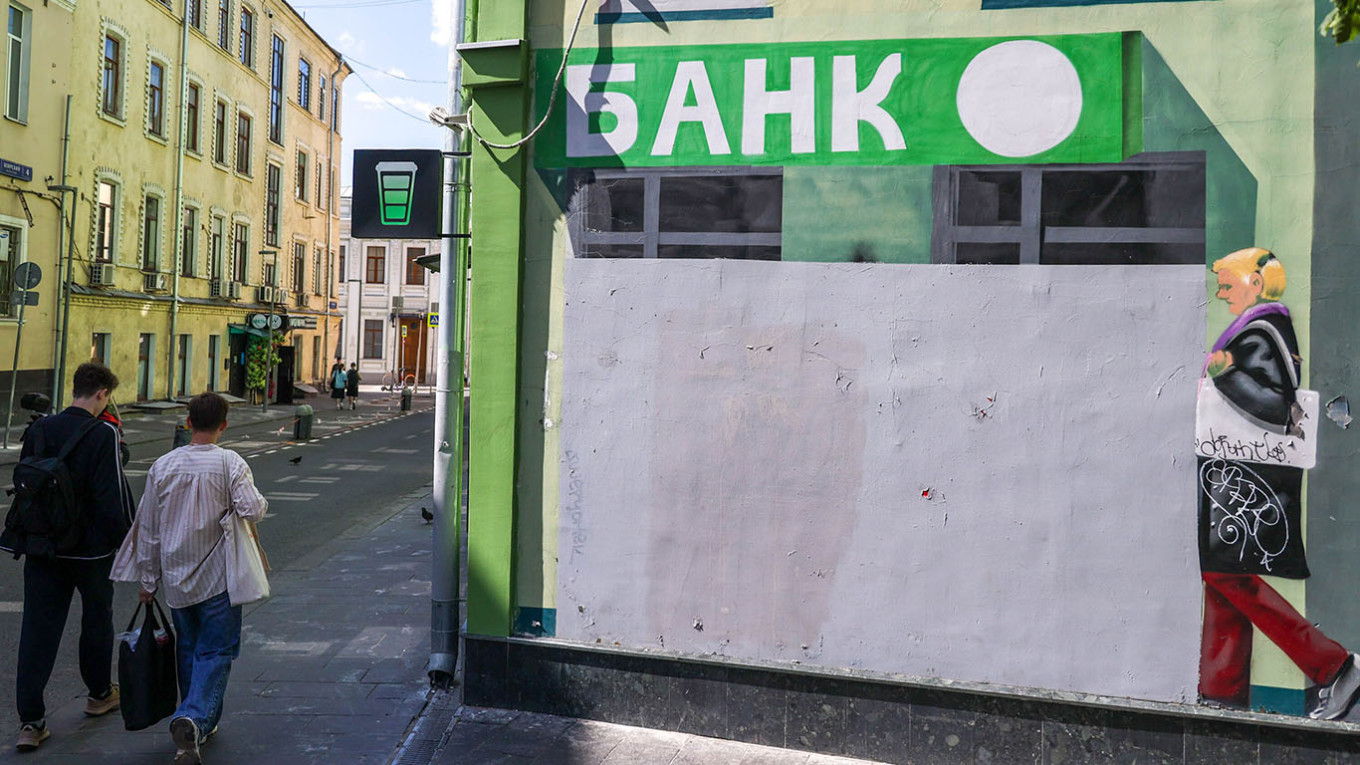
As the Kremlin prepares to roll out its latest financial innovation — the digital ruble — Russians are increasingly turning to a more old-fashioned alternative: cash.
Households and businesses have added 2.1 trillion rubles ($25.3 billion) to their cash holdings so far this year. That marks the largest increase recorded since the start of the war, surpassing the 1.8 trillion rubles ($21.7 billion) added between January and August 2023.
Back then, cash demand was driven by Russians fleeing the country amid military mobilization, panic during the short-lived Wagner mutiny and, reportedly, off-the-books payments to mercenaries fighting in Ukraine.
According to projections by Sberbank, Russia’s largest lender, cash in circulation could rise by 3.8 trillion rubles ($45.8 billion) over the course of 2026, making it the largest annual increase on record.
Much like in 2023, several factors are driving the current rush to cash.
First is simple practicality. Withdrawals began rising in February, when Russia started routinely jamming mobile signals to counter Ukrainian drone attacks. The jamming inadvertently knocked out card payment terminals and mobile banking apps.
“When the internet was shut down across the city in the spring, cards simply didn’t work. Cash was the only way to buy groceries or pay for services,” said Artyom, a Moscow resident who, like others cited in this story, asked to use a pseudonym.
Svetlana, who lives in the southern Samara region, said she also encountered regular problems when trying to use her card to pay for groceries at the supermarket earlier this year. However, she added, the internet outages mostly stopped by the summer.
Public anxiety is also playing a role. Despite official assurances that personal savings will not be touched to fund the military, Communist Party leader Gennady Zyuganov sparked alarm in June when he suggested that the 67 trillion rubles Russians hold in bank deposits were merely “enriching bankers” and should instead be put toward manufacturing or the war effort.
Dmitry Orlov, deputy chairman of Moscow-based Fora-Bank, said that high withdrawal rates reflect people hedging against both internet blackouts and “unsettling comments” from public officials about potentially freezing bank deposits.
At the same time, rumors of renewed military mobilization have led to a spike in people looking into the possibility of relocating abroad. Because Russian bank cards no longer work abroad, anyone planning to leave must withdraw cash to convert into euros or dollars.
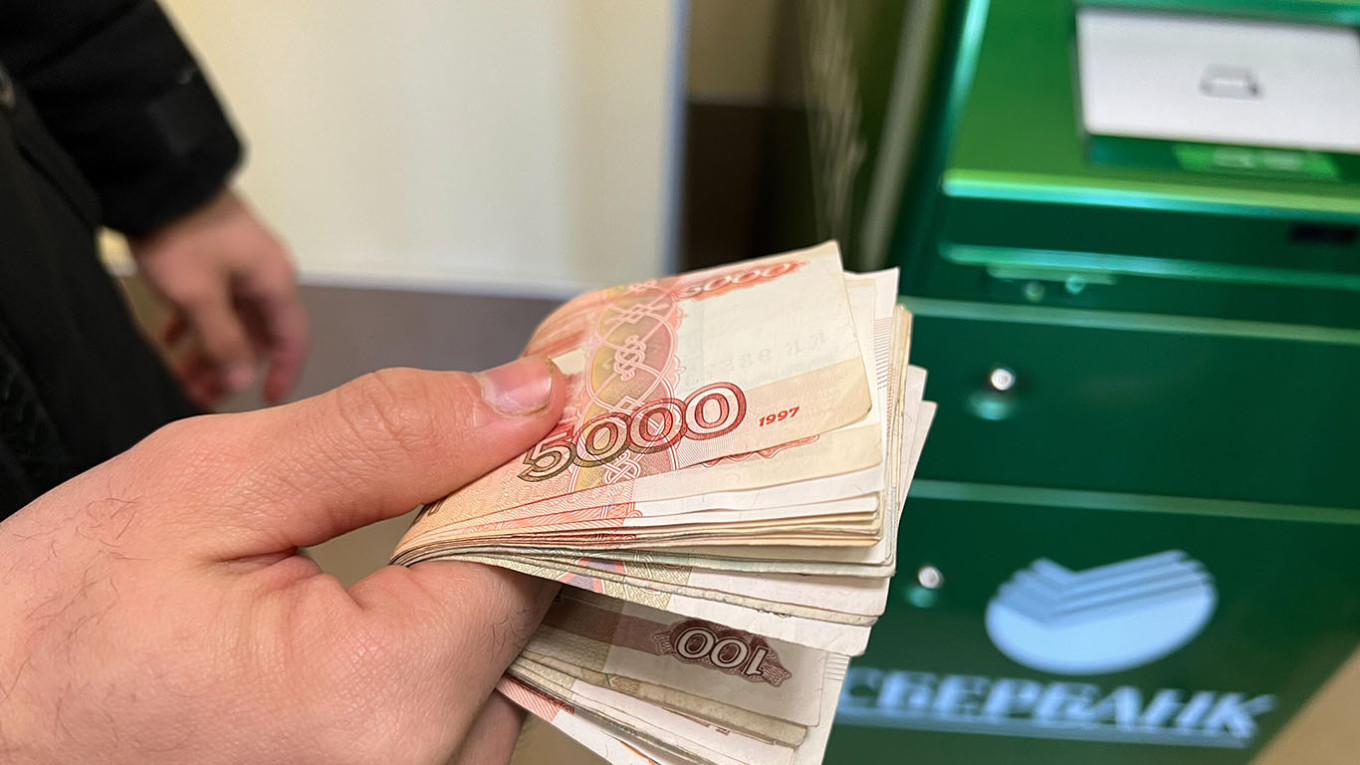
Businesses are also driving the shift, though mostly to avoid taxes. In January, the government raised the value-added tax (VAT) from 20% to 22% and lowered the income threshold at which companies are required to pay it. Operating off the books helps smaller businesses stay under that threshold or cut costs by paying employees and suppliers under the table.
In Moscow and smaller regional towns alike, small shops, coffee stands, repairmen and hotels frequently ask for cash, often offering small discounts to avoid electronic payments, according to multiple Russians who spoke to The Moscow Times.
Taras Skvortsov, Sberbank’s Chief Financial Officer, said that the main driver of cash leaving the banking system is companies keeping cash in circulation for “grey-market” transactions rather than depositing it back into banks.
That trend expands Russia’s infamous informal economy — already estimated at around 11% of GDP — and fuels tax evasion, with tax-related offenses jumping 17% year-over-year in the first half of 2026.
It also squeezes the banking sector. When money stays out of bank vaults, banks have less capital available to lend to consumers or to buy the government bonds that fund Russia’s budget deficit and infrastructure projects. Skvortsov warned that these liquidity shortages may eventually force the Central Bank to step in with support measures.
While the absolute numbers look staggering, the percentage growth tells a more subtle story. Cash in circulation grew 11.7% between January and July — roughly matching 2023 rates, and well below the 22.4% spike seen during the height of the COVID-19 pandemic.
Cash also still accounts for roughly 15% of Russia’s overall money supply (known to economists as M2, which combines physical currency with funds held in bank accounts) — a percentage that has remained largely stable.
“The recent trend of cash’s declining market share has reversed, but given normal seasonal fluctuations, nothing extreme is happening overall,” said Moscow-based economist Yegor Susin.
Janis Kluge, an economist at the German Institute for International and Security Affairs, noted that alongside cash, “transferable” checking accounts have also grown. This suggests Russians are not panic-draining their bank accounts all at once, but are instead keeping their funds easily accessible as falling interest rates lower the appeal of holding money in savings accounts.
“Russian households and businesses are prioritizing liquid assets over locked savings accounts,” Kluge explained. “The primary driver behind both rising cash and checking balances is simply falling interest rates.”
Last month, the Russian Central Bank cut its key interest rate for the tenth consecutive time to 14%, down from 18% a year prior, thus giving Russians less incentive to deposit their money in savings accounts.
A Message from The Moscow Times:
Dear readers,
We are facing unprecedented challenges. Russia's Prosecutor General's Office has designated The Moscow Times as an "undesirable" organization, criminalizing our work and putting our staff at risk of prosecution. This follows our earlier unjust labeling as a "foreign agent."
These actions are direct attempts to silence independent journalism in Russia. The authorities claim our work "discredits the decisions of the Russian leadership." We see things differently: we strive to provide accurate, unbiased reporting on Russia.
We, the journalists of The Moscow Times, refuse to be silenced. But to continue our work, we need your help.
Your support, no matter how small, makes a world of difference. If you can, please support us monthly starting from just $2. It's quick to set up, and every contribution makes a significant impact.
By supporting The Moscow Times, you're defending open, independent journalism in the face of repression. Thank you for standing with us.

Remind me later.