
Editor's Note: this article was published shortly before Russia's Supreme Court disqualified the Yabloko party following a lawsuit brought by a small far-right party. The article has been updated to reflect that fact, which only underscores why Russian elections are newsworthy.
A reader might be tempted to dismiss this article out of hand. Elections? In Russia? Come on now! Everyone knows that Russia is not a democracy and that the variegated parties fall in line on everything of importance, especially the war against Ukraine.
Nevertheless, Western observers should still pay attention to the upcoming parliamentary elections because they give us insights into Russian public opinion and the Kremlin’s vision for the country’s future.
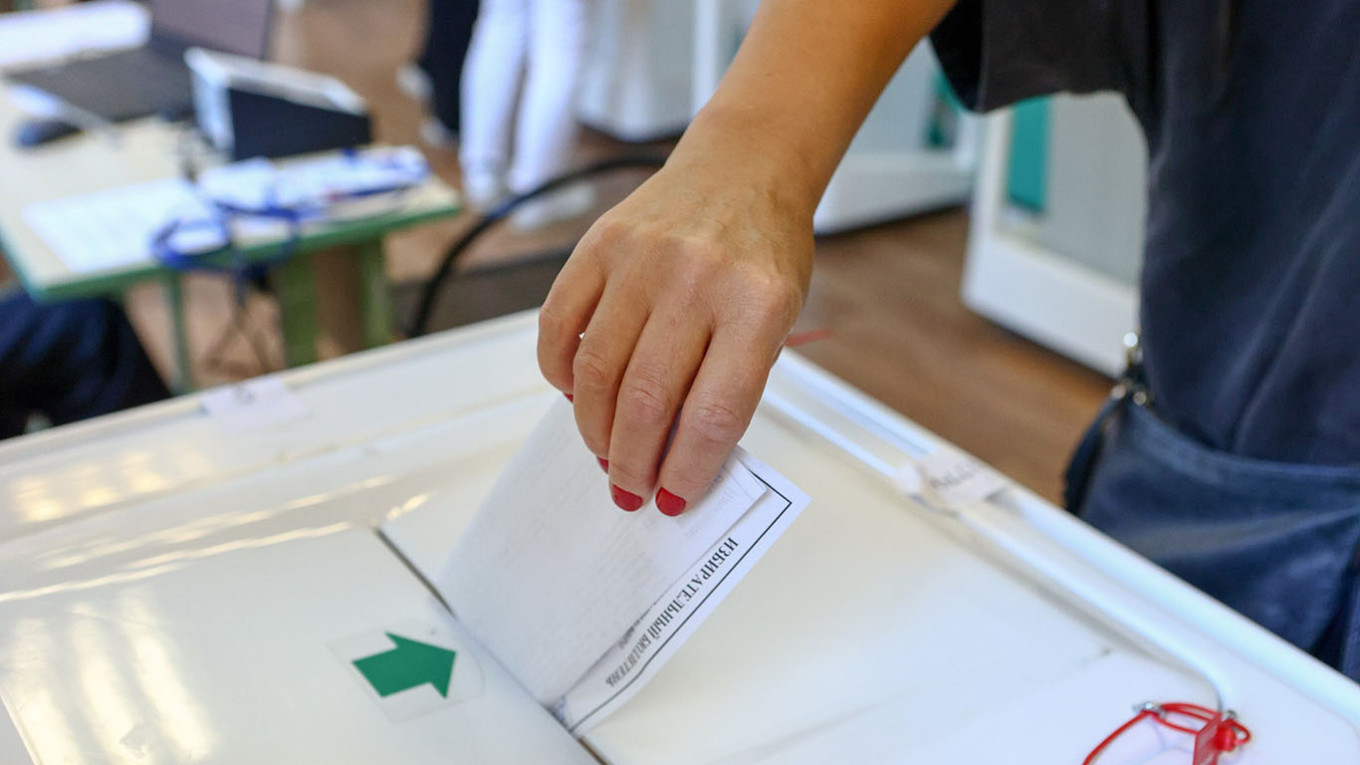
Scheduled to take place on September 18-20, the elections will determine the make-up of the State Duma, Russia’s lower chamber. 450 seats are up for grabs. When thinking about it, however, it is important to avoid the usual patterns of describing elections in functional democracies. Russian elections are neither free nor fair; they are rigged by the Kremlin while independent observers are intimidated or repressed.
The Kremlin’s approach to politics is one of theater. Russia is, unexpectedly for some, a deeply legalistic dictatorship. The Kremlin has been keeping up the appearance of respecting the letter of the law, though that law is regularly bent to the Kremlin’s will and disregarded when needed. Still, President Vladimir Putin seems to want to keep at least a veneer of legality. That is why activists jailed in Russia are normally sentenced under some article and after some form of a trial. Compare it with Iran or El Salvador, where there is often no legal justification for repression.
The Kremlin's interest in legality does not make the Russian system better than those more overt dictatorships. But understanding it allows us to comprehend why the Duma elections are still held every five years despite Russia’s democratic backsliding. They present an image of normality that, for the Kremlin, contrasts especially well with Ukraine, which has held no elections since the 2022 full-scale invasion. This year’s results will be rigged for certain — where independent observers accounted for over ten million rigged votes in the 2021 election. But the veneer of public participation in politics will be there, which is what matters to the Kremlin.
Some of the parties taking part are relics of the more chaotic but arguably more democratic past, like the Communist Party of the Russian Federation (CPRF). They were once a legitimate political force with presidential ambitions and still control mammoth funds and a loyal voting base across the country. Occasionally, they are able to mount serious challenges to the Kremlin, especially further from Moscow or on policies concerning social issues.
Lastly, the Kremlin uses elections as a barometer of public opinion. The Russian government is not a monolith, and there still exists space — though small and rapidly shrinking — for political experiments and discussion. The parties playing in Putin’s theater are there to represent various options for the country’s future development. They are known as the “systemic opposition.” They technically oppose the system but present no real challenge to it. One might say that their popularity and statements inform the system about social trends among the populace.
This is more important than one would think. Grigory Yavlinsky, leader of the only unequivocally anti-war liberal party, Yabloko, is still able to meet with Putin and the party is in direct contact with the all-powerful Presidential Administration. Yavlinsky explicitly framed Yabloko’s mission as “not intending to break into the Duma,” but giving Russians an option to express their anti-war sentiment legally.
There are limits to this, of course. On the day this article was published, Russia’s Supreme Court banned Yabloko from participating following a lawsuit from the small nationalist Rodina party.
Now that we know the main reasons why these elections are allowed in an authoritarian system, let’s examine the main options of the future offered to Russian voters. The current Duma is made up of five parties. The absolute majority of the seats, 315, is held by the dominant United Russia party, which governs in a coalition with the Liberal Democratic Party of Russia (LDPR). The latter is neither liberal nor democratic. They are supported by A Just Russia, whose chosen brand of social democracy was tainted by party head Sergei Mironov posing with a branded Wagner PMC sledgehammer, a reference to an infamous video of a Wagner fighter executing a former comrade. The opposition is represented by the CPRF with 57 seats and New People with 15.
It is safe to say that all of these parties will be elected in 2026. They all represent different visions of Russia, but none oppose the Kremlin where it matters, as they all toe the party line on the full-scale invasion of Ukraine. Non-systemic opposition activists call them “laboratory parties,” implying that they were created by the Kremlin’s political technologists.
But some, like the CPRF, have a storied history, claiming roots in the old Communist Party of the U.S.S.R. Their maverick leader Gennady Zyuganov was once seen as a serious threat to Boris Yeltsin’s presidency. Today, Zyuganov is firmly on Putin’s side, even proposing using trillions of Russians’ savings to finance the war.
Interestingly though, the party is still the chosen home of some genuine opposition-minded people. They have bona fide opposition politicians in their ranks, like populist Nikolai Bondarenko. In the more remote regions away from Moscow, they are seen as the only force able to challenge United Russia. In 2018, they were integral to the protests against increasing the pension age. Their conservative, yet socially-minded vision — traditional values married to social infrastructure and respect for Soviet heritage — is popular with pensioners, who make up over 25% of Russian voters. Just like anywhere else, the elderly vote more than younger age demographics.
The LDPR is experiencing a personality crisis, as the party was historically built around the character of Vladimir Zhirinovsky, a loudmouth nationalist who generated heaps of political memes every other time he made an appearance on the news. Take his 2003 appeal to then-United States president George W. Bush: “Don’t you dare shoot at Baghdad. Let’s just bomb Tbilisi together!”
Zhirinovsky, who died in 2022, was a relic of the rambunctious political life of the 1990s. Without him, the party lost much of its appeal. It is now run by known sex pest Leonid Slutsky, who doesn’t have an iota of Zhirinovsky’s charisma. Not to mention that now the LDPR is struggling to stay relevant also because its typical hypernationalist message is somewhat overshadowed by other major parties competing for the most virulently pro-war screed.
Their governing partner is United Russia, the party of power, headed by former president Dmitry Medvedev. While it once projected the image of respectable centrists with a somewhat right-wing inclination, United Russia now finds itself having to ramp up the pro-war rhetoric, best exemplified by Medvedev claiming at their 2026 congress that the entire Ukrainian nation “will be destroyed.” Here, there are unlikely to be any surprises: United Russia will win a rigged majority no matter what.
There is not much to say about A Just Russia, which was supposed to represent a slightly more tame and hip version of the Communists until Mironov expressed his wholehearted support for Yevgeny Prigozhin. Interestingly, he said he will keep the sledgehammer “until Zhenya returns.” Don’t interpret this as some anti-Putin message. There are still memorials to Prigozhin all over Russia, which are allowed to exist within the Kremlin’s doublethink.
It is worth paying attention to the two liberal and (one much more than the other) anti-war parties: New People and now-barred Yabloko. The two couldn’t be more different. New People has been a part of the Kremlin’s system from its founding in 2020. Yet it was supposed to represent a more liberal, less repressive vision for Russia. The party attracted some genuine popularity amongst Russians for addressing issues like internet censorship or domestic violence. It is also home to people like Sardana Avksentieva, former mayor of Yakutsk, who even received a glowing Economist profile in the kinder era of 2019.
Nevertheless, New People falls in line on the issues of state security, voting “aye” for the recent bill that rights defenders called “civic death” for exiled Russians.
Yabloko, on the other hand, is the unique case of still-existing genuine opposition, which is supposedly why the Supreme Court canceled their candidates’ registrations. Rooted in the Yeltsin era, Yabloko is run by Grigory Yavlinsky. A former boxer and mine inspector, Yavlinsky is a liberal maverick in his own right. He is so liberal, in fact, that he expelled Alexei Navalny from the party for nationalism — and later had Ilya Yashin expelled too for “causing political damage."
For all its faults (Yabloko is hated by many in opposition circles for the above reasons and others), Yabloko is the only party that offers a clearly anti-war platform, which spells out the aims of "ceasefire and not allowing a nuclear war” in 44 words. That is why anti-war Russian politicians in exile still support Yabloko, even Yashin. There is now a bubbling pro-Yabloko campaign underway among Russian exiles. Its effectiveness is doubtful. The exiles themselves were already fighting over how exactly to conduct this campaign and Yabloko predictably disowned its exiled supporters. Now, it’s unclear who they will support.
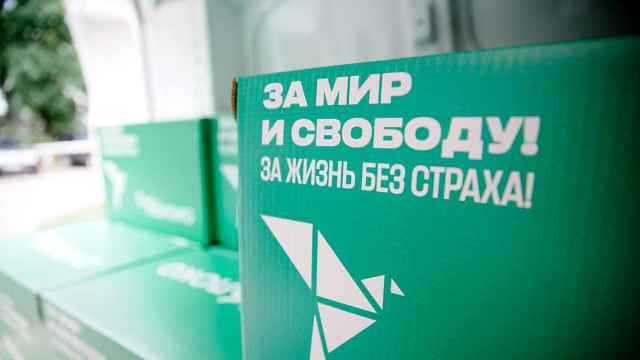
It was never likely that Yabloko could even make it to the Duma. Their true aim appears to be demonstrating that anti-war sentiment still exists, as they put in their slogan, “Yabloko is for Peace.” And for that, they have already been punished.
This election is sure to prove difficult to conduct, especially after Kyiv showed it is more than willing and capable to target Russian infrastructure. We will also never learn the real results — or at least not until a post-Putinist Russia opens the archives.
There is polling that gives us some glimpses in Russian electoral preferences. 70 % supposedly told state pollster VTsIOM that they will vote. Of that number, 41% support United Russia, 13% back the CPRF, 11% for New People, with the LDPR and A Just Russia on 8 and 6% respectively. This implies that Yabloko will only get 1-2 %. This polling, of course, is as deeply flawed as any political polling that comes out of Russia – we should not trust polls conducted in an atmosphere of repression and fear.
What we can see so far, though, is that Russians organically engage with issues that would be important anywhere else in the world: housing, pensions, energy prices and so on. They are also reluctant to support the hypermilitarism that seems to be engineered solely for the Kremlin’s consumption. Instead, they are supporting parties like New People for their stances against progressive issues like internet censorship or domestic violence.
Russians are, after all, regular people in a system captured by a dictatorship that is making a show out of what otherwise would have been a real political life.
A Message from The Moscow Times:
Dear readers,
We are facing unprecedented challenges. Russia's Prosecutor General's Office has designated The Moscow Times as an "undesirable" organization, criminalizing our work and putting our staff at risk of prosecution. This follows our earlier unjust labeling as a "foreign agent."
These actions are direct attempts to silence independent journalism in Russia. The authorities claim our work "discredits the decisions of the Russian leadership." We see things differently: we strive to provide accurate, unbiased reporting on Russia.
We, the journalists of The Moscow Times, refuse to be silenced. But to continue our work, we need your help.
Your support, no matter how small, makes a world of difference. If you can, please support us monthly starting from just $2. It's quick to set up, and every contribution makes a significant impact.
By supporting The Moscow Times, you're defending open, independent journalism in the face of repression. Thank you for standing with us.

Remind me later.