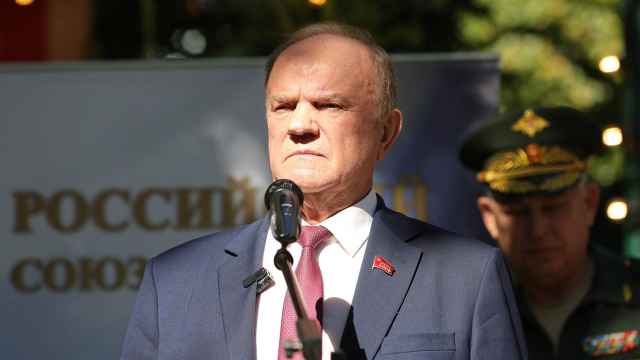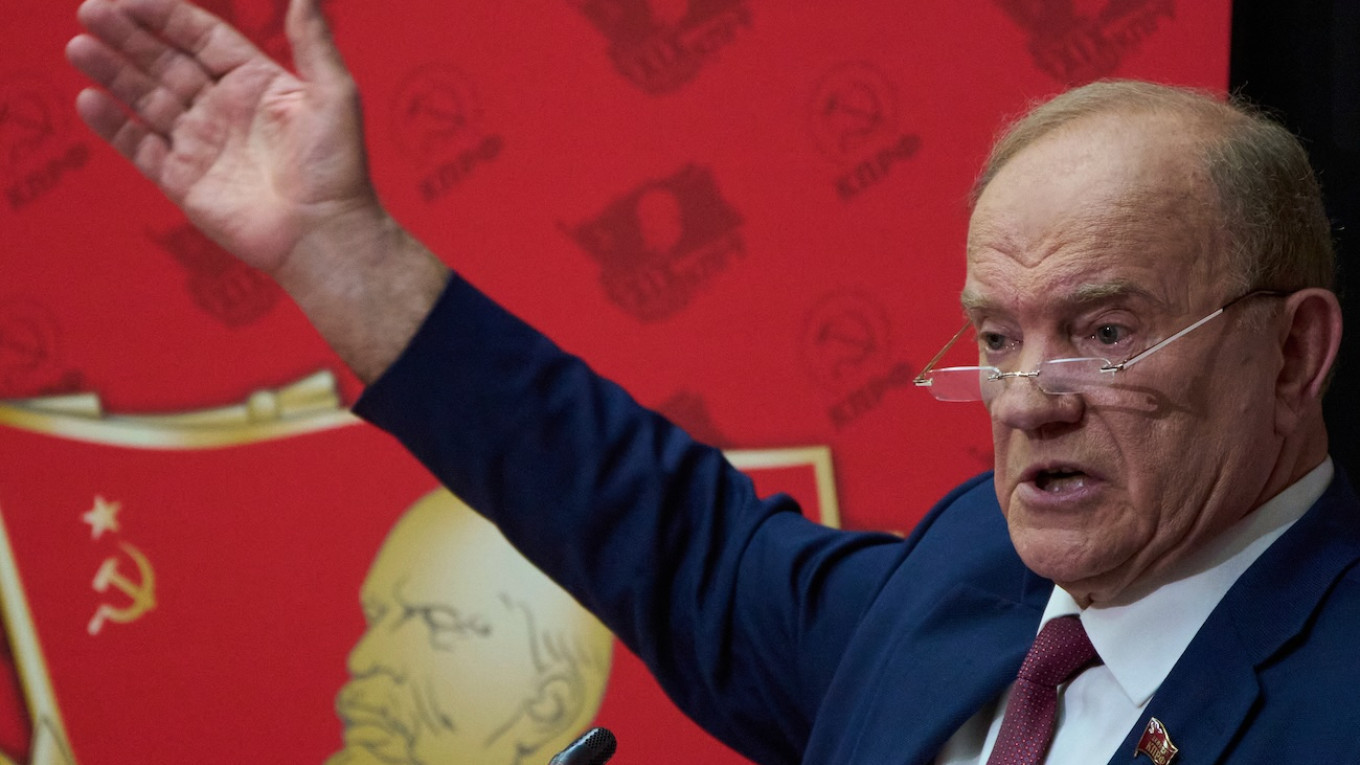
Veteran Russian Communist Party leader Gennady Zyuganov suggested using part of the trillions of rubles held in bank accounts by households and businesses to support the economy and state finances, prompting criticism from senior lawmakers and renewed debate over the security of private savings.
Speaking at the Communist Party's election congress, Zyuganov said Russian citizens held 67 trillion rubles ($904.5 billion) in bank deposits, while businesses had another 63 trillion rubles ($850.5 billion), for a combined total of 130 trillion rubles ($1.76 trillion).
"That is three state budgets," Zyuganov was quoted as saying by newspapers Vedomosti and broadcaster RTVI. "They are sitting there and enriching bankers."
Zyuganov argued that around 30 trillion rubles ($405 billion) could be mobilized quickly and said President Vladimir Putin, as commander-in-chief during wartime, could resolve the issue with a single decree.
The remarks touched on a sensitive issue in Russia, where officials have repeatedly sought to reassure savers that their deposits are safe despite persistent speculation that authorities could one day restrict access to bank accounts or freeze funds amid wartime economic pressures.
Russia's banks have attracted record deposits in recent years as high interest rates encouraged households and companies to park cash in savings accounts.
Anatoly Aksakov, chairman of the State Duma's Financial Markets Committee, dismissed Zyuganov's comments as irresponsible and described them as a provocation.
"To make such statements is extremely irresponsible," Aksakov told RTVI. "Someone is deliberately using Zyuganov."
Aksakov said there was no rationale for seizing or freezing deposits because bank savings already serve as a key source of funding for loans and financial operations.
"The money held in deposits is a resource for financing the economy and carrying out financial transactions," he said. "If you freeze or take it away, you deprive the economy of money. Neither the government nor businesses are interested in that. It is nonsense."
Concerns about the possible freezing of bank deposits first gained attention in November last year when Andrei Zubets, director of the Institute for Socio-Economic Research at the government-affiliated Financial University, suggested authorities could consider such a step if Russians began withdrawing large amounts of savings as interest rates declined.
Zubets argued that households had accumulated "tens of trillions of rubles" in bank accounts and warned that a rapid release of those funds into consumer spending could fuel runaway inflation.
"People have accumulated enormous sums in their accounts," he said at the time. "If rates are cut and they start withdrawing that money and bringing it to the market, rampant inflation will begin."
Central Bank Governor Elvira Nabiullina dismissed the idea as "nonsense," saying Russian banks remained profitable and financially stable.
Last year, Aksakov also argued that rumors about a potential deposit freeze had been spread by property developers seeking to encourage Russians to move money out of savings accounts and into real estate purchases.
Russia's banking sector has seen deposits surge since the Central Bank sharply raised interest rates to combat inflation following the Kremlin's 2022 invasion of Ukraine and the subsequent wave of Western sanctions.
High deposit rates have encouraged households to keep savings in banks, providing lenders with a substantial funding base despite economic uncertainty.
Read this article in Russian at The Moscow Times' Russian service.
A Message from The Moscow Times:
Dear readers,
We are facing unprecedented challenges. Russia's Prosecutor General's Office has designated The Moscow Times as an "undesirable" organization, criminalizing our work and putting our staff at risk of prosecution. This follows our earlier unjust labeling as a "foreign agent."
These actions are direct attempts to silence independent journalism in Russia. The authorities claim our work "discredits the decisions of the Russian leadership." We see things differently: we strive to provide accurate, unbiased reporting on Russia.
We, the journalists of The Moscow Times, refuse to be silenced. But to continue our work, we need your help.
Your support, no matter how small, makes a world of difference. If you can, please support us monthly starting from just $2. It's quick to set up, and every contribution makes a significant impact.
By supporting The Moscow Times, you're defending open, independent journalism in the face of repression. Thank you for standing with us.

Remind me later.