
On July 13, United States Secretary of State Marco Rubio announced that the Trump administration would seek to “dismantle” the International Criminal Court (ICC), “brick by brick, if necessary.” President Vladimir Putin, for whom the ICC has issued an arrest warrant, must have been rubbing his hands with glee when he heard.
U.S. hostility to the only permanent international criminal court is hardly new or out of step with the Republican Party. In 2002, the George W. Bush administration notified the UN Secretary-General that the United States did not intend to become a party to the Rome Statute. Congress then adopted a law known as the “Hague Invasion Act,” which authorised the president to use “all means necessary and appropriate” to secure the release of certain U.S. or allied personnel detained by, on behalf of, or at the request of the Court.
President Donald Trump’s first administration later imposed sanctions on ICC officials over the Afghanistan investigation. The second Trump administration went further in 2025, sanctioning ICC prosecutors and judges, including officials connected with investigations concerning Palestine and Afghanistan. The consequences went beyond the listed individuals, prohibiting U.S. citizens, unless authorised, from providing funds, goods or services to or for the benefit of any designated person, which would be punishable by up to 20 years imprisonment. The chilling effect this creates extends to Court personnel, lawyers, NGOs, scholars, journalists, banks and technology companies whose ordinary work may involve dealings with a sanctioned person.
Rubio’s announcement suggests that the United States is now prepared to target the Court itself with effects that ripple out to affect states and organisations that support it. Washington cannot legally abolish a treaty court created by other sovereign states. But it can try to make the Court inoperable by exploiting the global reach of the dollar, U.S.-based technology and American financial and communications infrastructure. “Dismantling” the ICC is legally impossible, but making it operationally ineffective is not.
Having spent much of my professional life studying and teaching international criminal law, I have grown accustomed to political attacks on the ICC. Governments under scrutiny routinely accuse the Court of bias, incompetence or political motivation. The Trump administration announcement, however, goes beyond harsh criticism or hostility and increasingly resembles a declaration of war.
Yet Rubio did not substantiate any casus belli for this escalation. No current ICC investigation is directed at US officials or military personnel. The Office of the Prosecutor closed the Venezuela II preliminary examination, initiated by the Maduro government’s referral concerning the humanitarian consequences of U.S. sanctions. The Afghanistan investigation formally remains open, but will focus on alleged crimes by the Taliban and Islamic State–Khorasan Province and “deprioritize” alleged conduct by U.S. personnel. Rubio instead invoked the Palestine investigation and hypothetical future proceedings against U.S. “soldiers, border guards, police officers and prosecutors.”
The legal arguments offered for this campaign are essentially the United States’ familiar “fundamental objections” to the ICC. But they do not survive even an elementary reading of the Rome Statute.
It is true that the United States is not a party to the Statute, but that does not preclude Americans from being arrested or prosecuted on the territory of a country that is.
The proposition that a foreign national who commits a crime on the territory of another state is ordinarily subject to that state’s criminal jurisdiction is hardly a radical one. It is that territorial state, not the one the suspect is a citizen of, that gives that consent.
In important respects, the ICC may exercise less jurisdiction than states. National courts routinely exercise territorial jurisdiction over foreigners and may also rely, depending on domestic law and the offence, on nationality, passive-personality, protective or universal-jurisdiction principles. The scope and conditions of those forms of extraterritorial jurisdiction vary, and universal jurisdiction remains contested in important respects. The ICC, by contrast, is limited to four categories of international crimes, to defined temporal and territorial or nationality links. The contradiction is especially striking after the US itself invoked domestic criminal prosecution as part of the justification for its January 2026 operation in Venezuela, in a manifest breach of international law.
Nor is the ICC designed to replace functioning national courts. A case is inadmissible when it is genuinely being investigated or prosecuted by a state with jurisdiction, unless that state is unwilling or unable genuinely to carry out the proceedings. This safeguard applies equally even when the relevant state is not a party, including the United States.
As a Russian lawyer, I cannot help but feel a sense of déjà vu. For years, I watched Russian officials dismiss international courts as politicized institutions interfering with national sovereignty. Russia rejected the ICC’s Ukraine investigation on the grounds that Russia was not a party to the Rome Statute. But the Court’s jurisdiction over crimes committed on Ukrainian territory rested first on Ukraine’s status as a state party. Russia’s non-membership does not protect it or its citizens.
Moscow has also moved from legal argument to intimidation. It opened criminal proceedings against ICC officials, placed them on wanted lists and, in December 2025, secured convictions in absentia of the Prosecutor and eight judges for performing their functions under the Rome Statute. Russia has also criminalized providing any assistance to the ICC, and even adopted its own version of the Hague Invasion Act.
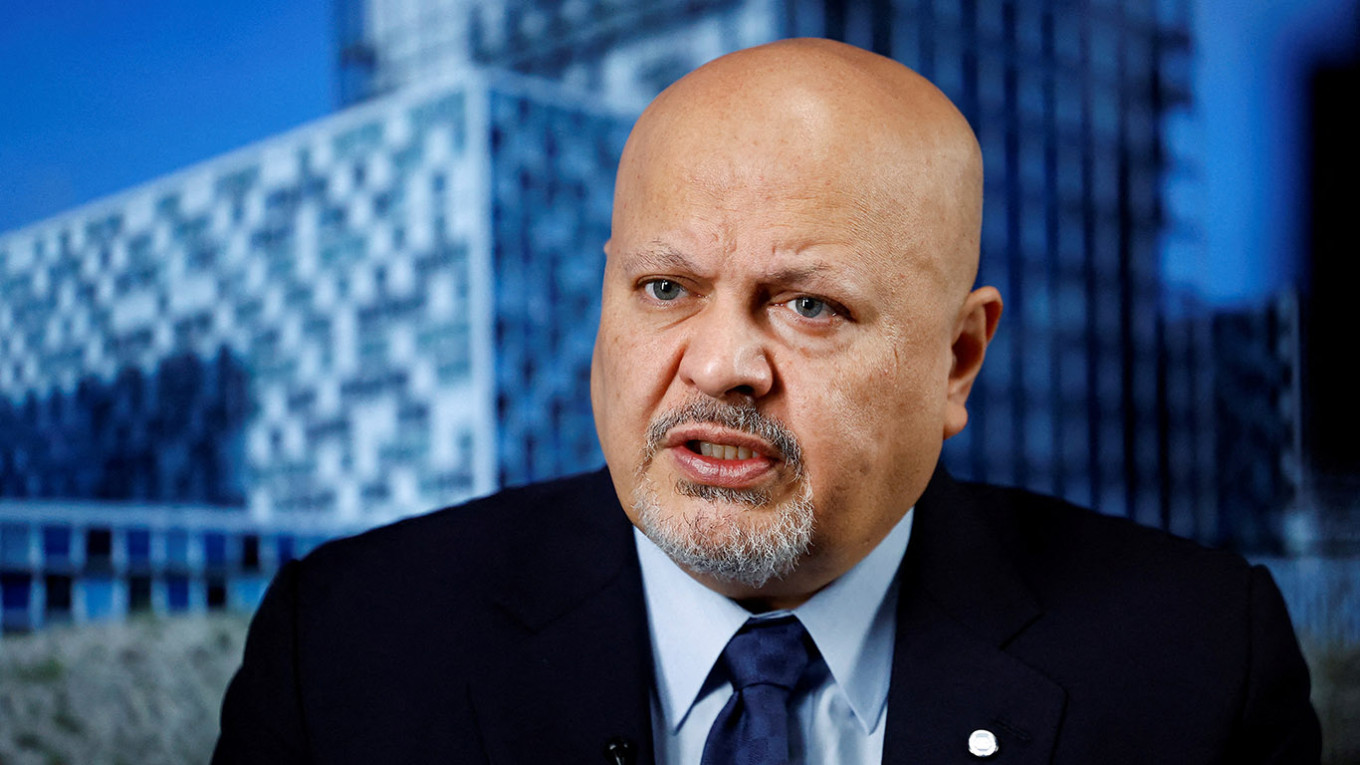
The language may be different, but the underlying logic is similar: international law is useful when it constrains others and illegitimate when it constrains us. This double standard was perhaps best expressed by the late Republican Senator Lindsey Graham. He strongly welcomed the ICC’s warrant for Vladimir Putin, while he and Rubio, then a senator, had supported international accountability for Russian crimes in Ukraine. Yet when the Court turned to Israel, Prosecutor Karim Khan later recalled Graham telling him “This court is for Africa and thugs like Putin. It is not for democracies like Israel and the United States of America.” In this conception, the Court is legitimate when it pursues Russia or African defendants, but illegitimate when it approaches Washington’s friends.
The current U.S. administration may not like Russia or, in some cases, Russians. But it clearly respects Putin’s authority and, sadly, shares much of his view of international law. This does not make Washington and Moscow politically equivalent or even suggest collusion. It means that, on this fundamental question, their logic is converging.
Nor does the comparison require pretending that the ICC is beyond criticism. Questioning its historical concentration on Africa, its limited number of final convictions, the opacity of some warrant proceedings and the choices made by the Office of the Prosecutor is perfectly legitimate.
The current challenge may be more serious than the Court’s many previous crises because it attacks the conditions it needs to operate in the first place. The historical reversal is stark. The United States helped create or sustain accountability mechanisms for the former Yugoslavia, Rwanda and Sierra Leone and supported the Security Council’s referral of Darfur to the ICC. Russia, too, was not always an enemy of the Court: it signed the Rome Statute — though it rescinded its signature in 2016 — and voted for the Security Council referrals of both Darfur and Libya.
In his opening statement at Nuremberg on Nov. 21, 1945, U.S. Chief Prosecutor Justice Robert Jackson warned: “The record on which we judge these defendants today is the record on which history will judge us tomorrow.” His point was that a legal principle loses legitimacy when its authors insist that it applies only to defeated enemies.
The deepest historical irony is that the two states that helped lay the foundations of modern international criminal justice — the United States and the Soviet Union, whose successor is today’s Russia — are now united by a common conviction: international law should apply to everyone except themselves.

A Message from The Moscow Times:
Dear readers,
We are facing unprecedented challenges. Russia's Prosecutor General's Office has designated The Moscow Times as an "undesirable" organization, criminalizing our work and putting our staff at risk of prosecution. This follows our earlier unjust labeling as a "foreign agent."
These actions are direct attempts to silence independent journalism in Russia. The authorities claim our work "discredits the decisions of the Russian leadership." We see things differently: we strive to provide accurate, unbiased reporting on Russia.
We, the journalists of The Moscow Times, refuse to be silenced. But to continue our work, we need your help.
Your support, no matter how small, makes a world of difference. If you can, please support us monthly starting from just $2. It's quick to set up, and every contribution makes a significant impact.
By supporting The Moscow Times, you're defending open, independent journalism in the face of repression. Thank you for standing with us.

Remind me later.