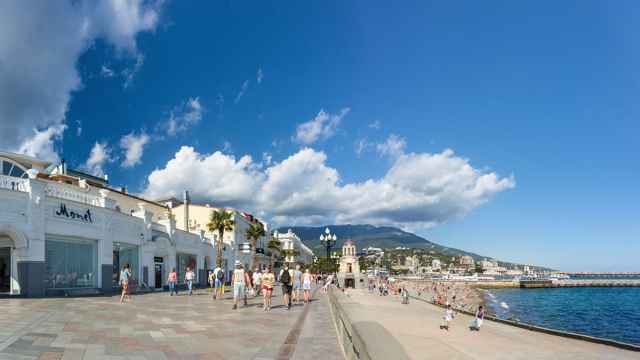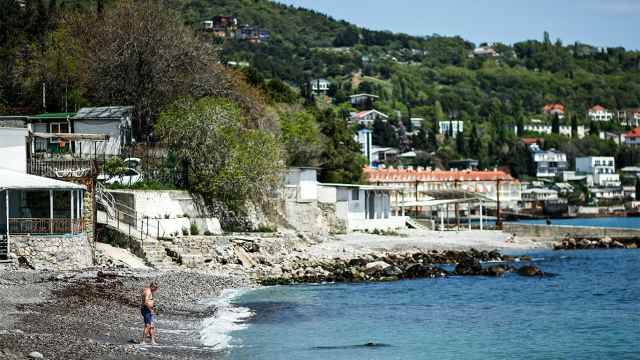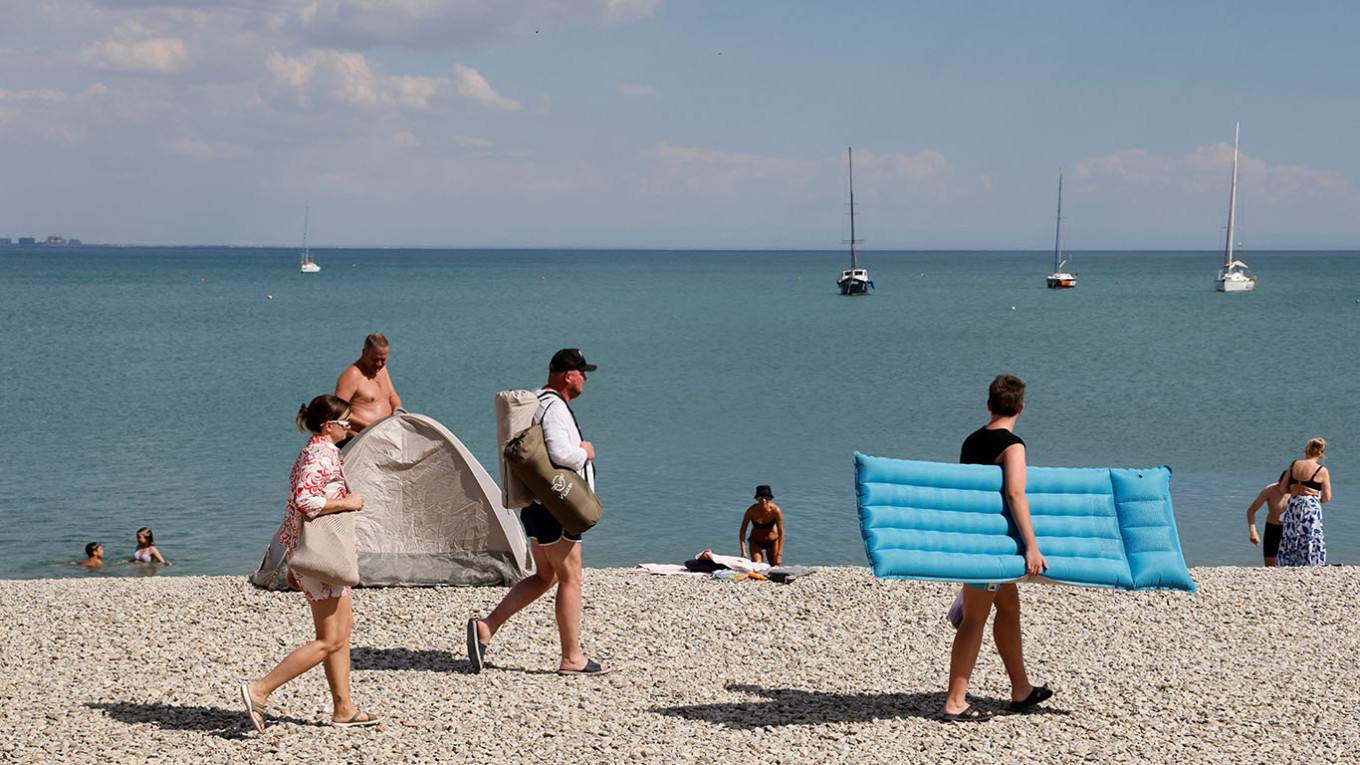
Russia's government has allocated more than 4.3 billion rubles ($56.3 million) from its reserve fund to support the tourism sector in the annexed Crimean peninsula and the city of Sevastopol, saying thousands of businesses have been hit by the fallout from Ukrainian attacks.
The funding comes as Kyiv steps up its campaign to disrupt Russian logistics and infrastructure supporting the occupied peninsula, leaving parts of Crimea grappling with fuel shortages, power outages and water disruptions that have dealt a heavy blow to the peak summer tourist season.
The government said the payments would support employees at more than 4,600 tourism-related businesses that had found themselves in a "difficult situation" because of Ukrainian attacks.
Of the total package, 3.7 billion rubles ($48.5 million) will go to Crimea, while 584.5 million rubles ($7.7 million) has been allocated to Sevastopol, according to the government's press service.
The Russian Tour Operators Association (ATOR) said that by the end of July around 1 million trips to Crimea and Sevastopol had been canceled.
The association estimated the value of canceled bookings at 20 billion-25 billion rubles ($262 million-$327.5 million), including 5 billion-7 billion rubles ($65.5 million-$91.7 million) in losses borne by tour operators.
ATOR has urged the government to grant tour companies and hotels in Crimea temporary relief on refund obligations to customers, as well as tax and social insurance payment deferrals.
Crimea was hit by a fuel crisis in late May after intensified Ukrainian strikes targeted supply routes to the peninsula and Russian oil refineries. Regional authorities declared a state of emergency on June 26.
On July 6, Ukrainian attacks on electrical substations left the entire peninsula without power before water supplies were also disrupted.
Russian authorities say electricity and water problems persist across parts of Crimea.
The disruptions have also led to shortages of some staple foods, including sugar, buckwheat, rice, flour and salt. Some supermarkets have reportedly introduced purchase limits for certain grocery products.
Fuel prices at filling stations have risen to 185-200 rubles ($2.42-$2.62) per liter, while black-market prices have reportedly climbed to 250-400 rubles ($3.28-$5.24) per liter.
On June 24, Ukrainian President Volodymyr Zelensky announced the start of what he described as an operation to compel Russia to make peace in Crimea. Ukrainian officials have since said they aim to isolate the peninsula and disrupt its tourism industry.
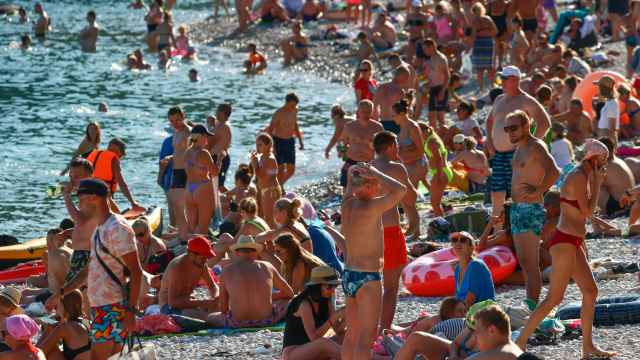
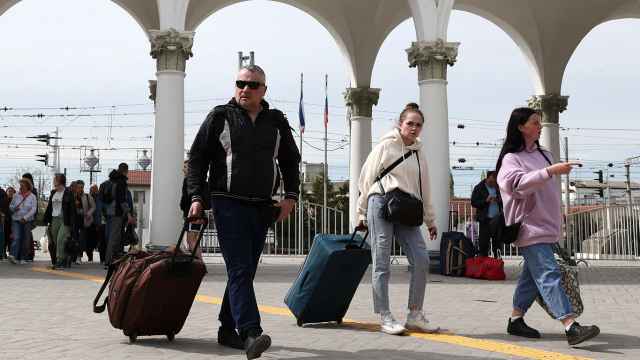
By late June, about 2,000 vehicles had lined up to leave Crimea, rail service between the peninsula and Russia had been cut roughly in half, and videos circulating on social media last week appeared to show largely empty beaches during what is normally the height of the summer holiday season.
Read this article in Russian at The Moscow Times' Russian service.
A Message from The Moscow Times:
Dear readers,
We are facing unprecedented challenges. Russia's Prosecutor General's Office has designated The Moscow Times as an "undesirable" organization, criminalizing our work and putting our staff at risk of prosecution. This follows our earlier unjust labeling as a "foreign agent."
These actions are direct attempts to silence independent journalism in Russia. The authorities claim our work "discredits the decisions of the Russian leadership." We see things differently: we strive to provide accurate, unbiased reporting on Russia.
We, the journalists of The Moscow Times, refuse to be silenced. But to continue our work, we need your help.
Your support, no matter how small, makes a world of difference. If you can, please support us monthly starting from just $2. It's quick to set up, and every contribution makes a significant impact.
By supporting The Moscow Times, you're defending open, independent journalism in the face of repression. Thank you for standing with us.

Remind me later.