Recently, while scrolling through Central Asian circles on Facebook, I came across a slogan posted on someone’s profile: “The fact that you do not have a criminal record is not your merit, but our failure.”
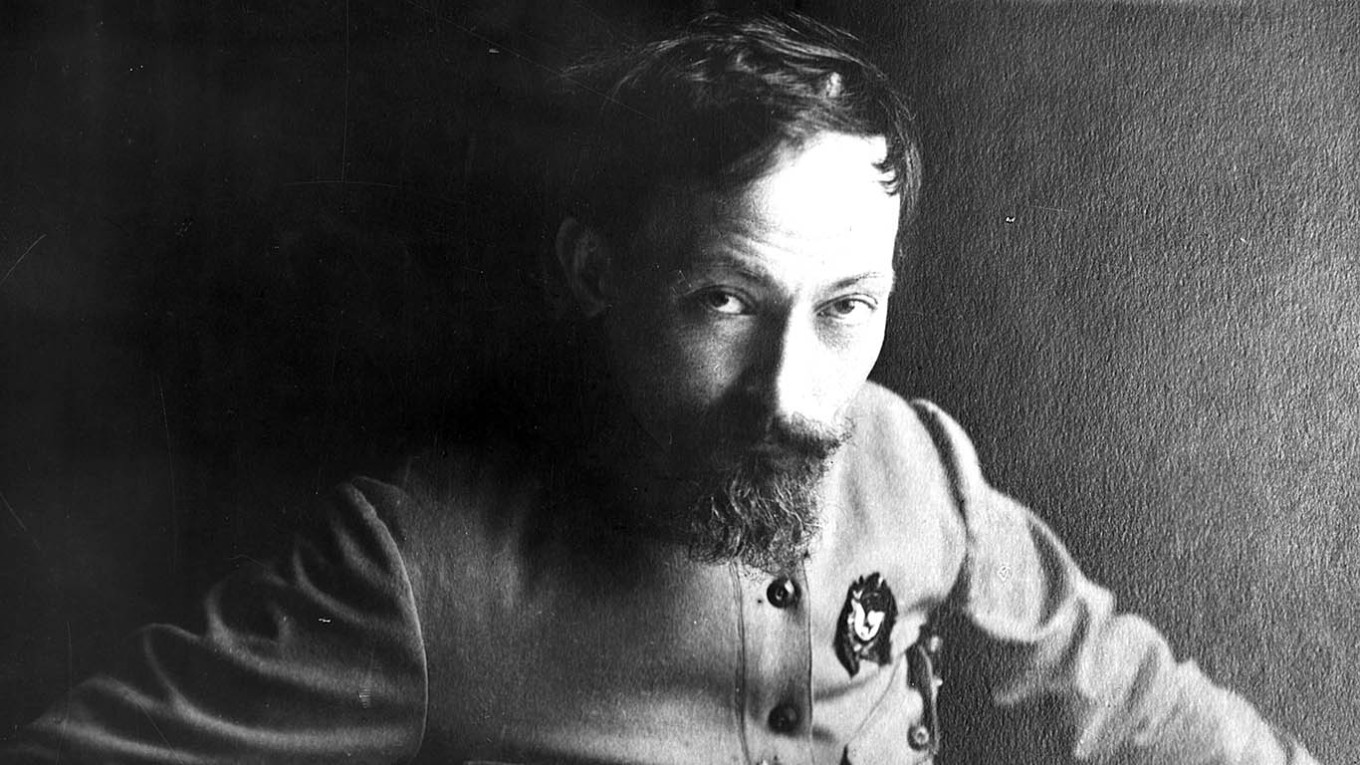
This quote, which was shared the way one might share an inspirational maxim, was attributed to Felix Dzerzhinsky, founder of the Cheka secret police and one of the principal architects of the Red Terror. Seeing it brought back memories of seeing the same slogan pinned to cabinet doors and taped matter-of-factly above desks in the police stations and security service offices in Kyrgyzstan.
Whether Dzerzhinsky actually said it is doubtful. What is not in doubt is Dzerzhinsky’s governing philosophy: “We represent in ourselves organized terror — this must be said very clearly,” he once said.
But the historical accuracy of that slogan is somewhat beside the point. What matters is that generations of officials have found it meaningful enough to display decades after the state that produced it ceased to exist.
When the U.S.S.R. collapsed in 1991, the prevailing assumption in Western capitals — and among many citizens of the successor states — was that democratic governance would follow more or less naturally.
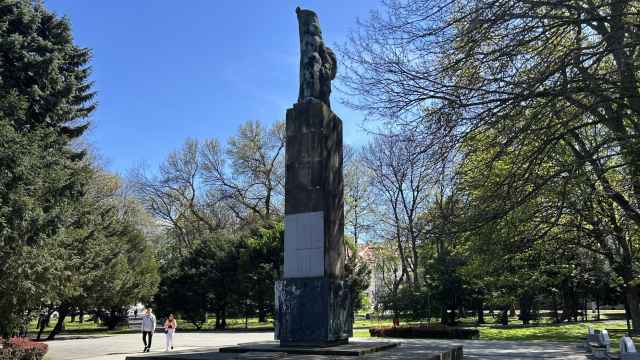
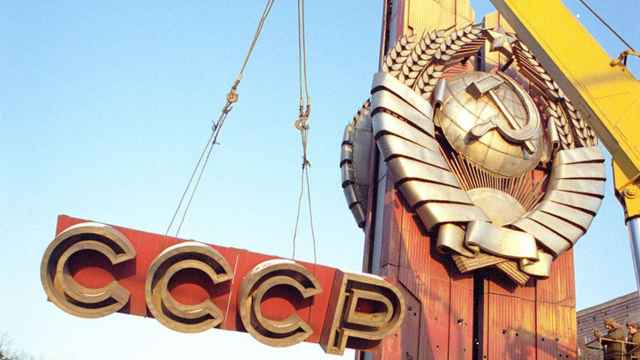
The early signs were encouraging. Elections were held and new constitutions were adopted. Market economies, however chaotic, emerged while the symbols of Soviet power were taken down from public squares.
What the optimism of that moment failed to take into account was how durable state institutions built with the Soviet mindset turned out to be. Unpacking that requires a genuine reckoning with the past, no matter how uncomfortable it may be.
Germany’s long, imperfect and ongoing process of confronting the legacy of Nazism is the reference point most often cited precisely because it was exceptional. It established, through law, education and public culture, a broad consensus that the previous system was not merely defeated but illegitimate.
Only a few of the nations that emerged from the U.S.S.R. attempted a comparable process. The Baltic states undertook genuine lustration, opened their KGB archives and built their post-Soviet identities around the experience of breaking out of Soviet occupation rather than continuity with it. Their democratic institutions have generally proven to be more resilient as a result.
Ukraine embarked on a similar process of desovietization, something that accelerated after 2014 and became a matter of national survival after 2022.
Elsewhere across the former U.S.S.R., the archives of Soviet repressions were partially opened, then closed again. Security institutions were reorganized without being fully dismantled, meaning many officials who ran the old regime either remained in power or held influence behind the scenes. Public discussion of Soviet political violence was selective, serving political agendas instead of seeking genuine accountability. Instead of rejecting the Soviet experience, it was kept alive enough to shape Russia’s future while being held far away enough for plausible deniability.
Russia offers the clearest and most consequential illustration of where that suspension leads.
The 1990s brought a genuine, if chaotic, political opening. But the institutions, narratives and power networks inherited from the Soviet period remained largely intact beneath the surface of democratic procedure.
The result was more subtle than a restoration of the U.S.S.R., as some mistakenly see it. The political instincts that made that regime possible never went away, making the 1990s a brief, disorienting interlude while a new form of authoritarianism consolidated.
By the 2000s, suspicion of independent civic activity was effectively made policy as hostility to dissent was framed as a security imperative. The subordination of individual rights to state interests was treated, once more, as a pragmatic necessity.
These instincts adapted to new circumstances. They adopted new language and new justifications. But their underlying logic remained recognizable to anyone familiar with the institutions that produced the Dzerzhinsky slogan.
The same dynamic plays out, to varying degrees, across Central Asia.
Kyrgyzstan has faced repeated political upheavals since 1991, making its politics more contested than Kazakhstan’s managed stability or Turkmenistan’s hermetic isolation. Uzbekistan under Shavkat Mirziyoyev has undertaken genuine liberalization in some domains since 2016 while consolidating presidential authority in others.
Tajikistan, meanwhile, has followed the most unambiguous trajectory. Three decades of Rahmon family rule refined the Soviet apparatus to eliminate dissent and extend the state’s aggressive reach into the diaspora. Transnational repression is a practice common across the region, but nowhere else has it been pursued so systematically. Thousands have been designated as extremists for social media activity, their religious practice or having the slightest association with opposition figures.
Some common structural patterns persist across the region. Independent journalism is treated as a security concern rather than a civic function. Political opposition is either annihilated outright — through imprisonment, exile or worse — or domesticated into managed irrelevance, tolerated only insofar as it poses no genuine challenge to incumbent power. Civil society organizations face scrutiny and the security services remain embedded in political life in ways that have less to do with any particular leader’s preferences than with institutional continuity.
These are products of what might be called infrastructural authoritarianism — the accumulated weight of institutions, personnel, procedures and assumptions inherited from a system explicitly designed not merely to govern populations but to monitor, categorize and manage them. Under the Soviet model, citizens were expected to demonstrate loyalty, conformity was rewarded and dissent was costly.
Discussions of why authoritarianism has endured across much of the former Soviet Union usually focus on the obvious explanations: self-serving leaders, geopolitical pressures and, in some cases, the oil and gas revenues that shield governments from public accountability.
These factors matter. But they are incomplete without attention to the politics of historical memory, which is harder to quantify.
When a country never fully confronts the legacy of authoritarian repression, that repression gradually becomes part of the political landscape. Repressive institutions acquire legitimacy through sheer continuity and citizens lower their expectations of what government should be.
This does not necessarily mean these countries are erasing their past. More often, they are carefully curating what they say.
Uzbekistan's state-backed rehabilitation of the Jadidists — Muslim reformers purged by Stalin in the 1930s — illustrates the distinction between selective commemoration and genuine reckoning. Museums have been built in their honor, they have received posthumous state orders and the president's daughter declares that her father’s policies reflect the Jadids’ dreams.
But beneath the public embrace, the way in which those historic purges laid the foundations for Uzbekistan’s present-day repressive policies remains largely untouched.
The Dzerzhinsky slogan that still hangs in government offices in Kyrgyzstan makes this uncomfortably clear. Its continued presence reflects a worldview in which people are subjects to be managed rather than citizens with rights, where the security apparatus exists not to protect freedom but to identify and neutralize those who might threaten the state’s conception of order.
The implications of this for Western policy are not straightforward, but they do point to something often overlooked in engagement with the region. Technical assistance, anti-corruption initiatives and democratic capacity-building all have their place. Yet they can accomplish only so much if they fail to address the historical narratives that continue to legitimize authoritarian rule.
Authoritarian systems are always evolving, adopting new languages and finding new justifications for their existence. Their resilience often depends less on popular nostalgia than on the failure of successor societies to develop a shared vocabulary for naming and rejecting what came before.
The U.S.S.R. is gone. Its political infrastructure — the habits, the hierarchies, the assumptions about power — is not. Until that inheritance is genuinely examined rather than quietly perpetuated, the Dzerzhinsky problem will remain: not as a relic, but as a template.
A Message from The Moscow Times:
Dear readers,
We are facing unprecedented challenges. Russia's Prosecutor General's Office has designated The Moscow Times as an "undesirable" organization, criminalizing our work and putting our staff at risk of prosecution. This follows our earlier unjust labeling as a "foreign agent."
These actions are direct attempts to silence independent journalism in Russia. The authorities claim our work "discredits the decisions of the Russian leadership." We see things differently: we strive to provide accurate, unbiased reporting on Russia.
We, the journalists of The Moscow Times, refuse to be silenced. But to continue our work, we need your help.
Your support, no matter how small, makes a world of difference. If you can, please support us monthly starting from just $2. It's quick to set up, and every contribution makes a significant impact.
By supporting The Moscow Times, you're defending open, independent journalism in the face of repression. Thank you for standing with us.

Remind me later.