The BBC’s Steve Rosenberg does a superb job. If the reader doesn’t follow his work, they really should. He doesn’t just get Russia; he likes it, which is refreshing in the current information climate.
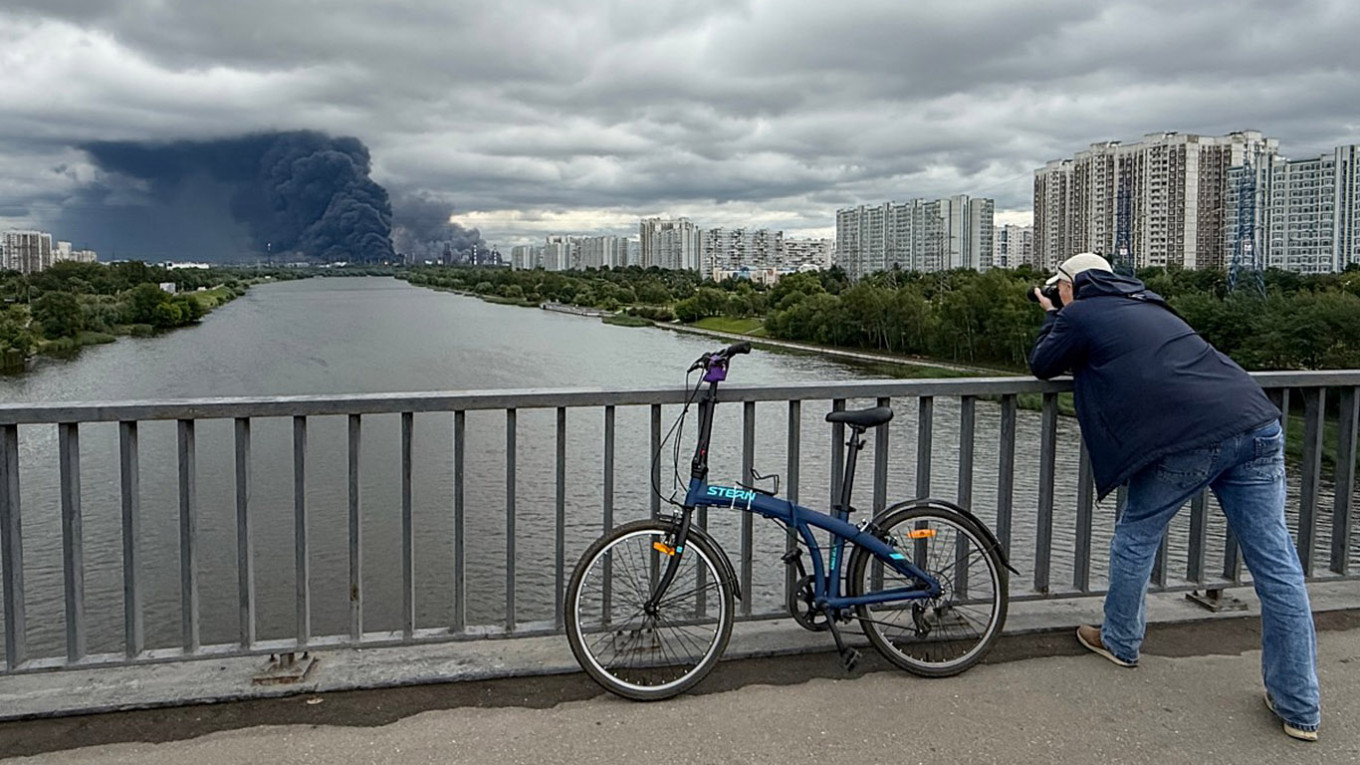
More refreshing was how Rosenberg admitted to being perplexed by the indifference of locals following Ukraine’s drone attack on a Moscow oil refinery. As images of black clouds engulfing the city hit our screens to tell us Ukraine is turning the tide and that Russia’s economy is in the death zone, most Muscovites shrugged and carried on.
“I realized then that my sense of what's normal in Moscow and what's not needed updating,” Rosenberg wrote. He echoed most of the expert community. But unlike him, many of them are hellbent against updating their understanding.
Many of us still in (or regularly visiting) Russia weren’t that surprised by Moscow’s “meh.” A tornado in the Urals shocked more people the following week, as did the football World Cup. And it isn’t just because this happened in a quiet southeastern suburb.
Two things we mustn’t forget tell us a lot. First, a number of major cities have faced high-profile attacks or tragedies in recent decades: the Crocus City Hall attack, the Volgograd train station suicide bombing, the St. Petersburg metro bombing, the Kemerovo shopping mall fire, not to mention the 1999 apartment bombings shortly before then-Prime Minister Vladimir Putin became president. Since 2022, many smaller cities and regions have been hit by drones, notably in the largely forgotten Operation Spider’s Web attacks.
Second, most ordinary Russians are accustomed to chugging along through economic difficulties in modern history. A shrug at the economy and an instinct to hunker down without fuss in tough times were expected.
I’ve been here before. I had already been living in Russia for a while when the Crimean annexation happened. I remember watching the ruble devalue in real time and looking at a pile of cash savings in my desk drawer. I, too, shrugged because there was literally nothing else I could do. My professional and private life were going well, so it only made sense to keep plodding along.
I remember waking up on the morning opposition politician Boris Nemtsov was killed and feeling how tense it was. My spouse told me to be careful with what I posted online. I remember Putin disappearing from public view for a while and all the rumors people had heard. I remember getting emails from my employer in 2019-21 urging us to avoid certain weekend protests. My salary was briefly cut during Covid. As for February 2022, I just couldn’t believe it.
But each time, the country carried on. Friends told me repeatedly that this was a small crisis. Not because they were brainwashed by state propaganda about the 1990s, but because they had actually lived through harder times and come out the other side with a decent quality of life. Colleagues took great delight in explaining something about the Russian character: we’re good in tough times.
Only a minority was interested in protests and the latest monuments to Stalin. The majority danced and rollerbladed through their cities’ parks, got married, had children and found new purposes in life. When the kiosks were leveled one October morning to make way for chic malls, they were thrilled. It made a noticeable difference to their lives, like the Gosuslugi government services application or the suburban high-speed rail.
The country that shrugged at hardship saw a huge uptick in attendance at concerts and exhibitions. They had the world’s fourth-highest education attainment rate. They had learned how to weather the bad days, spending most of their income on essentials but still finding something to enjoy.
Yet, from 2014 and all through the Covid pandemic, people outside read that Russia’s economy was kaput and that its healthcare system was bound to collapse. This was underscored by the tyrant in the Kremlin imprisoning or poisoning political opponents.
Few really had a sense of what was normal for Russia. And if they did, they couldn’t make it newsworthy. The Guardian’s Shaun Walker once said that he wondered if journalists could have done a better job at explaining Russia — not if the editors wouldn’t run it. A former ABC News correspondent in Moscow in the 1970s once joked (entirely seriously) that anyone who dared try to publish a positive story about life in the U.S.S.R. could never work again.
Little has changed. Those who haven’t updated their senses still can’t see the Russia that shrugged and carried on throughout the years. In my view, they suffer from a condition called “Russia of the mind,” believing Russia is still collapsing and on the brink of the abyss. People are getting fed up, the military is struggling and the elites are losing patience with Putin. To some Russia-watchers, the fuel crisis is the latest proof of this impending doom. Everyone who stays silent must secretly support Putin and the war, otherwise they would just leave or protest.
Their judgments and assessments of Russia are clouded by how they think Russia is, should be and will become. Unsurprisingly, they listen to a specific brand of experts, exiled Russians from the liberal opposition and read analysis that concurs with their personal views. Their careers often depend on that particular narrative.
For some, it began in Munich in 2007. They haven’t stopped misquoting that speech ever since. For others, it was the 2011 Snow Revolution (which didn’t revolutionize anything) or the annexation of Crimea.
The newer class of experts will never be able to look past February 2022. They will be genuinely surprised when future scholarly works enlighten them on what they were missing. It’s no coincidence that many of these same people define Russia solely by Putin’s villainy, pet patriotic projects, the absence of democratic elections, an unjust justice system and wishful thinking about why Russia isn’t like the rest of Europe.
Those who still travel to and live in Russia safely (which is the case for the overwhelming majority) have a different Russia of the mind. That Russia can survive, thrive, surprise and is full of people who deserve to enjoy their lives just as any other innocent human being. It is one defined by curious nuances that acknowledges life is getting harder.
Russia isn’t perfect, but it is still a relatively safe and normal place to live, where one can have a good life and whose best days lie ahead. We might even like to call it home, or prefer certain things about Russia. Naturally, some people think that makes us Kremlin stooges and useful idiots, rather than adults with agency over our lives and capable of nuanced decisions and free thought.
But there is another Russia of the mind obscuring our judgments. Russian-Israeli billionaire Mikhail Fridman said what he misses most about Russia is himself. The lives and the Russia we once knew. For some foreigners, this was when they personally experienced Russia for the first time. Most had a blast with like-minded people. It isn’t just that they would turn the clock back if they could. They genuinely see Russia’s good because they experienced it. The Russia on our screens doesn’t feel right.
Of course, our feelings are sentimental and rooted in better days when we were happy or things made more sense to us. But the Russia that shrugged off the drone attack is the Russia most haven’t learned to accept. That is affecting sober assessments of the country and policymaking.
We shouldn’t crave the day they stop shrugging and hope it sparks an uprising. We must try to learn from and embrace it. Russia leaves a special imprint on one’s mind. But it’s under no obligation to obey our personal feelings about what should happen.
A Message from The Moscow Times:
Dear readers,
We are facing unprecedented challenges. Russia's Prosecutor General's Office has designated The Moscow Times as an "undesirable" organization, criminalizing our work and putting our staff at risk of prosecution. This follows our earlier unjust labeling as a "foreign agent."
These actions are direct attempts to silence independent journalism in Russia. The authorities claim our work "discredits the decisions of the Russian leadership." We see things differently: we strive to provide accurate, unbiased reporting on Russia.
We, the journalists of The Moscow Times, refuse to be silenced. But to continue our work, we need your help.
Your support, no matter how small, makes a world of difference. If you can, please support us monthly starting from just $2. It's quick to set up, and every contribution makes a significant impact.
By supporting The Moscow Times, you're defending open, independent journalism in the face of repression. Thank you for standing with us.

Remind me later.