
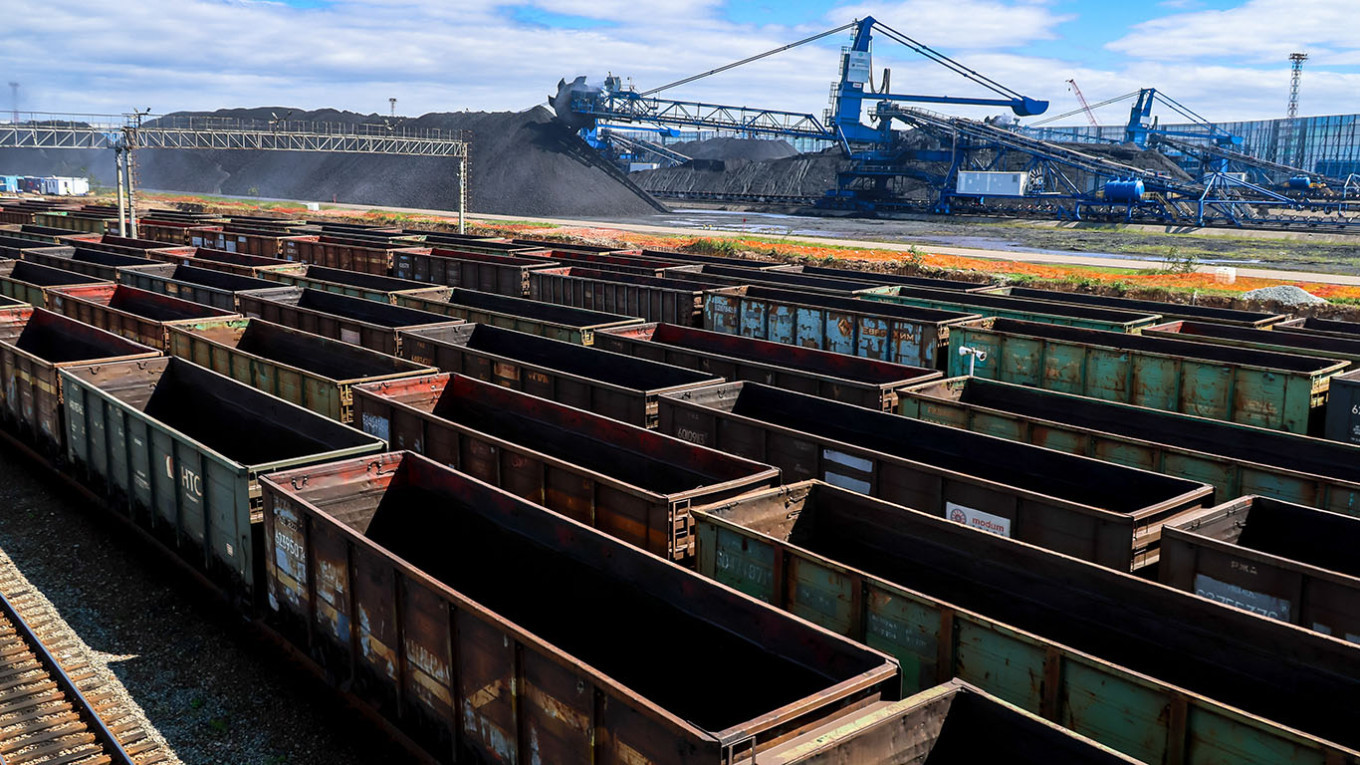
Higher global energy prices triggered by the U.S.-Israeli war on Iran have done little to ease the deepening crisis in Russia’s coal industry, with analysts and officials warning the sector remains on track for another year of heavy losses.
Benchmark Brent crude has hovered near $95 a barrel in recent weeks, down from peaks during the hostilities but still well above pre-conflict levels of around $70, as Washington and Tehran alternate between diplomacy and renewed threats.
The Strait of Hormuz, a critical route for global oil supplies, appears likely to remain effectively closed for the foreseeable future after U.S. President Donald Trump said he would extend a ceasefire between the two sides “indefinitely.”
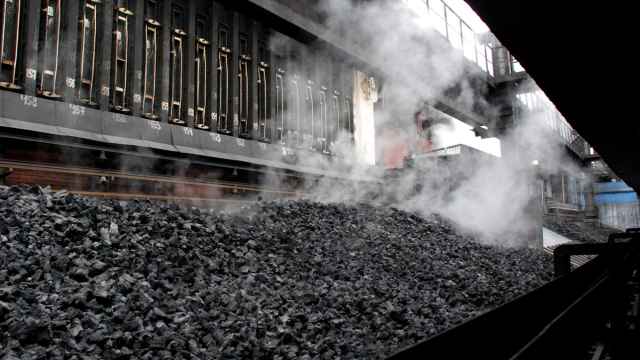
Russia’s coal sector, which employs nearly 150,000 people, has been under pressure since global coal prices plateaued after 2023, while competition intensified and Western sanctions restricted access to key export markets. Coal companies posted combined losses of 408 billion rubles ($5.47 billion) in 2025, with around 67% of firms operating at a loss.
The downturn has hit especially hard in the coal-producing Kemerovo region of Siberia, exacerbating a broader socio-economic crisis after years of underinvestment in public services.
At first glance, higher oil and gas prices might have been expected to boost demand for Russian coal, particularly in Asia.
But Russian industry executives and officials say the Middle East crisis has done little to set the sector on the path to recovery.
Of the roughly $24 billion Russia earned from energy exports in March, a two-year high, coal accounted for only about 5.5%, according to calculations by the Center for Research on Energy and Clean Air (CREA).
Coal export revenues rose 22% month-on-month in March, but lagged far behind oil, where revenues surged 94%, and analysts say the gains are too modest to reverse the sector’s decline.
Deputy Energy Minister Dmitry Islamov said the Middle East crisis would not have a “noticeable effect” on coal producers, adding that any “systemic” price changes were unlikely before late 2026 or 2027.
Speaking on March 24, about a month into the energy crisis, Islamov said industry losses could widen this year to as much as 575 billion rubles ($7.71 billion).
Alexander Kotov, a partner at Moscow-based consultancy NEFT Research, gave a similar forecast, estimating losses of 500 billion to 550 billion rubles ($6.70 billion to $7.37 billion) for the sector.
Despite short-term gains from the Middle East conflict, Russia’s coal exports in 2026 are still expected to fall by 5% to 8% from 2025 levels, to between 195 million and 200 million metric tons, he said.
One reason is that coal markets are less constrained than oil and gas markets, with more abundant supply and fewer countries competing to buy it.
As a result, prices for Russian thermal coal, the country’s main export grade used in power generation, have risen, but far less sharply than for oil and gas.
Prices for coal shipped from Russia’s Far East ports, the main gateway to Asian markets, climbed around 23% from $79 per ton at the start of the year to $97 per ton as of March 20, according to the Center for Price Indices.
NEFT Research estimates Russian coal export prices for the second through fourth quarters of this year will range from $69.60 to $82.30 per ton depending on destination — still far below the 2022 peak, when Russian coal sold for more than $150 per ton.
By comparison, the price of Russia’s Urals crude rose from an average of $56.60 per barrel in February to $94.50 in March, an increase of roughly 73%.
The gap reflects stronger competition facing Russian coal exporters than the country’s oil and gas producers, particularly in Asia.
Several of the world’s largest coal consumers — China, India and Indonesia — are also among its biggest producers, all ranking ahead of Russia.
China reintroduced import duties on Russian coal in 2024 to support domestic producers, while India also imposes tariffs on Russian shipments.
At the same time, producers in Australia and Indonesia benefit from shorter shipping routes and fewer trade barriers when selling to India and China.
Rising logistics costs have added to the pressure.
The Middle East crisis pushed up shipping demand and marine fuel costs, in many cases wiping out gains from higher coal prices.
Freight rates from Russia’s Far East rose by 21% to 44% between late February and late March, depending on the destination, according to the Center for Price Indices.
In some cases, exporters withdrew offers to Chinese buyers because volatile freight costs made shipments difficult to price and unprofitable.
NEFT Research estimates that in February, exporters shipping Kuzbass coal through Far Eastern ports received around 6,424 rubles per ton ($86.08), but retained only 1,888 rubles per ton ($25.30) after transport and other costs.
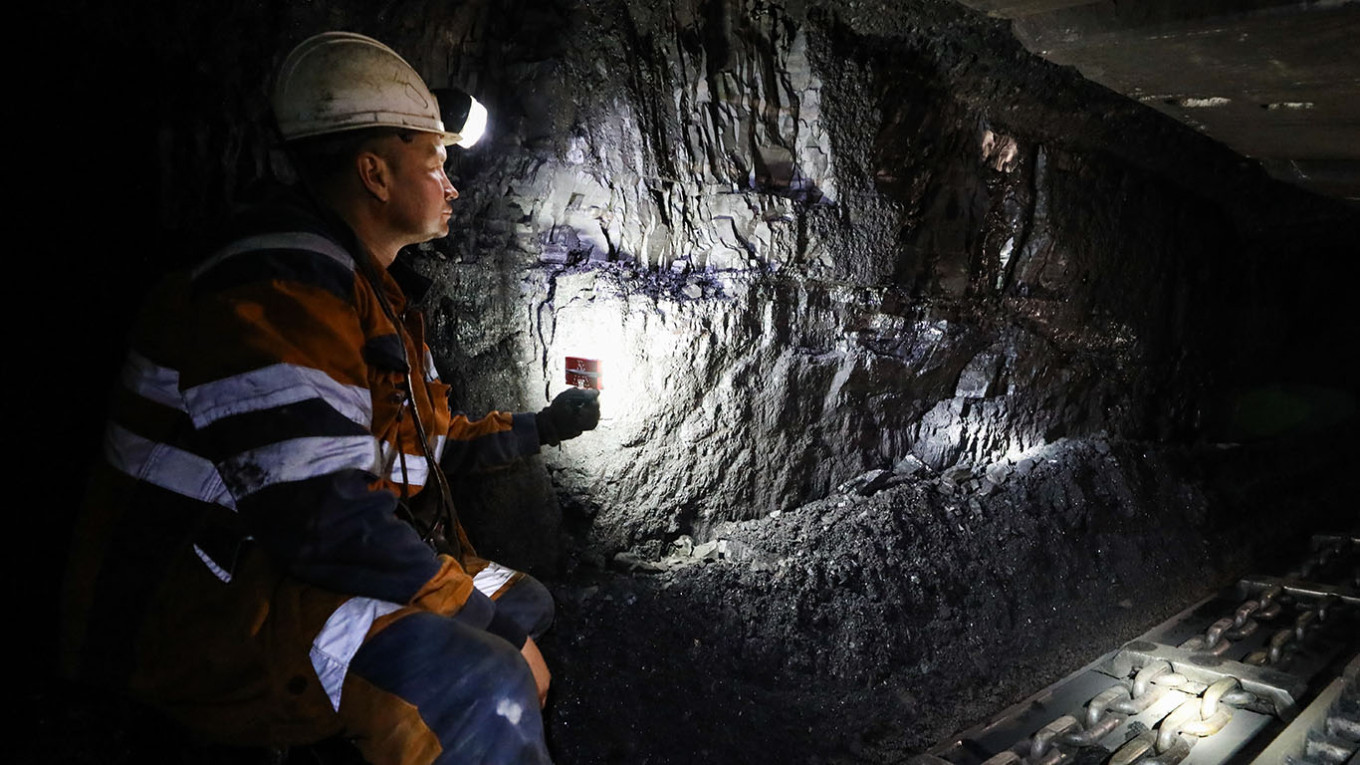
Margins improved by up to a third in March, but analysts cited by Kommersant said only some eastern export routes were consistently profitable — particularly shipments to South Korea, which depends heavily on energy imports.
For most producers, margins remain too thin to cover production costs, Kotov said.
Alexei Kalachev of consultancy Finam said higher prices and a weaker ruble could slow the industry’s “slide into crisis” this year, but not enough “to start pulling it out of it.”
A temporary rise in export revenues may allow some producers to pay overdue taxes and insurance contributions, but the sector as a whole will continue to post losses, Moscow-based analyst Kirill Rodionov wrote on Telegram.
He noted separately that coal production in the Kemerovo region, Russia’s coal-mining heartland, fell 7% in the first quarter of 2026 to 46.6 million metric tons.
Both Russian and Western analysts say the current crisis is unlikely to trigger a major coal recovery and may instead accelerate Asia’s shift toward alternative energy sources.
According to research by Ember, renewable energy overtook coal in 2025 as the world’s largest source of electricity generation for the first time since 1919. Renewables, including solar, wind and hydropower, accounted for 33.8% of global output, compared with coal’s 33%.
China and India, both still heavily reliant on coal, were among the countries where coal-fired power generation fell in 2025 — by 1.6% and 3%, respectively.
The long-term outlook for Russian exporters remains uncertain as China and India prioritize domestic supply and greater coal self-sufficiency, while Japan and South Korea accelerate their shift toward renewables and nuclear energy, NEFT Research said.
That leaves Southeast Asian countries such as Vietnam and the Philippines as the main remaining source of demand growth, but the consultancy said this would not be enough to offset falling imports from larger economies.
“Coal may be a readily available buffer for now, but the Iran war won’t derail the transition to cleaner energy,” Asia-focused energy analyst Julius Cesar Trajano noted. “Over the long-term, the Iran war will reinforce, not reverse, the region’s shift to a more diversified energy mix. The conflict is underscoring the true reason governments want fewer fossil fuels: Not to reduce emissions, but to reduce exposure to a volatile energy market.”
India is steadily expanding its nuclear program, while China has 36 reactors under construction — more than the rest of the world combined — as part of plans to double its use of non-fossil fuel energy by 2035.
South Korea is also increasing nuclear power generation and exploring financing for projects in Vietnam, while Japan is reversing policies that shut down nuclear plants after the 2011 Fukushima disaster.
A Message from The Moscow Times:
Dear readers,
We are facing unprecedented challenges. Russia's Prosecutor General's Office has designated The Moscow Times as an "undesirable" organization, criminalizing our work and putting our staff at risk of prosecution. This follows our earlier unjust labeling as a "foreign agent."
These actions are direct attempts to silence independent journalism in Russia. The authorities claim our work "discredits the decisions of the Russian leadership." We see things differently: we strive to provide accurate, unbiased reporting on Russia.
We, the journalists of The Moscow Times, refuse to be silenced. But to continue our work, we need your help.
Your support, no matter how small, makes a world of difference. If you can, please support us monthly starting from just $2. It's quick to set up, and every contribution makes a significant impact.
By supporting The Moscow Times, you're defending open, independent journalism in the face of repression. Thank you for standing with us.

Remind me later.