
Russians are finding it harder and harder to conceal their dissatisfaction and fatigue about what President Vladimir Putin has turned their country into.
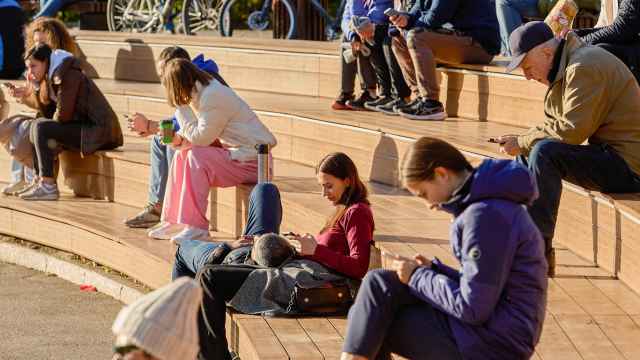
The blocking of WhatsApp and then Telegram and increasingly frequent internet shutdowns didn’t just spark frustration from isolated outcasts or suspicious social groups, but practically the entire country. State propaganda is no longer enough to keep this discontent down. Even loyalists like blogger Ilya Remeslo or former “people’s governor” Pavel Gubarev are calling their former idol in the Kremlin a war criminal and accusing him of coming to power by accident, respectively.
Then came the Instagrammers, with their millions of followers.
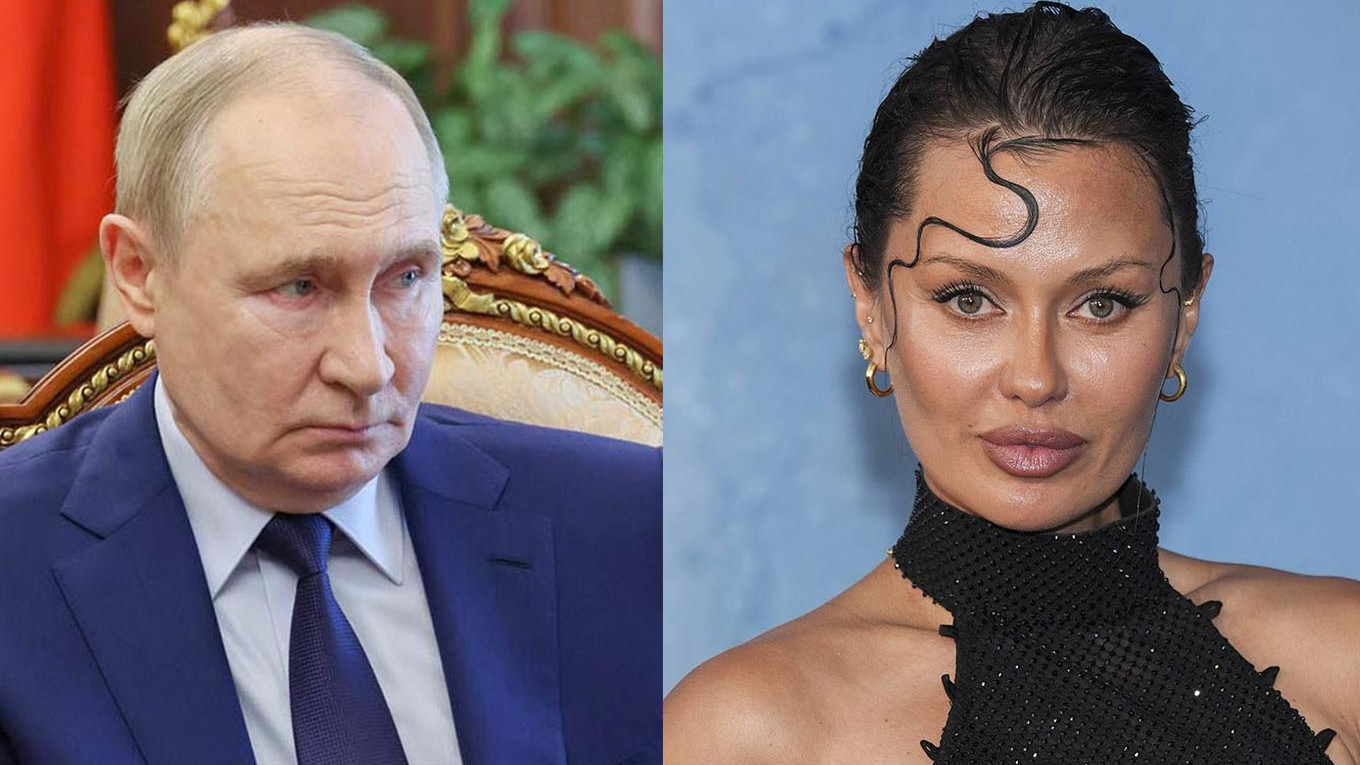
The first to speak on behalf of the people was former reality TV star Viktoria Bonya, who has an audience of 13 million and lived in Monaco for many years.
She began her 18-minute video address to Putin by saying that everyone fears him — the people, artists, bloggers — because there is a “huge thick wall” between them and him.
Then, she ran through the current Russian news agenda: from flooding in Dagestan and amendments weakening protections of endangered species, to the mass slaughter of livestock in Novosibirsk and internet blockages.
Bonya’s speech was, of course, designed to help Putin, not challenge him. It included assurances of support, mention of “our boys” fighting at the front, and declarations of love for Russia and its people. Bonya blamed the wall on a conspiracy by State Duma deputies and other grandees, arguing that because Putin does not use the internet and requires information to be brought to him on pieces of paper, the truth is being stopped from reaching him.
The Instagrammer even suggested that Putin should create some kind of social network where he could immediately see all the people’s appeals.
But it would be more reliable to place a little table by the Kremlin’s Borovitsky Gate, where complainers and madmen can leave their ideas for Putin to collect.
Bonya was quickly joined by another Instagram blogger, Aiza, who also expressed her love for Russia and its people. Unsurprisingly, she doesn’t live in Russia either. Aiza repeated Bonya’s theses point by point: information that does not reach Putin’s ear, the dastardly deputies with their billions of rubles and foreign passports, and about the Max messenger, which she has of course downloaded to communicate with the parents who remained in Russia, and which simply needs to be made good so that it can replace Instagram and Telegram for Russians.
The patriotic internet stand-up was rounded off by television presenter Katya Gordon, in Moscow, who dispensed with sentiment altogether and declared that while Putin is distracted by “solving foreign economic and political problems,” a certain group inside Russia is working against him. Naturally, she sees this as a provocation to undermine trust and spark protests ahead of the State Duma elections. She called on Putin and the FSB to pay attention to in order to deal with the fifth column inside Russia.
The Kremlin reacted quickly to Bonya’s video, which got more than 23 million views. Putin’s mouthpiece, Dmitry Peskov, said that “a great deal of work is being done, involving a large number of people, about the problems she listed.
Learning of this, the delighted Bonya, in tears, recorded a new video in which she asked people “not to drag” her into the same boat as the BBC and TV Rain because she is “with the people and within the people.” Sitting on camera in a red Turkish flag T-shirt, Bonya, sobbing, gave her thanks to Peskov and Putin. Raising her hands upward, she thanked God and then touched her chest with intoxicated sincerity.
Experts, journalists and the public are falling over each other to explain what’s happening. Some speak of a behind-the-scenes game among Kremlin elites who have grown tired of Putin. Others say it is an attempt by Putin’s administration to vent popular anger by playing the well-known card of bad boyars and the good Tsar. A third group believes it was Bonya’s own initiative. A fourth blames everything on the West for rocking the boat and calls Bonya a “new Navalny,” accusing her of trying to stage a Maidan Revolution in Russia.
All of these options are bad for Putin as they indicate growing irritation not just in individual social groups, but across the whole country.
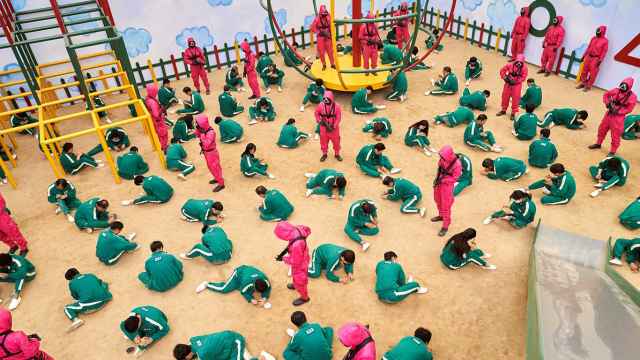
Putin has been running an experiment on the population for the past few years, making it perfectly clear that as long as he remains in power, Russians have to endure whatever hell he decides to create: men mobilized only to be subjected to torture and sent home in zinc coffins; a “new elite” of returned killers; prison for anti-war activity and military propaganda starting from kindergarten. Russia tried to pretend that it understood and could tolerate all of this. But that tolerance ran out when it came to the most essential thing: communication. Putin, with his Soviet-era understanding of information flows, cannot understand this necessity.
There is one point on which one cannot argue with Bonya: sooner or later, “the moment comes when people can no longer be afraid.”
Will Putin back down? For a time, perhaps. Apparently, Russian authorities have decided to hold off on harsher internet and Telegram blockages because of public backlash. But at the same time, they’re investing an additional 12 billion rubles ($160 million) in a firm that makes blocking tools, so any step backward will be a tactical decision, not a change in objective. Retreating only to return with a harsher grip is Putin’s style, and it is too late to change it, even if he wanted to. The point of no return has been passed, leaving nowhere to retreat. The alternative to the Kremlin office is either ending up in The Hague or splattered against the wall of a soldier's latrine.
And finally, one would like to address Bonya directly.
Dear Viktoria! During Putin’s “time in power,” Russian men have been destroyed by the tens of thousands. These men are the very people you proclaim to love so much while sitting in distant Monaco. And it is Putin himself who is doing this, the same man who inspires in you something very close to religious ecstasy. Think about that when you compose your next tearful petition to him.
A Message from The Moscow Times:
Dear readers,
We are facing unprecedented challenges. Russia's Prosecutor General's Office has designated The Moscow Times as an "undesirable" organization, criminalizing our work and putting our staff at risk of prosecution. This follows our earlier unjust labeling as a "foreign agent."
These actions are direct attempts to silence independent journalism in Russia. The authorities claim our work "discredits the decisions of the Russian leadership." We see things differently: we strive to provide accurate, unbiased reporting on Russia.
We, the journalists of The Moscow Times, refuse to be silenced. But to continue our work, we need your help.
Your support, no matter how small, makes a world of difference. If you can, please support us monthly starting from just $2. It's quick to set up, and every contribution makes a significant impact.
By supporting The Moscow Times, you're defending open, independent journalism in the face of repression. Thank you for standing with us.

Remind me later.