

NATO also traded barbs with the government over an agreement giving Russian forces direct control over the de facto borders of Georgia's South Ossetia and Abkhazia regions. (Story, Page 5.)
The tensions are likely to grow this week, because NATO plans to kick off military exercises in Georgia that have drawn fire from Moscow, which itself is preparing for Victory Day, the May 9 holiday celebrating the end of World War II.
NATO last week expelled two senior diplomats from Russia's permanent mission to the alliance's headquarters in Brussels on spying charges, just hours after it had resumed official contacts with Moscow that had been severed since last year's brief war in Georgia.
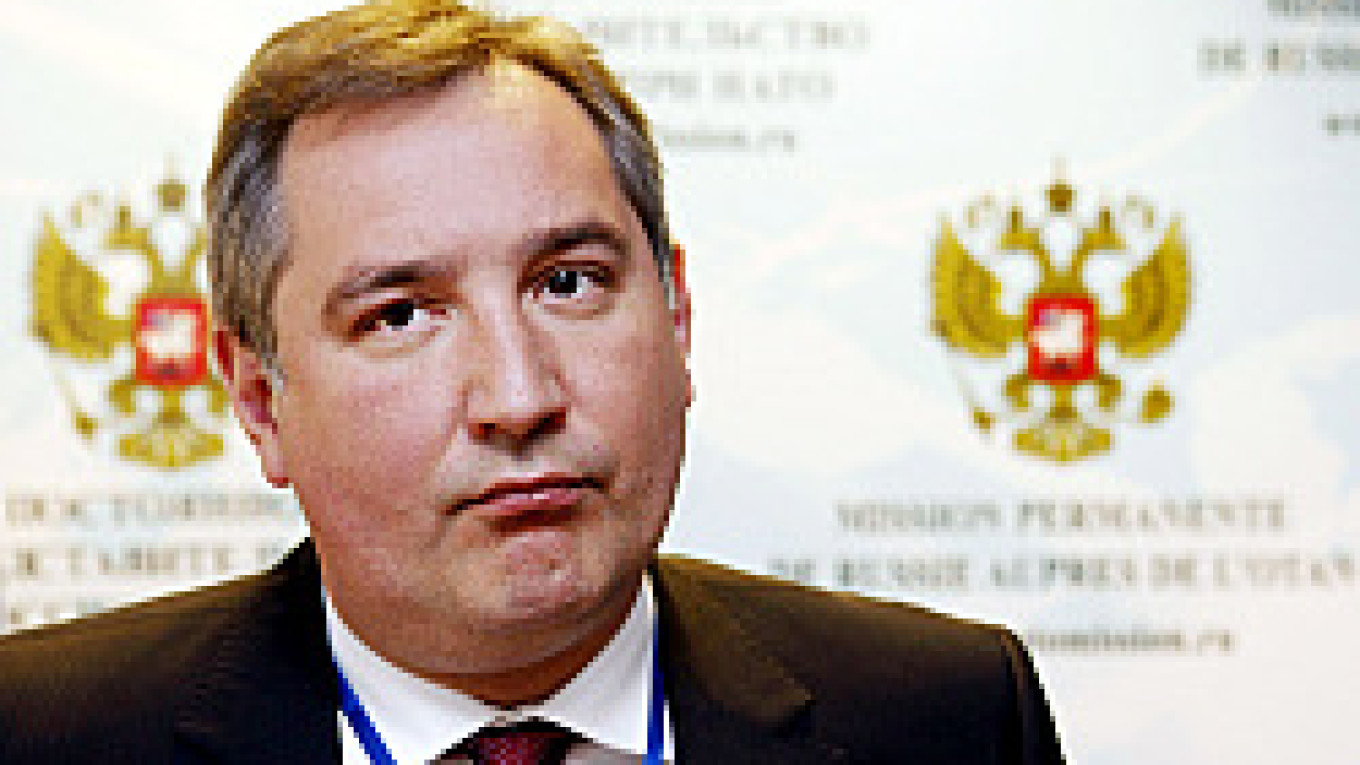
Russia's NATO representative Dmitry Rogozin said Thursday that the alliance's secretary-general, Jaap de Hoop Scheffer, briefed him about the expulsion just after the NATO-Russia Council had convened for the first time.
Rogozin vehemently denied that the diplomats had been involved in spying activities.
"These accusations are fabricated, irresponsible and provocative," he said, Interfax reported.
The Foreign Ministry issued a furious statement in which it accused elements inside NATO of trying to disrupt the normalization of ties with Moscow. "We ask all NATO members to think about the consequences. We will certainly make our conclusions from this provocation," the ministry said.
Diplomats said that from the statement's wording, a tit-for-tat expulsion seemed unavoidable. "They will have to expel someone this week, and the interesting thing to watch will be which country will be hit," a senior Western diplomat told The Moscow Times, speaking on condition of anonymity because of the sensitivity of the matter.
Reciprocal expulsions are complicated by the fact that NATO only has an information office in Moscow, and it is nothing close to matching Russia's NATO mission in Brussels.
NATO officials linked the expulsion to the uncovering of a top Russian spy, Herman Simm, in Estonia last year, news reports said.
A NATO spokesman reached by telephone Sunday refused to comment on the affair.
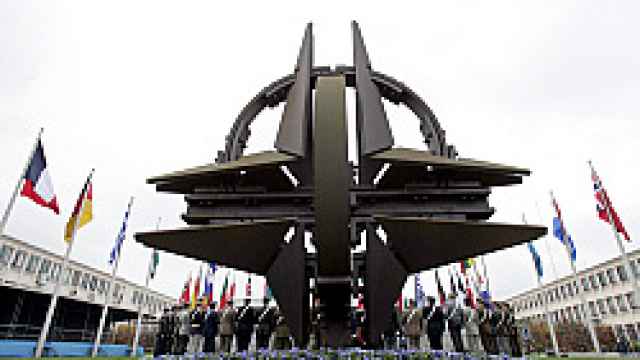
Virginia Mayo / AP
NATO's headquarters in Brussels, where the alliance expelled two Russian diplomats on spy charges last week.
|  |
| |
Yet questions remained why NATO would choose to retaliate more than two months after Simm's conviction just as it was taking the key step of rebuilding ties by getting the NATO-Russia Council back to work.
Rihards Piks, a former Latvian foreign minister who is a deputy in the European Parliament, said that the timing of the spy spat was counterproductive.
"It is not in NATO's interest to disturb the dialogue with Russia," he said by telephone from Riga on Sunday.
He said NATO's member states should continue to talk and develop relations with Moscow.
Alexei Malashenko, an analyst at the Carnegie Moscow Center, suggested that the whole affair might have been staged by a Kremlin faction that is opposed to better relations with the West. "This is a very typical step for Russian foreign policy, and this might point to forces in the Kremlin that are against resetting ties," he said.
In another twist, one of the expelled Russian diplomats, Vasily Chizhov, is the son of Moscow's ambassador to the European Union, Vladimir Chizhov.
Vasily Chizhov was a mission secretary, while the other expelled diplomat, Viktor Kochukov, headed the political section, Rogozin said.
A Foreign Ministry official said that Ambassador Chizhov's work would not be affected by his son's expulsion, Interfax reported.
The senior Chizhov was in Moscow last week for talks between EU Energy Commissioner Andris Piebalgs and Deputy Prime Minister Igor Sechin about the European Energy Charter.
Relations with the EU turned sour last week when Foreign Minister Sergei Lavrov warned the 27-member union against meddling with former Soviet republics. An upcoming EU summit with six former republics "should not get in the way of the post-Soviet area," Lavrov said after talks with EU officials in Luxembourg.
A Message from The Moscow Times:
Dear readers,
We are facing unprecedented challenges. Russia's Prosecutor General's Office has designated The Moscow Times as an "undesirable" organization, criminalizing our work and putting our staff at risk of prosecution. This follows our earlier unjust labeling as a "foreign agent."
These actions are direct attempts to silence independent journalism in Russia. The authorities claim our work "discredits the decisions of the Russian leadership." We see things differently: we strive to provide accurate, unbiased reporting on Russia.
We, the journalists of The Moscow Times, refuse to be silenced. But to continue our work, we need your help.
Your support, no matter how small, makes a world of difference. If you can, please support us monthly starting from just $2. It's quick to set up, and every contribution makes a significant impact.
By supporting The Moscow Times, you're defending open, independent journalism in the face of repression. Thank you for standing with us.

Remind me later.