

 | To Our Readers |
The Moscow Times welcomes letters to the editor. Letters for publication should be signed and bear the signatory's address and telephone number. |
President Dmitry Medvedev's proposal to extend the presidential term has sparked a heated debate. Kremlin supporters and loyal political analysts claim that increasing the term from four to six years will improve political stability. They argue that Russia's traditions and unique history dictate that it is far too difficult to handle Russia's complex problems in just four years.
Opponents point to the experience of Western democratic countries, where presidential authority is decreasing rather than increasing. And in nations where the terms are long, like Austria, it is only because the presidential post is more or less symbolic. They add that only the least democratic countries, such as the former Soviet republics in Central Asia, have chosen to increase their presidential terms. This puts Russia in dubious company.
It is not entirely clear why the presidential term issue was raised at this particular moment. It would seem that under conditions of increasing financial instability, which could lead to serious social problems, the country's leadership should be focusing on more pressing issues. The question of presidential terms could have easily been put on the backburner for a year -- unless Medvedev has plans to resign in the near future.
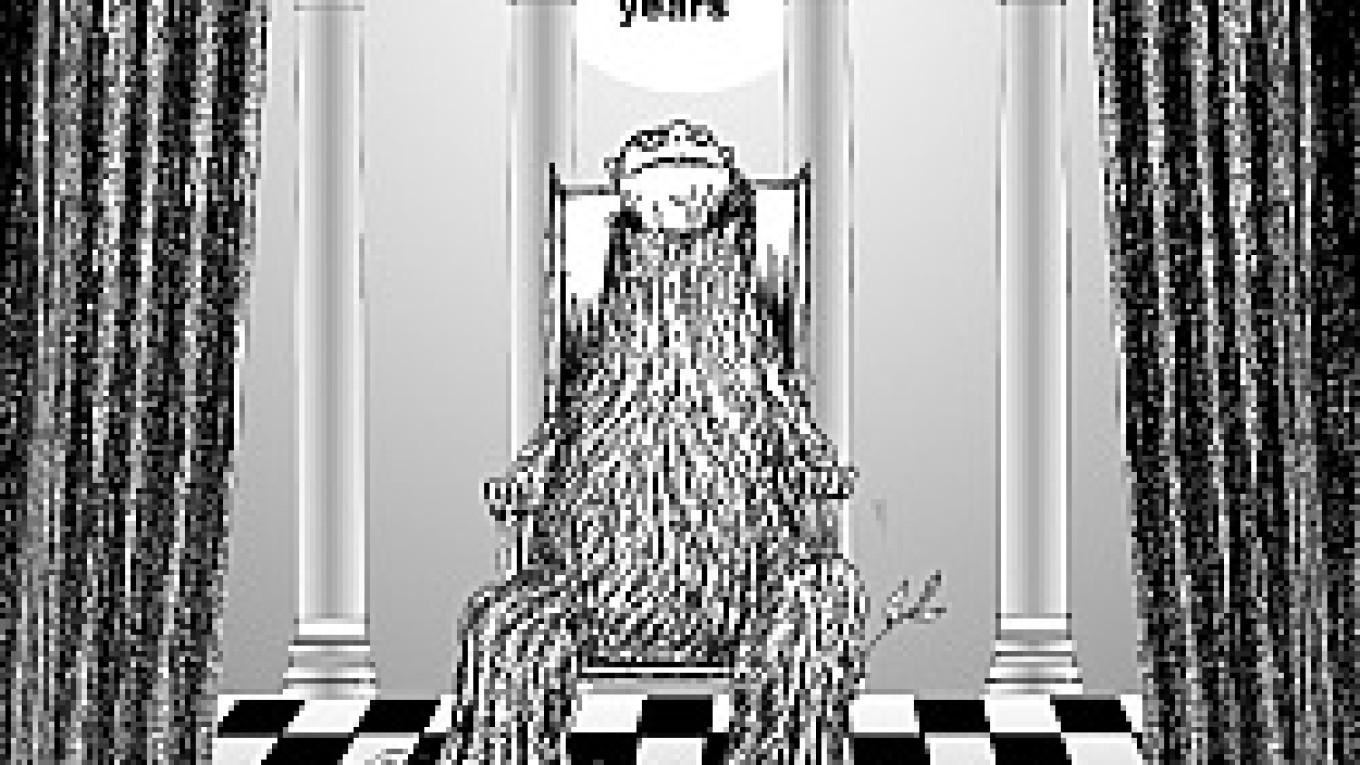
But the issue of what is the optimal presidential term -- four, six or even more years -- does provide an opportunity to raise the question of how long most leaders can rule before they lose their leadership skills.
During the last 50 years of Russian history, only four people have ruled for extended periods -- Soviet leaders Nikita Khrushchev and Leonid Brezhnev, and Presidents Boris Yeltsin and Vladimir Putin. The rest, including Soviet leader Mikhail Gorbachev, held power for much shorter periods.
But if we look at the activities of the four leaders who stayed in their posts the longest, we see a curious pattern. They lost their motivation, energy, innovation and the ability and willingness to consider the opinions of others within an average of five to six years after coming to power.
Khrushchev ruled from 1953 to 1964. His worst character traits -- tyranny, megalomania and a propensity for making rash, arbitrary and incompetent decisions -- began appearing in the late 1950s and early 1960s. The result was an increasing number of problems and mistakes, from food shortages to the Cuban Missile Crisis.
Brezhnev, who led the Soviet Union from 1964 to 1982, lost whatever scant leadership abilities he had in the early 1970s. The final 10 years of his 18-year rule went down in history as the period of Soviet stagnation.
Yeltsin served from 1991 to 1999. His first presidential term was not very successful, and his second is widely considered to have been catastrophic.
Finally, most of Putin's reforms were implemented during his first presidential term. His second term was marked by a slowdown in reforms, a sharp increase in both bureaucracy and corruption and worsening relations with the West.
Comparing such diverse epochs and dissimilar leaders may be flawed, and historians might rightfully consider this analysis as superficial and inaccurate. Nevertheless, one general conclusion is clear: Russian leaders -- as well as their advisers -- are productive, innovative and efficient for no more than five or six years. After that, they become detached from the real problems facing the country, corruption flourishes and the economy declines into periods of stagnation and then crisis.
Although this phenomenon may be more pronounced in Russia, it is seen in mature democracies as well. Great leaders in the West also try to exceed the limits placed on them by historical circumstances, and the results are usually negative. For example, Winston Churchill's second term as British prime minister was less triumphant than his first, and Charles de Gaulle's presidency in France took on an almost comical form in the mid-1960s.
Of course, the first temptation is to attribute the drop in a leader's abilities to his age. But old age and health are probably not the only factors. Each leader has his own particular mission in history. Churchill's mission was to achieve victory in World War II and de Gaulle's was to found the French Fifth Republic. The same was true for every Kremlin leader. After his mission has been completed, if the aging leader continues to cling to power, he quickly loses his former greatness and becomes a parody of himself. Napoleon Bonaparte once said, "There is only one step from the sublime to the ridiculous," and toward the end of his brilliant career he fell victim to the same general law.
If this theory is right, then an amendment should be made to Medvedev's proposal. The presidential term could be extended to six years, but on the condition that each president serves only one term. This is the best way to ensure that there is always fresh air in the Kremlin corridors.
Andrei Kortunov is president of the New Eurasia Foundation in Moscow.
A Message from The Moscow Times:
Dear readers,
We are facing unprecedented challenges. Russia's Prosecutor General's Office has designated The Moscow Times as an "undesirable" organization, criminalizing our work and putting our staff at risk of prosecution. This follows our earlier unjust labeling as a "foreign agent."
These actions are direct attempts to silence independent journalism in Russia. The authorities claim our work "discredits the decisions of the Russian leadership." We see things differently: we strive to provide accurate, unbiased reporting on Russia.
We, the journalists of The Moscow Times, refuse to be silenced. But to continue our work, we need your help.
Your support, no matter how small, makes a world of difference. If you can, please support us monthly starting from just $2. It's quick to set up, and every contribution makes a significant impact.
By supporting The Moscow Times, you're defending open, independent journalism in the face of repression. Thank you for standing with us.

Remind me later.