

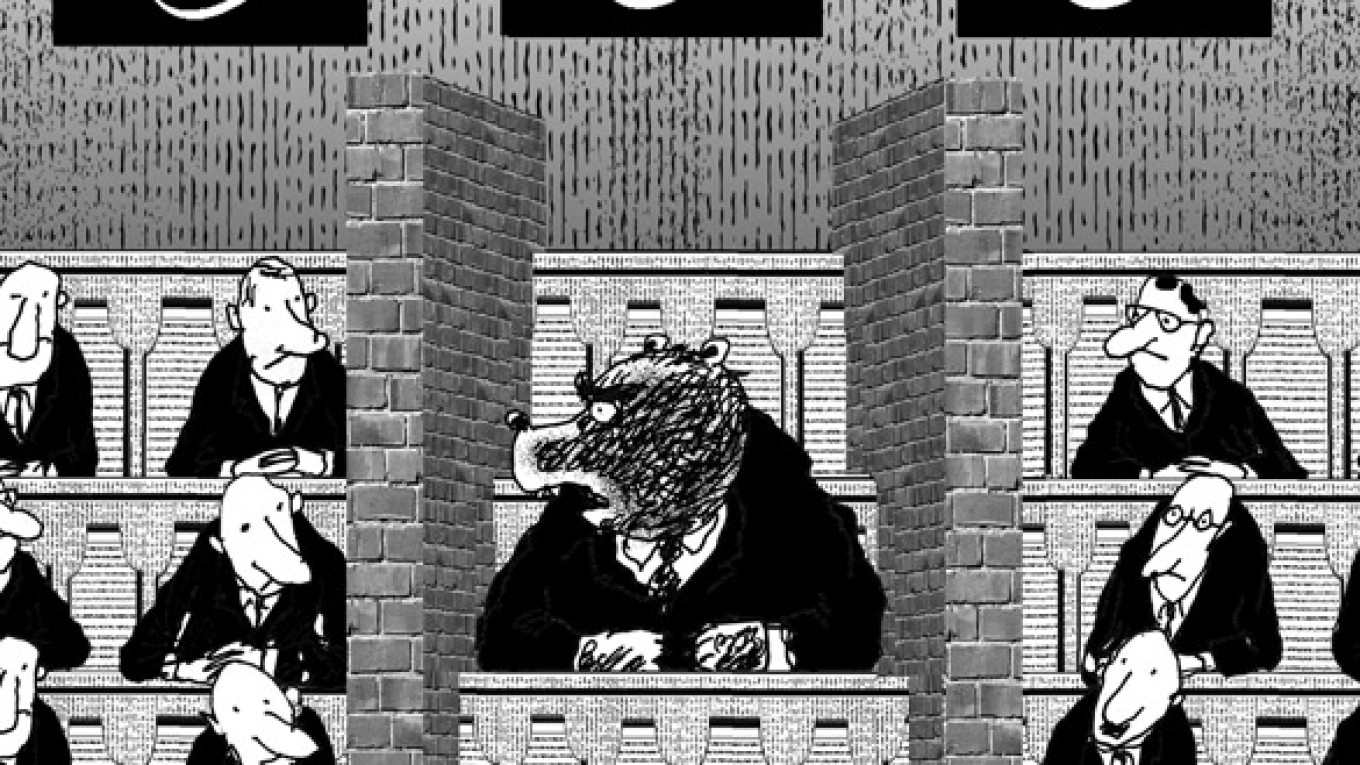
Since the end of the Cold War, the number of European nations has increased, NATO expanded while the Warsaw Pact was dissolved. Meanwhile, organizations such as the Council of Europe, the Organization for Security and Cooperation in Europe and the European Union became more important players in the global arena. Europe sought its own model of security but, unfortunately, it has not formed the necessary structures to do this. Major political innovations do not appear out of thin air. The road from conceptualization to realization is a long one.
The entire world will celebrate the 20th anniversary of fall of the Berlin Wall on Nov. 9. This was a epochal historical event, and we must heed the call — the call to democracy, respect for a nation’s sovereignty and individual rights, closer cooperation among European countries, the harmonizing of national, European and international law and the establishment of peaceful relations among all Europeans. That call should be transformed into concrete actions, but numerous obstacles stand in the way of such a project. For example, new political and psychological walls have been constructed in Europe. Young European countries that have only recently declared their sovereignty are the main instigators of this division and antagonism. I am speaking about countries that are trying to define their own identity, that possess great ambitions but few resources. Their names are well known — Georgia, Latvia, Lithuania, Estonia, Poland and others. Under the patronage of the United States, they have become valuable pawns for conservatives and neoconservatives in the West in their global chess game against Russia.
As a result, these European states are actively cultivating Russophobia to give the United States the upper edge in the game. Recall the recent resolution of the Polish Diet concerning the Molotov-Ribbentrop Pact, anti-Russian resolutions of the Parliamentary Assembly of the Council of Europe concerning events in the Caucasus in August 2008 and the resolution of the European Parliament regarding energy security. These initiatives indicate an escalation of anti-Russian rhetoric in Europe. That is why we should heed President Dmitry Medvedev’s words that he spoke at the UN General Assembly several weeks ago: that “irresponsible political regimes” should not be allowed to provoke divisions in Europe.
In any case, political manipulations under the guise of Russophobia are like the “political AIDS” of the 21st century, and we must take firm measures to eliminate them. It is clear that legal nihilism, double standards, U.S. hard-power tactics only lead to an increase in global conflicts. It takes away time and resources of the state that could be used for working together to find effective solutions to such urgent problems as terrorism, piracy, health pandemics, nuclear nonproliferation, other weapons of mass destruction, the demilitarization of space and overcoming the global economic crisis.
One of the lessons from the fall of the Berlin Wall is that Europeans — including Russia — need to work together to solve the most pressing political, economic, legal, ecological and social problems facing the Continent. A united Europe can and should be a shining example of cooperation, freedom, democracy and respect for international law.
Vasily Likhachev, formerly Russia’s ambassador and permanent representative to the European Union in Brussels, is the deputy chairman of the International Affairs Committee in the Federation Council.
A Message from The Moscow Times:
Dear readers,
We are facing unprecedented challenges. Russia's Prosecutor General's Office has designated The Moscow Times as an "undesirable" organization, criminalizing our work and putting our staff at risk of prosecution. This follows our earlier unjust labeling as a "foreign agent."
These actions are direct attempts to silence independent journalism in Russia. The authorities claim our work "discredits the decisions of the Russian leadership." We see things differently: we strive to provide accurate, unbiased reporting on Russia.
We, the journalists of The Moscow Times, refuse to be silenced. But to continue our work, we need your help.
Your support, no matter how small, makes a world of difference. If you can, please support us monthly starting from just $2. It's quick to set up, and every contribution makes a significant impact.
By supporting The Moscow Times, you're defending open, independent journalism in the face of repression. Thank you for standing with us.

Remind me later.