

Using bank officials and police officers to deal with business competitors is just as common as ever despite more than three years of federal initiatives to battle the practice, according to a report released Tuesday — though some industry observers disagree.
The National Anti-Corruption Committee, a non-governmental organization affiliated with leading human rights activists, said in a 36-page document that bank-related raiding — when businessmen use banking and law enforcement contacts to illegally seize assets or even whole companies — is continuing, though President Dmitry Medvedev and various federal agencies have tried to combat it.
But the report doesn't give figures for the practice, and economic experts told The Moscow Times that raiding — at least among big companies — is rare.
Yelena Panfilova, general director of Transparency International Russia and one of the report's editors, said in an interview that both raiding by banking institutions and raiding of banks themselves remain problems.
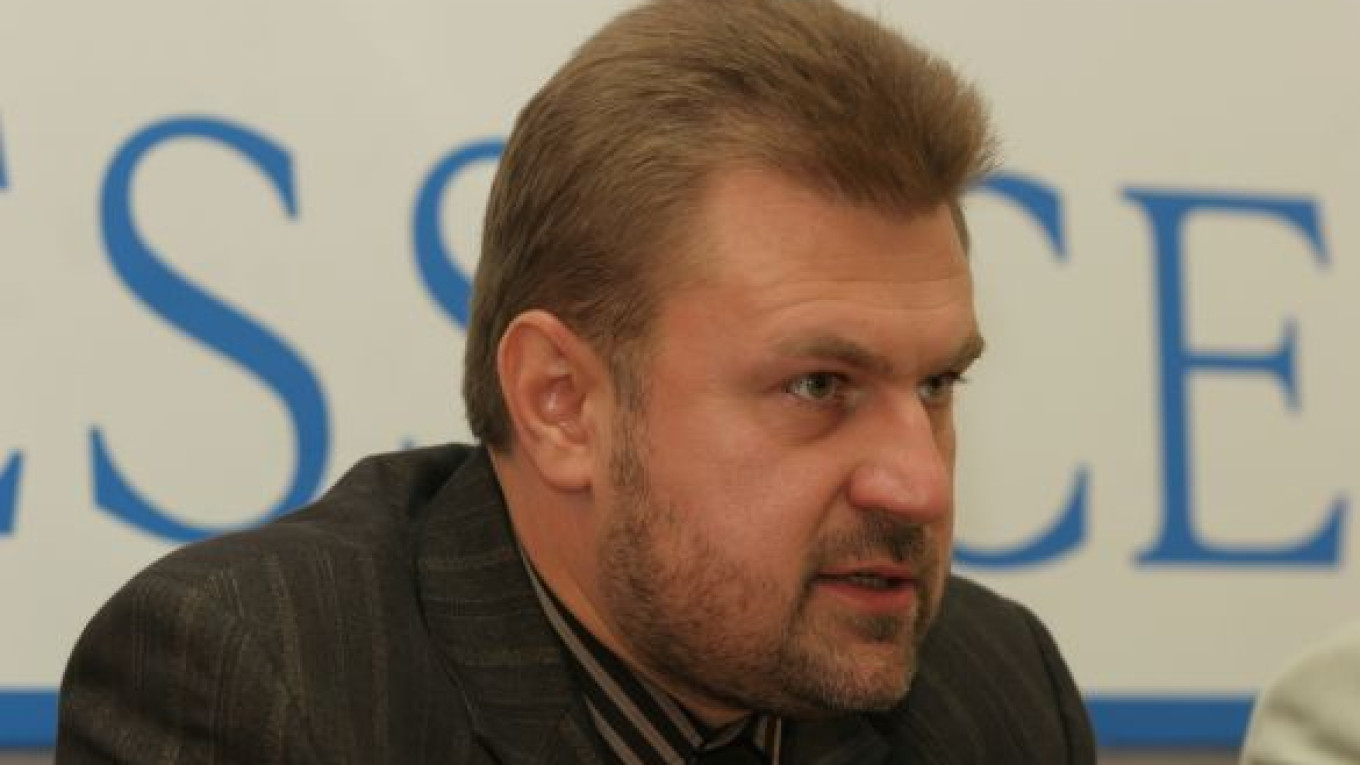
At a Tuesday press conference, Panfilova and Kirill Kabanov, who chairs the National Anti-Corruption Committee and directed the report, said all levels of law enforcement know the extent of raiding and fail to act against it.
"Without local government resources, raiding is, of course, not possible," Panfilova said.
In the committee's view, raiding has increased, especially as lending conflicts became more frequent during the financial crisis. The report says that "in the past three years, this broad practice has been building up in conjunction with conflicts between banks and debt holders."
The conflict between state-owned Sberbank and industrial company MAIR Group is a prime example of how the crisis ratcheted up tensions and, according to the committee, allegedly led to raiding and intimidation.
In January 2008, MAIR Group received a loan of about 2 billion rubles ($63 million) from Sberbank, the committee said in its report. That same year, the general director of two of the company's factories was slapped with criminal charges related to the production of scrap metal. He fled abroad, the company's operations were disrupted and difficulties in obtaining the money from Sberbank ensued.
In 2009, MAIR Group owner Viktor Makushin sought bankruptcy status for his company and later that year was charged with embezzlement. The Stavropol region's Arbitration Court blocked his company's bankruptcy, and in May 2010, Sberbank took control of MAIR Group.
At the same time Makushin was charged, Stavropol's governor bragged to Prime Minister Vladimir Putin that he had prevented Makushin from closing one of the local plants and filing for bankruptcy.
"We didn't let him do that. … I reported him to the law enforcement agencies," The Moscow Times quoted the governor as saying in August 2009.
Sberbank didn't respond to an e-mail request for comments.
Mark Rubinstein, head of research and senior analyst for financial group Metropol, questioned the report's conclusions about an increase in raids.
"This is wrong, in my view," Rubinstein said of the report. There have been anti-raiding initiatives at the federal level, he said, and the issue has been partly addressed.
Raiding is significant at "the level of smaller firms and private firms," but not among large or public corporations, he said. Vladimir Tikhomirov, Otkritie's chief economist, echoed that view.
"The economic impact of these [raiding] cases is not large, but it creates a bad smell," he said by phone.
The research released on Tuesday was intended to "evaluate the effectiveness of the measures put in place and comprehend the cause-and-effect relationships that are putting the brakes on" the anticipated results.
President Dmitry Medvedev signed an anti-raiding law into effect in July 2010, introducing criminal charges for activities associated with raiding. He also spoke about the misuse of criminal investigations for raiding at the St. Petersburg International Economic Forum held this past June.
But that has been for naught, Panfilova and Kabanov said at Tuesday's press conference. "The most that exists now is a prophylactic against corruption," Panfilova said.
A Message from The Moscow Times:
Dear readers,
We are facing unprecedented challenges. Russia's Prosecutor General's Office has designated The Moscow Times as an "undesirable" organization, criminalizing our work and putting our staff at risk of prosecution. This follows our earlier unjust labeling as a "foreign agent."
These actions are direct attempts to silence independent journalism in Russia. The authorities claim our work "discredits the decisions of the Russian leadership." We see things differently: we strive to provide accurate, unbiased reporting on Russia.
We, the journalists of The Moscow Times, refuse to be silenced. But to continue our work, we need your help.
Your support, no matter how small, makes a world of difference. If you can, please support us monthly starting from just $2. It's quick to set up, and every contribution makes a significant impact.
By supporting The Moscow Times, you're defending open, independent journalism in the face of repression. Thank you for standing with us.

Remind me later.