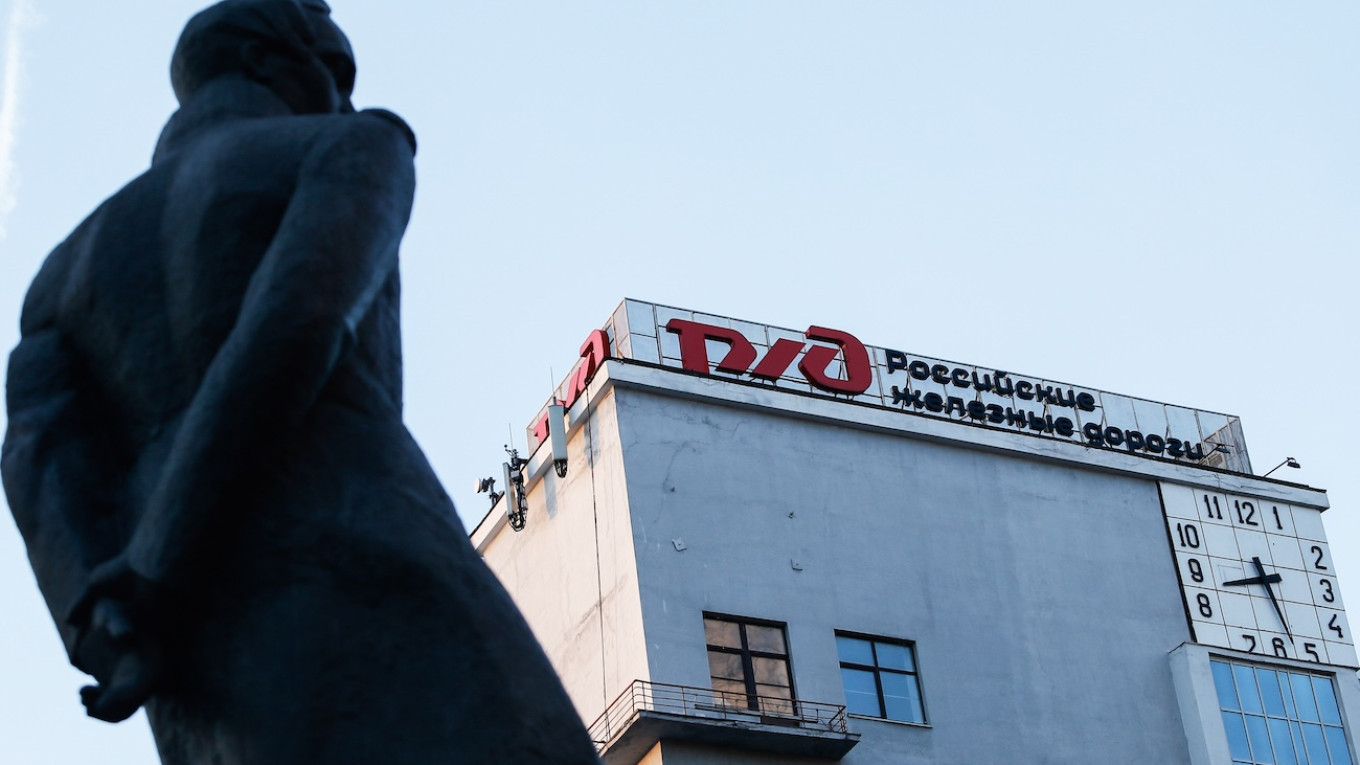
Russia will bring forward a planned increase in railway tariffs to October in a bid to shore up the finances of state railway monopoly Russian Railways (RZhD), which is grappling with mounting debt and weaker profits, the RBC news website reported Sunday.
Instead of raising tariffs in 2027 as previously planned, the government will increase freight rail tariffs by 8.5% and long-distance passenger fares by 9.2% from Oct. 1 this year, according to RBC.
The tariff increase follows an unscheduled 1% surcharge introduced in March under a transportation "security" levy. The additional revenue was intended to help finance RZhD's investment program, which the company was forced to cut by one-quarter this year to 713.6 billion rubles ($9.13 billion).
Freight rail tariffs were previously raised by 10% in 2025, 13.8% in 2024, 6.8% in 2023 and 8% in 2022.
Following the October increase, cumulative freight tariff growth since the start of Russia's full-scale invasion of Ukraine will reach 56%, RBC reported.
The increases come as RZhD has faced its weakest freight performance in 16 years. Cargo volumes totaled 1.1 billion metric tons last year, their lowest level since 2009, while shipments were up just 0.5% in the first five months of this year.
The company's net profit fell 22-fold in 2025 to 2.2 billion rubles ($28.2 million) from 50.7 billion rubles ($649.0 million) a year earlier.
RZhD sharply reduced spending to contain costs. Its 2025 investment program, which covers infrastructure projects as well as purchases of railcars and locomotives, was cut to 890 billion rubles ($11.39 billion) from 1.5 trillion rubles ($19.20 billion) the previous year.
Even after the cuts, the company borrowed 800 billion rubles ($10.24 billion) in new debt during the year, leaving its total debt close to 4 trillion rubles ($51.20 billion), according to the report.
Last autumn, RZhD asked the government for 200 billion rubles ($2.56 billion) in emergency funding from the National Wealth Fund, citing high interest rates that had doubled its annual debt servicing costs to 534.1 billion rubles ($6.84 billion).
The government rejected the request.
RZhD subsequently moved some employees to part-time work. CEO Oleg Belozerov said the company plans to cut about 15% of its central administrative workforce, or roughly 6,000 jobs, from 2026.
Belozerov has also said the company plans to reduce spending on fuel and maintenance as part of a broader effort to save 74 billion rubles ($947.2 million).
Read this article in Russian at The Moscow Times' Russian service.
A Message from The Moscow Times:
Dear readers,
We are facing unprecedented challenges. Russia's Prosecutor General's Office has designated The Moscow Times as an "undesirable" organization, criminalizing our work and putting our staff at risk of prosecution. This follows our earlier unjust labeling as a "foreign agent."
These actions are direct attempts to silence independent journalism in Russia. The authorities claim our work "discredits the decisions of the Russian leadership." We see things differently: we strive to provide accurate, unbiased reporting on Russia.
We, the journalists of The Moscow Times, refuse to be silenced. But to continue our work, we need your help.
Your support, no matter how small, makes a world of difference. If you can, please support us monthly starting from just $2. It's quick to set up, and every contribution makes a significant impact.
By supporting The Moscow Times, you're defending open, independent journalism in the face of repression. Thank you for standing with us.

Remind me later.