

Tamara Kruglikova waited days for Soviet officials to announce the Chernobyl nuclear disaster about 140 kilometers from her home. Hiroshi Ishikawa posts radiation levels every 30 seconds online to supplement Japanese government reports on the fallout from Fukushima.
On April 26, 1986, as Chernobyl's ruptured reactor spewed radiation into the air, children in Kruglikova's city of Gomel played outdoors and adults prepared for May 1 rallies. The one curiosity was why the mud turned an orange-yellow color after it drizzled, she said in a telephone interview from Gomel.
"The Japanese cannot even imagine what ignorance we lived in," said Kruglikova, a 60-year-old literature teacher. "Everything we knew at first was basically just rumor, but many people trusted the official line."
The participation of people like Ishikawa makes Japan's handling of what Prime Minister Naoto Kan called the biggest crisis since World War II that much more challenging due to public scrutiny. No sooner had Kan declared a nuclear state of emergency, five hours after the quake, than web sites such as Twitter and Facebook were offering alternative information.
"Social media pushes the government to act more quickly," said Laura Roeder, a social media marketing consultant based in Los Angeles. "Governments can't hide information anymore. It can spread too quickly to too many people."
The March 11 9.0-magnitude quake and seven-meter tsunami that followed disabled cooling systems at the Fukushima Daiichi plant. The buildup of pressure caused hydrogen explosions that damaged at least three reactors, leaking radiation.
The United Nation's International Atomic Energy Agency measured the disaster at 5 out of 7. Chernobyl was the only accident to be ranked a 7 as 1,200 tons of graphite and radioactive matter were ejected into the air, polluting land and increasing cancer rates, according to the World Nuclear Association.
Unlike their Soviet counterparts, Japanese residents have followed the drama via nonstop media coverage including briefings by the government, plant operator Tokyo Electric Power Co. and the nuclear agency. Officials are pushed to publish everything from the status of each reactor to the level of radiation found in local spinach.
The words "millisievert" and "Becquerel" — measurements of radiation — have entered the daily vernacular, and the anonymous 50 nuclear workers who initially tackled the disaster became a blog phenomenon.
//Monopolize Information
Ishikawa, a former researcher at Nippon Telegraph & Telephone Corp., uses data from a Geiger counter he bought six years ago for $200. His web site has attracted more than 300,000 visitors, up from 1,000 before the quake, he said.
"Governments and institutions that might have sought to monopolize information in the old days now face an era when almost anyone has the ability to publicize," Ishikawa, 68, said by phone in Tokyo. "The tools are completely different from 25 years ago, the level of knowledge and comprehension of people receiving the data has risen considerably."
Twitter, a social-networking site, set up a special page in English and Japanese with information on rescue efforts, evacuation, medical advice and how to donate money. It also advised users to create special tags for their messages related to the crisis.
Hitomi Ito, a 37-year-old manager at a food store in Fukushima city, uses Mixi's online network to hunt down scarce gasoline and foodstuffs. Following a lead from Mixi postings, Ito, who has been using the service for five years, arrived at a local gas station to find herself 89th in line.
"I rely on this for everything; how else are you supposed to get this kind of information?" she said.
//Radio Liberty
Kruglikova said she heard news of an accident at Chernobyl by word of mouth and from reports on Radio Liberty, a U.S. station set up to broadcast into communist countries. Even after the Soviet government acknowledged the accident, the propaganda machine downplayed the radiation impact, she said.
The Kremlin suppressed reports about the accident until April 28 and delayed evacuation of the town of Pripyat near the site for 40 hours, according to "The Long Road to Recovery," a book published by the United Nations in 1996. The authorities pushed Chernobyl stories to back pages of newspapers, it said.
Kruglikova's school had no Geiger counters and little idea what effects radiation could have. Speculation that iodine might be an antidote resulted in several poisonings as people mixed it with milk without caring for the dose, she said.
//Radiation Trackers
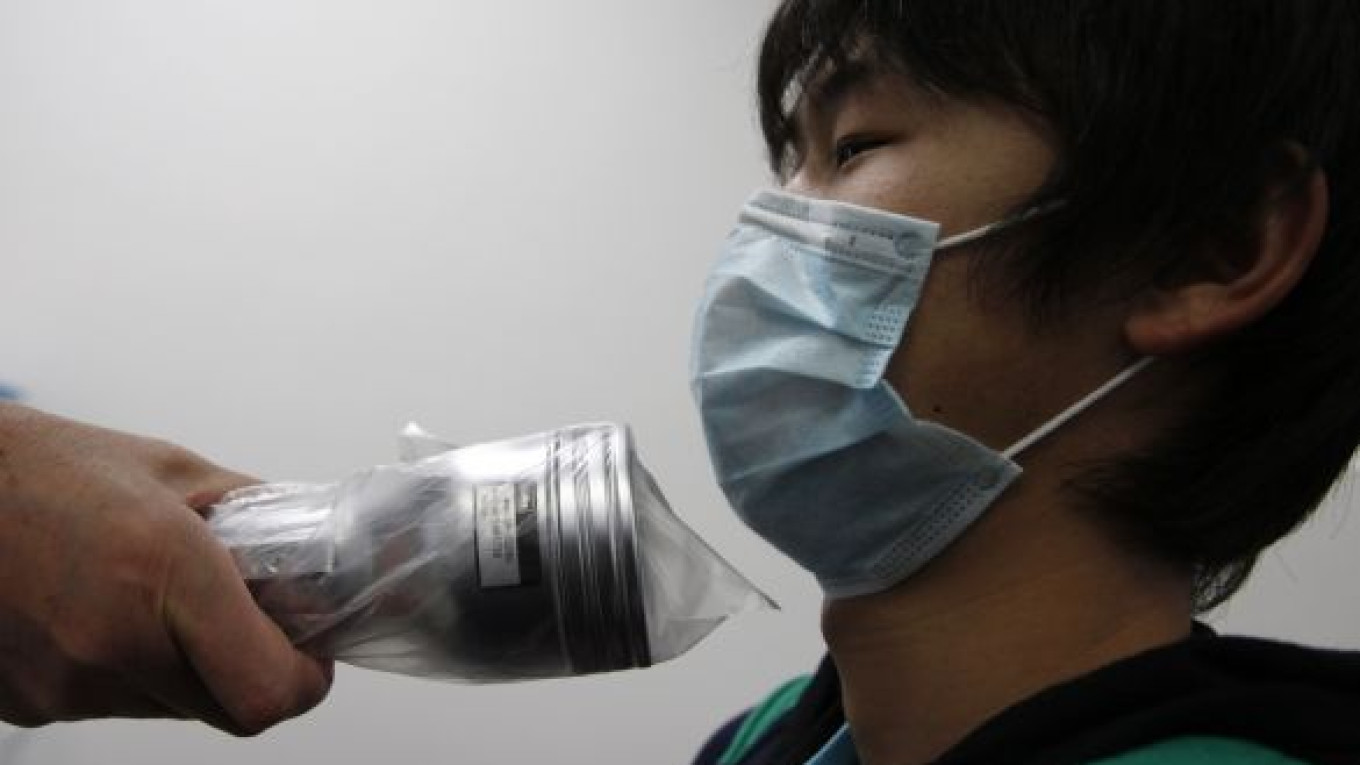
More than 60 Japanese sites post radiation levels from around the country, while private companies have set up their own monitoring to keep employees and the public updated. Readings in Tokyo soared 21-fold to as much as 0.809 microsieverts an hour on March 15, compared with 0.0338 microsieverts before the quake, according to the Tokyo Metropolitan Institute of Public Health. That's still less than one-hundredth of the radiation dose from a single chest X-ray.
Japan's population has flocked to download reference software and set up blogs. Medical reference, navigation and transportation software for the iPhone topped application downloads at Apple's iTunes Store in Japan after the quake, according to PositionApp.
"Yurekuru Call for iPhone," an early warning earthquake notification service; "Flashlight-4," which uses the screen as a light source; and a location app for the nearest hospitals and convenience stores, were among the top downloads, it said.
//Can't See, Smell
Radiation fears are especially poignant in Japan because of the fallout from the atomic bombs dropped on Hiroshima and Nagasaki in 1945 by the United States to end the war, Ishikawa said.
"People are frightened by radiation because you can't touch or smell it, can't confirm it with your five senses," he said.
Still, one danger with the wealth of information, public and private, is its sheer volume, he said.
"It increases the amount of noise, false, ungrounded and manipulative information that may cause panic."
A Message from The Moscow Times:
Dear readers,
We are facing unprecedented challenges. Russia's Prosecutor General's Office has designated The Moscow Times as an "undesirable" organization, criminalizing our work and putting our staff at risk of prosecution. This follows our earlier unjust labeling as a "foreign agent."
These actions are direct attempts to silence independent journalism in Russia. The authorities claim our work "discredits the decisions of the Russian leadership." We see things differently: we strive to provide accurate, unbiased reporting on Russia.
We, the journalists of The Moscow Times, refuse to be silenced. But to continue our work, we need your help.
Your support, no matter how small, makes a world of difference. If you can, please support us monthly starting from just $2. It's quick to set up, and every contribution makes a significant impact.
By supporting The Moscow Times, you're defending open, independent journalism in the face of repression. Thank you for standing with us.

Remind me later.