

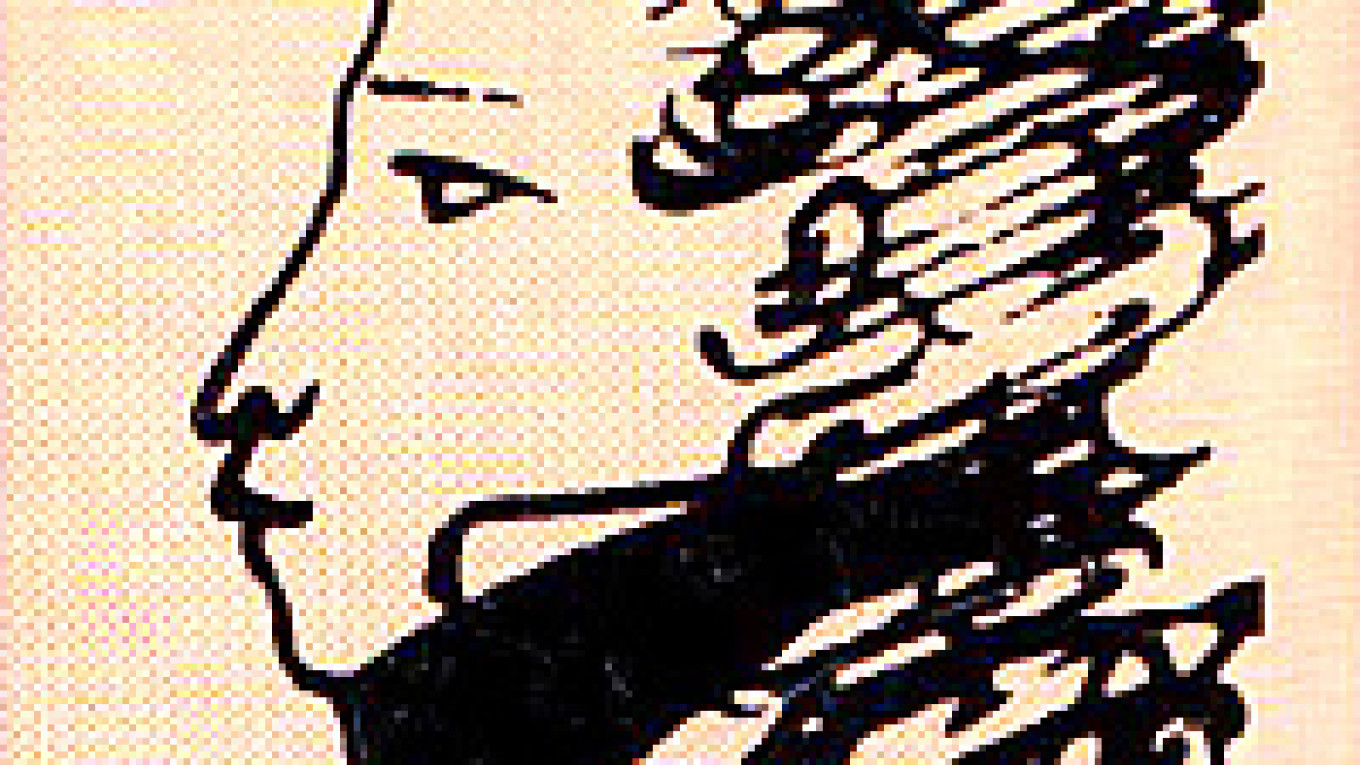
The book, "Pushkin: Documents from his Biography," was one of my purchases at December's non/fiction book fair. It is the first of two volumes, following the events from Pushkin's birth in 1799 up to 1829. A second volume will cover the final eight years of the poet's short life. Running to almost 1,000 pages, the book also includes high-quality reproductions.
It is no accident that Iskusstvo published a substantial number of copies. For Russians, Pushkin is still very much the national author, and his work and, to a large extent, his life, remain central to the school curriculum.
Back in Soviet times, a book like this would have been snapped up by all the members of the intelligentsia for their home libraries. Today, Russians are less keen to hold onto the Soviet Union's reputation of being the nation that reads the most books, but Pushkin's name still evokes the old instincts.
Apart from genealogical investigations into the Russian nobility and school reports revealing Pushkin was a mediocre student, the book is filled with police documents. The poet was exiled from Moscow and Petersburg, several times, and throughout his youth and adult years, he was under permanent surveillance.
On the one hand, the police reports give us a detailed account of the poet's life, with attention to time and place rare from biographers or memoirists. On the other hand, it is sad to see that the poet was under such unrelenting scrutiny for no apparent reason.
It is also amazing that the full force of the state machine was often devoted to discussing literary work -- from "Andre Chenier," a poem about the French poet who perished in 1794 during the revolutionary terror, to "Gavriiliada," an irreverent retelling of the Annunciation story, which was considered blasphemous and almost cost Pushkin his career.
Bizarrely, this tradition lasted at least until the discussion of Boris Pasternak's "Doctor Zhivago" in 1958. In later cases of literary ostracism, such as the condemnation of Joseph Brodsky, officials wisely abstained from discussing literary merits.
The volume is a good read -- and interest in Pushkin is perhaps one of the few things that gives Russian intellectuals the feeling of belonging to a single nation.
A Message from The Moscow Times:
Dear readers,
We are facing unprecedented challenges. Russia's Prosecutor General's Office has designated The Moscow Times as an "undesirable" organization, criminalizing our work and putting our staff at risk of prosecution. This follows our earlier unjust labeling as a "foreign agent."
These actions are direct attempts to silence independent journalism in Russia. The authorities claim our work "discredits the decisions of the Russian leadership." We see things differently: we strive to provide accurate, unbiased reporting on Russia.
We, the journalists of The Moscow Times, refuse to be silenced. But to continue our work, we need your help.
Your support, no matter how small, makes a world of difference. If you can, please support us monthly starting from just $2. It's quick to set up, and every contribution makes a significant impact.
By supporting The Moscow Times, you're defending open, independent journalism in the face of repression. Thank you for standing with us.

Remind me later.