

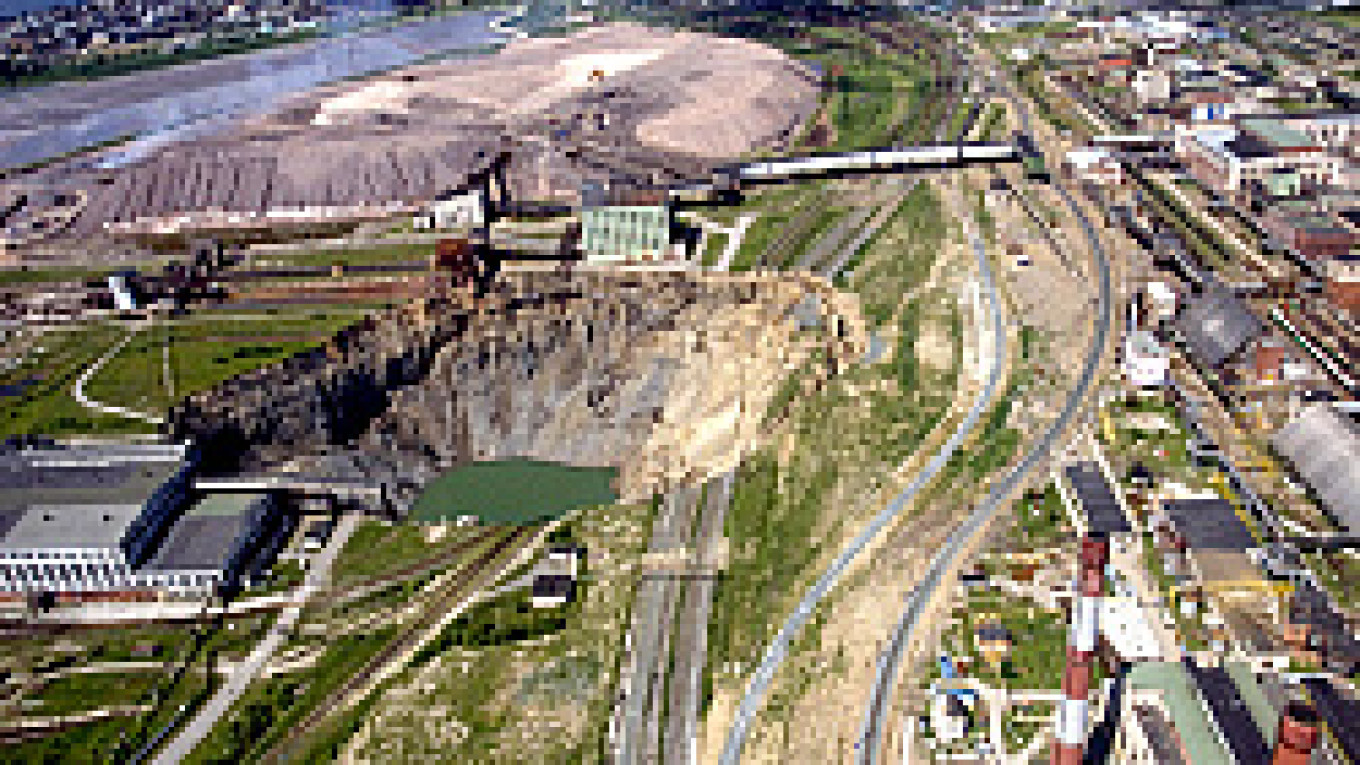
Sergei Testov, chief engineer at a power station near the sinkhole, said the link could be disrupted for at least several weeks as the government considers options for a third rail spur to move potash from Silvinit's mine in the Ural mountains.
"We will do everything we can to build the new rail line before the old one is closed," Testov, one of the lead engineers in the rail link construction program, said by telephone from the Perm region.
"It probably won't be a disruption of two or three months, but for two or three weeks we will probably need to disrupt it."
Silvinit, which accounts for more than 10 percent of the global potash supply, reduced shipments of the soil nutrient last year after the collapse of a 50-year-old deposit owned by rival miner Uralkali opened up the sinkhole and cut its rail link.
The disruption to supplies caused potash prices to rocket to record highs on fears of a global shortage at a time when the fertilizer component is in high demand from farmers anxious to replenish dwindling global grain stocks.
Canadian miner Potash Corporation of Saskatchewan, the world's largest potash company, temporarily suspended new sales contracts in October on fears of a global shortage following the first disruption near the sinkhole.
"The situation is keeping us in suspense, but we are sure a crisis can be averted," said Anton Subbotin, chief spokesman for Silvinit.
Testov is chief engineer for Thermal Power Plant No. 10 in the Perm region, part of power generating company TGK-9. The plant is only a few hundred meters from the sinkhole, a crater 300 meters in diameter and 70 meters deep.
Both Testov and Subbotin said the hole was about 100 meters from the replacement rail link completed this year and that it was spreading toward it. When it gets to within 75 meters, local safety officials would shut it down, they said. The government is now examining a number of possibilities for a third rail spur to replace the one that will be closed.
"The alternative is still only in the planning stages," Testov said. "Once the government makes a decision, in the best case scenario I think we can build it in three months."
At a tour of the power plant last week, Testov and plant director Alexei Maltsov said the sinkhole was expanding toward the rail line at a rate of around 10 meters per week ?€” meaning only two or three weeks remain before the line would need to be closed.
But on Monday, Testov revised this estimate, saying the expansion of the sinkhole had slowed. He declined to give a more specific estimate.
The web site of the Perm branch of the Emergency Situations Ministry said the hole had not grown during the week ending July 4.
A Message from The Moscow Times:
Dear readers,
We are facing unprecedented challenges. Russia's Prosecutor General's Office has designated The Moscow Times as an "undesirable" organization, criminalizing our work and putting our staff at risk of prosecution. This follows our earlier unjust labeling as a "foreign agent."
These actions are direct attempts to silence independent journalism in Russia. The authorities claim our work "discredits the decisions of the Russian leadership." We see things differently: we strive to provide accurate, unbiased reporting on Russia.
We, the journalists of The Moscow Times, refuse to be silenced. But to continue our work, we need your help.
Your support, no matter how small, makes a world of difference. If you can, please support us monthly starting from just $2. It's quick to set up, and every contribution makes a significant impact.
By supporting The Moscow Times, you're defending open, independent journalism in the face of repression. Thank you for standing with us.

Remind me later.