

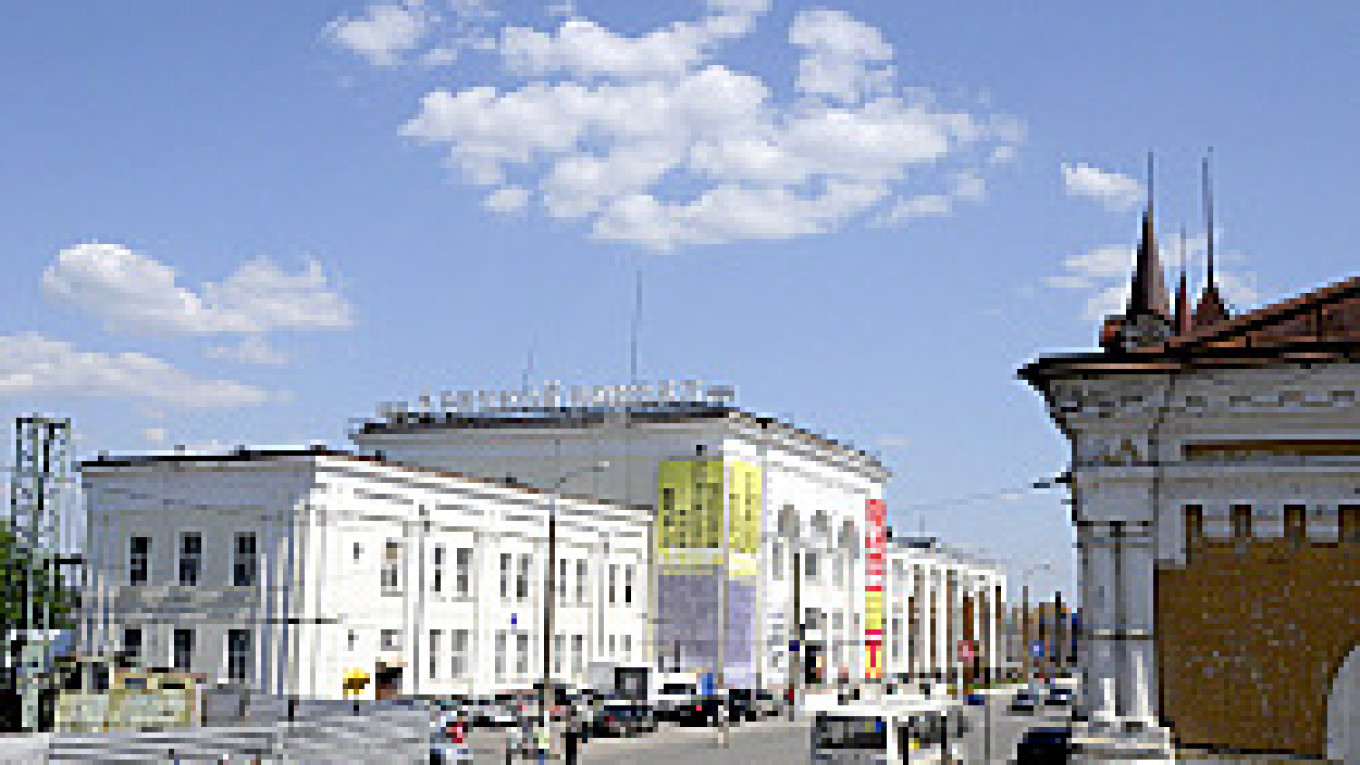
That, however, looks set to change. The Living Perm festival, which took place recently, incorporated art, music and literature in more than a hundred venues to mark the biggest cultural event in the region's entire history.
"There were doubts when I first suggested the title," admitted Marat Guelman, director of the Perm Museum of Contemporary Art. "But now, I'm not worried, because having seen how many sheets of paper there were for every part of the program, I understood that Perm is living. The main task is to show Perm that it is living."
The museum itself officially came into being only this March, when Guelman left his gallery at Winzavod in Moscow and the regional government signed the papers for its development. It is housed in an old riverboat station, in which Guelman curated an exhibition of "poor art" last September that was heavily favored to win the Innovation Contemporary Art Prize (though in the end, it lost out) and led Afisha magazine to name Perm "city of the year."
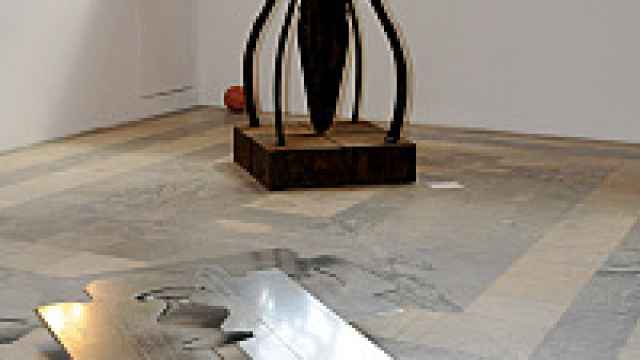
Sergei Glorio
An exhibit at Living Perm
|  |
| |
Many have already begun to refer to Perm as the "new Bilbao." The capital of the Basque region was, likewise, a large and largely unprepossessing industrial city until the Guggenheim opened a branch there in 1997. Since then, it has been transformed, featuring regular exhibitions by internationally known artists and becoming a major tourist destination.
Perm, of course, has a longer way to go still. The festival's centerpiece, the "Moskvapolis" exhibition at the Perm museum, was more a nonprofit art bazaar than a conventional museum show. Featuring stands from Moscow's major galleries, contemporary museums and its art press, it aimed to acquaint locals with big names like photographer Boris Mikhailov and painters Vladimir Dubossarsky and Alexandr Vinogradov and an equal measure of young artists, among them critical darling Vladimir Logutov and the popular Anya Zhelud.
The future of the museum looks sound. It has enjoyed the patronage of millionaire senator Sergei Gordeyev, who has to this point largely financed the project himself. Work is already well under way on establishing a permanent collection, and from the second half of this year the museum will be written into the regional budget. "In a year, Perm will be the cultural capital of Russia," Guelman told The New York Times. "A phenomenon is being created in Perm that will pull all of Russian art up to an international level."
The parallel events, far too numerous to list, ran the gamut from the post-Revolutionary avant-garde to a curious Russian take on Jean-Michel Basquiat. Those were the two particular highlights of the festival. The former, an exhibition dedicated to an obscure collective in a village near Perm "told" by Yekaterina Degot and artist Leonid Tishkov, will transfer to Winzavod in September for the Moscow Biennale's parallel program. The latter, which consisted of advertising billboards appropriated by the foul-mouthed St. Petersburg group Prosthesis, took place in a run-down building and had a buffet consisting of highly alcoholic medical spirits instead of the usual wine. And lest one should think that the festival relied too highly on imported art — inevitable at this nascent stage in Perm's cultural development — 500 young artists and musicians from all over the region were brought over to visit the festival and take part in master classes.
"One thing is obvious — there was life there, a Living quarter, a Living Perm," Perm Governor Oleg Chirkunov wrote in his blog at the festival's close. "It's a place which definitely needs to be given new life. We need to get thinking, so that there's life there not once a year, but every weekend."
A Message from The Moscow Times:
Dear readers,
We are facing unprecedented challenges. Russia's Prosecutor General's Office has designated The Moscow Times as an "undesirable" organization, criminalizing our work and putting our staff at risk of prosecution. This follows our earlier unjust labeling as a "foreign agent."
These actions are direct attempts to silence independent journalism in Russia. The authorities claim our work "discredits the decisions of the Russian leadership." We see things differently: we strive to provide accurate, unbiased reporting on Russia.
We, the journalists of The Moscow Times, refuse to be silenced. But to continue our work, we need your help.
Your support, no matter how small, makes a world of difference. If you can, please support us monthly starting from just $2. It's quick to set up, and every contribution makes a significant impact.
By supporting The Moscow Times, you're defending open, independent journalism in the face of repression. Thank you for standing with us.

Remind me later.