

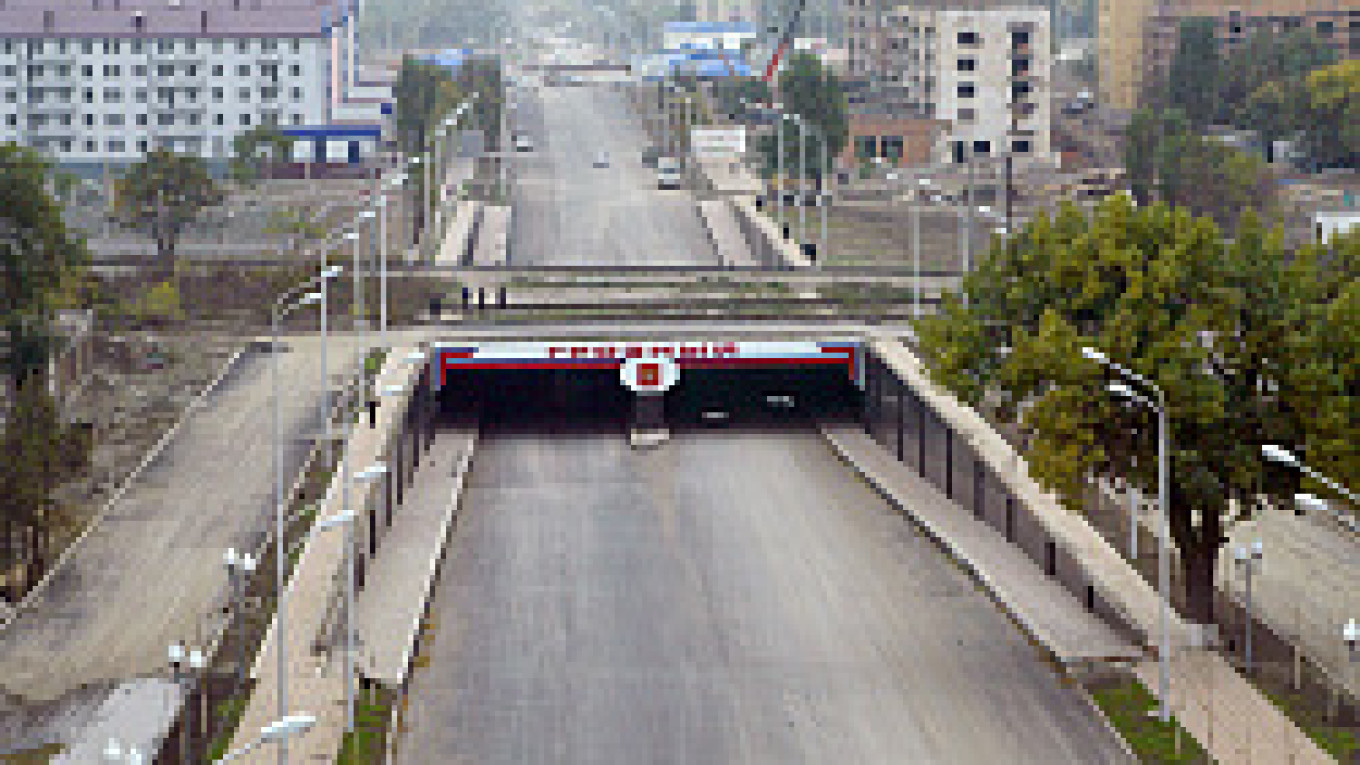
The officer says in a couple years, the city will look "just like before" -- meaning before federal forces launched the disastrous 1994-96 war that left separatist rebels in charge and the once-attractive city in ruins.
Grozny was pounded again after Russia launched a second campaign in 1999. But with the fiercest fighting in the past, the city is in the throes of a construction boom that is starting to erase the effects of war.
"It's getting better every day," said Tamerlan Abdulayev, 18, who travels to Grozny from a nearby village to attend trade school.
When he and a friend started three years ago, they would head home immediately after classes because the destroyed capital was depressing and there was nothing to do. "Now we stay and look around," he said.
A look around Grozny presents a strange mix.
Dilapidated apartment buildings stand by a road to the newly restored airport, expected to start regular operations soon. A towering new arch over a road leading into Grozny, decorated with portraits of Putin and the late Chechen President Akhmad Kadyrov, gives way to a wasteland on the city's outskirts.
The city still bears countless scars of battle: vines snake over the walls of bombed-out brick homes, and half-destroyed apartment buildings line streets, some with lights shining from windows of apartments occupied by returning refugees with nowhere else to go.
The arch and airport were officially opened this month, on the 30th birthday of Chechen Prime Minister Ramzan Kadyrov, the son of the president who was elected in 2003 and assassinated the following year. The younger Kadyrov is widely credited as the force behind the building boom, which has taken off since he assumed the post less than a year ago.
As head of the government, Kadyrov is responsible for economic issues, and he controls a fund in his father's name that helps pay for the restoration. Last month, he denied allegations the fund was financed by skimming off state salaries, saying the money comes from donations made by wealthy Chechens and other sources.
For many in Chechnya, the source is beside the point. They are finally seeing tangible improvements in a place long seen as a money pit -- a fount of cash for corrupt officials involved in overseeing a reconstruction that went nowhere for years.
"Huge money was spent and that was it, there were ruins. But after years of living in ruins -- people in Grozny don't remember anything else -- suddenly they begin to restore the city, restore streets," said Alexander Cherkasov, a Chechnya expert at the human rights group Memorial. "A serious restoration of the city is under way."
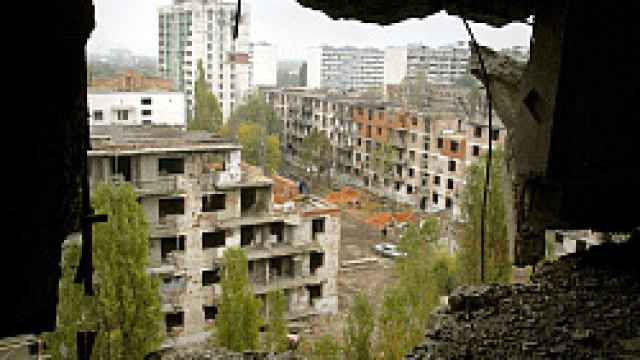 Musa Sadulayev / AP Bombed-out buildings still dot Grozny, but they are being replaced gradually. |  |
| |
Workers have begun restoring her building, she said, but she added that the reconstruction in Chechnya would not fix thousands of ruined lives.
"I feel no happiness about these changes," she said. "Even if they build a mansion of pure gold for every resident, they are powerless to bring back the dead or restore the health of people crippled in this war nobody needed."
Kadyrov spokesman Lyoma Gudayev said that under the region-wide reconstruction program -- called "No Trace of War" -- the capital will be "practically completely restored" within two to three years.
The change has its limits. Many residents live in squalid conditions, often without running water even in restored buildings. And critics of the Kremlin and Chechnya's Moscow-backed government say that in addition to papering over the wounds of war, the reconstruction is covering up a climate of fear sown by government forces they claim use abductions, threats and torture to maintain control.
Desperate for normalcy, many Chechens are willing to accept the trade-off, Cherkasov suggested.
Residents see the physical improvements "and they are inclined to embrace this, because it is easier to accept it and not to think about the frightening things that are happening," he said. "People are very tired, and they are inclined to take this for stability."
Not all Chechens are convinced. Actress Laila Baisultanova, 23, is glad streets and schools are being restored, but her brother disappeared more than two years ago, and she said abductions are a persistent problem that is not being resolved. Strolling near a statue of the elder Kadyrov, Baisultanova expressed concern about the quality of the construction -- in words that sounded like a warning about Chechnya's fragile future.
"What's built fast collapses fast," she said.
A Message from The Moscow Times:
Dear readers,
We are facing unprecedented challenges. Russia's Prosecutor General's Office has designated The Moscow Times as an "undesirable" organization, criminalizing our work and putting our staff at risk of prosecution. This follows our earlier unjust labeling as a "foreign agent."
These actions are direct attempts to silence independent journalism in Russia. The authorities claim our work "discredits the decisions of the Russian leadership." We see things differently: we strive to provide accurate, unbiased reporting on Russia.
We, the journalists of The Moscow Times, refuse to be silenced. But to continue our work, we need your help.
Your support, no matter how small, makes a world of difference. If you can, please support us monthly starting from just $2. It's quick to set up, and every contribution makes a significant impact.
By supporting The Moscow Times, you're defending open, independent journalism in the face of repression. Thank you for standing with us.

Remind me later.