

I’m not suggesting that you’re better off skipping town than seeing one of these shows — on the contrary, they’re pretty good. But here’s something else worth bringing up: Have you ever spent as much time thinking about where, on what and between whom you are going to sit in a theater as you (expats) do when you go online to make seat selections before heading home for the holidays? You might find it worth your time.
The quality of seating in Moscow theaters is as diverse as the theaters themselves. There are soft, comfortable seats that receive your body with delicacy and sensitivity. There are seats that tell you, “We really would rather you didn’t come here at all.” There are seats that cater to the young, and there are seats that pity the old. There are seats you cannot see out of, and there are seats you cannot get out of — not without difficulty, anyway.
Perhaps my favorites are the seats at the Vakhtangov Theater. These upholstered green, velvety chairs seem to have actually been designed to meet the demands of a theater viewer: They are soft enough to support you through the longest shows but not so luxurious as to let you fall asleep during the most trying of evenings. Unless you’re a critic, of course, but critics can sleep in boxcars tumbling down cliffs.
Also making my list of the best seats in town are both halls belonging to the Maly Theater — the original next to the Bolshoi Theater on Teatralnaya Ploshchad and the affiliate stage near metro station Dobryniskaya. Not only are the upholstered chairs at these venues beautiful, they seem to have been made by someone who respected his fellow humans and future spectators. True, space is a bit more cramped at the older hall than at the newer affiliate. But still — you sit down in either of these houses and feel as though you have something to live up to, and that someone is willing to give you the chance to do that. This, I might add, is a good feeling to have in a theater.
One of the first times I attended a performance at Anatoly Vasilyev’s School of Dramatic Art in the then-new building on Sretenka Ulitsa, Vasilyev took the stage before the show and made an extraordinary admission.
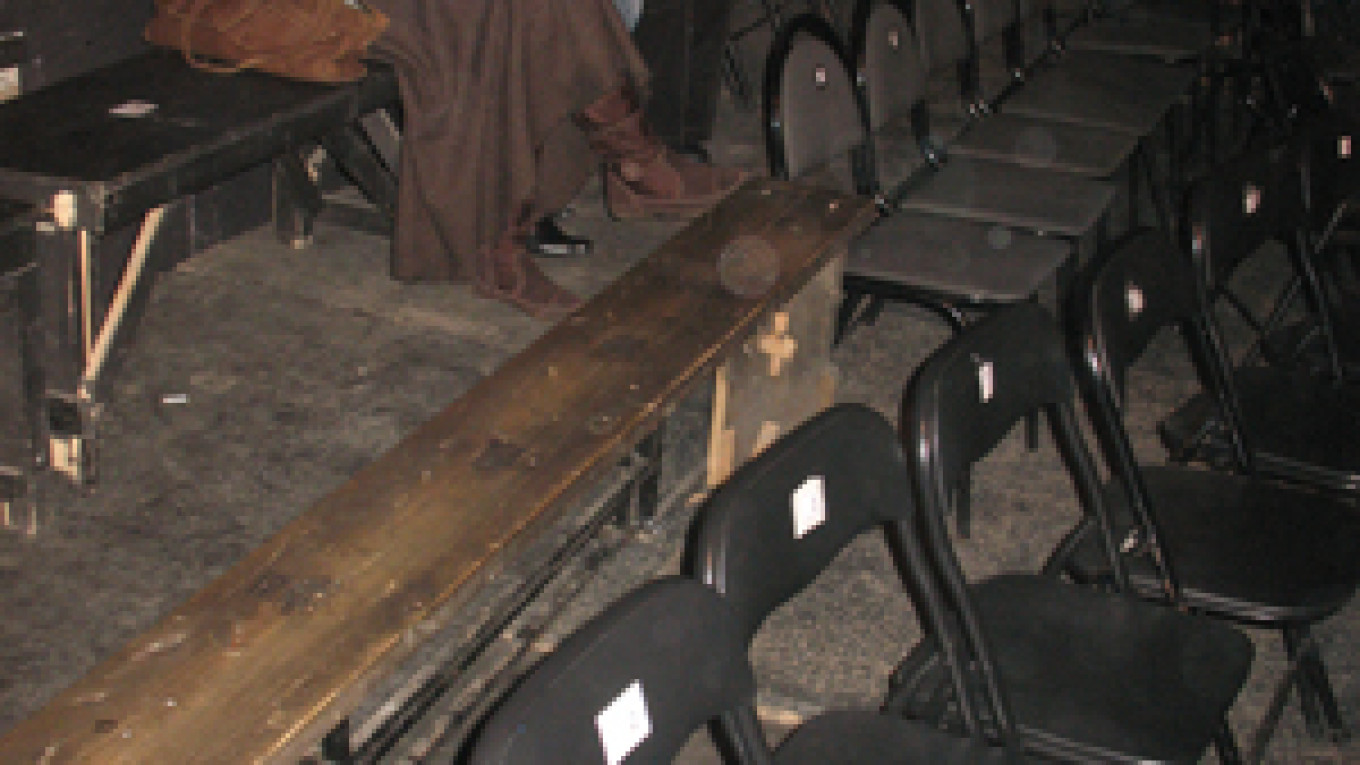
“If I had my way, none of you spectators would be here," he declared. "But since you are, I must inform you that during the performance no one is permitted to speak and no one will be permitted to leave.” Vasilyev, who is notoriously skeptical of, if not to say hostile to, spectators in his theater, is now long gone from Moscow. That’s a complicated story we don’t care about in the present context. What's important is that the seats Vasilyev had put into his theater are still there, punishing spectators. The tapered hardwood benches and narrow, hard chairs on which spectators sit there are aggressive in the discomfort they cause. I have plenty of padding on my back end, and all of it nonetheless invariably goes numb by the time I get to the end of a show there.
A number of Moscow theaters seem to have been built for a population from the 18th or 19th century, when, as I’m sure it has been scientifically proven by someone, people were much shorter. The strange thing about this is that all these theaters were built in the 20th century, and many were remodeled in the 21st. What were the remodeling architects thinking? In the seats of the newly remodeled Pushkin Theater I physically cannot sit normally. I am not exceptionally tall, an inch or so over 6 feet. But the seats in front of me in this house are so close that I can only sit with my legs splayed to either side, fighting for precious territory that my neighbors surely wish I would vacate. It is the same at Praktika, the Stanislavsky and the National Youth Theater. Whenever I attend these theaters I always ask for an aisle seat if I can — just like I do on all my flights to New York.
A Message from The Moscow Times:
Dear readers,
We are facing unprecedented challenges. Russia's Prosecutor General's Office has designated The Moscow Times as an "undesirable" organization, criminalizing our work and putting our staff at risk of prosecution. This follows our earlier unjust labeling as a "foreign agent."
These actions are direct attempts to silence independent journalism in Russia. The authorities claim our work "discredits the decisions of the Russian leadership." We see things differently: we strive to provide accurate, unbiased reporting on Russia.
We, the journalists of The Moscow Times, refuse to be silenced. But to continue our work, we need your help.
Your support, no matter how small, makes a world of difference. If you can, please support us monthly starting from just $2. It's quick to set up, and every contribution makes a significant impact.
By supporting The Moscow Times, you're defending open, independent journalism in the face of repression. Thank you for standing with us.

Remind me later.