

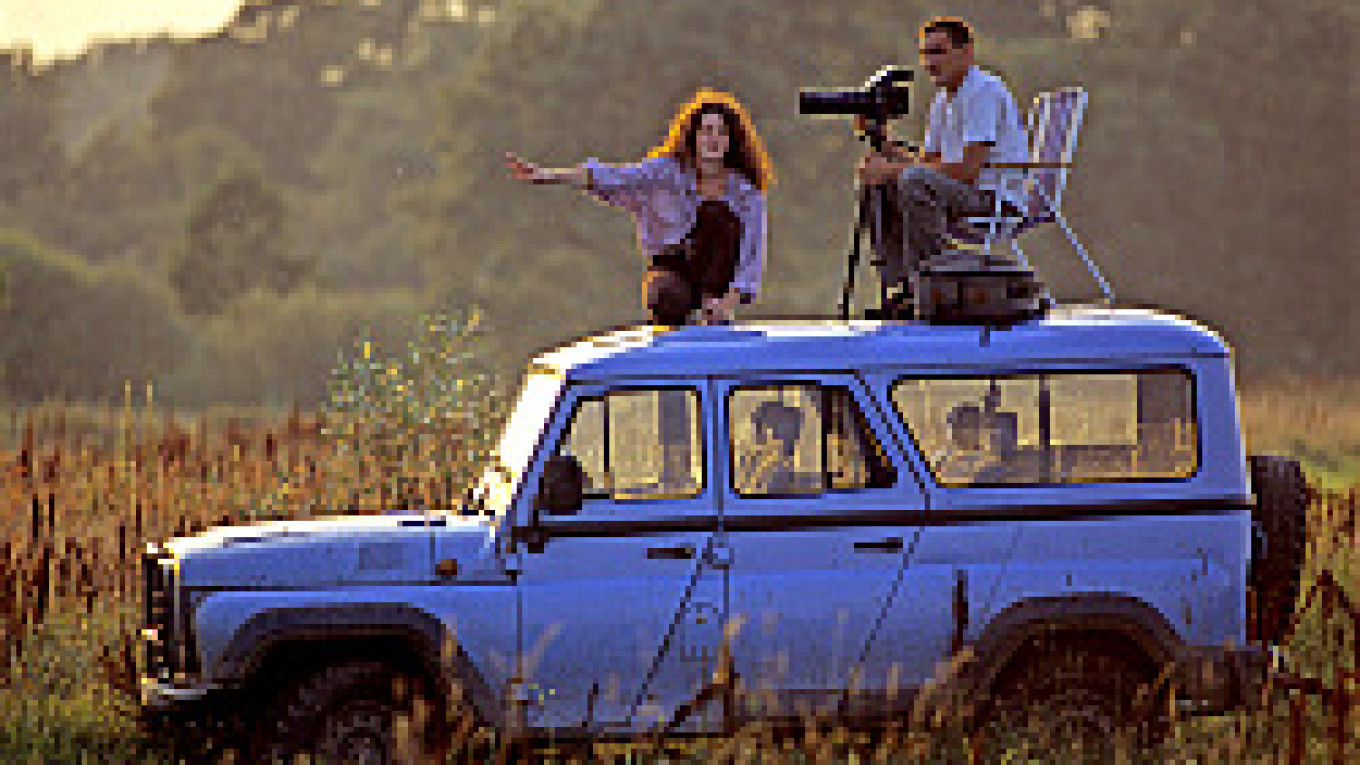
"There is no analogous system anywhere else in the world, but it is not widely known because the reserves' purpose is more scientific, not recreational, like in the U.S.," said Williams as she sipped orange juice at Starlite diner, a place she frequented in her Moscow days when she got nostalgic. Since then, she has moved to a tiny village in the Bryansk region, which has no roads, shops or phone line. She does not visit Moscow frequently.
Williams was hired by WWF at a time of opportunity for environmental activists in Russia. "Before the current oil boom, the number of nature reserves in Russia was growing and environmental awareness was higher," she said. At the time, she lived in a communal flat on Ulitsa Sretenka and worked on WWF projects out of a small apartment on Tulskaya, which she had to largely remodel herself. She helped WWF raise $10 million to help the zapovedniks at a time when their funding thinned to 10 percent of what it was during the 1980s.
As proposals for funding trickled in by mail, fax, and budding e-mail technology, one reserve director brought it all the way from the Bryansk region in person. "I told him, you could have just faxed it and avoided the trip, but he replied that the nearest fax was in Kiev, six hours in the opposite direction," she said. Little did she know at the time that the small reserve would soon become her home, and the man, Igor Shpilenok -- her husband.
Williams' decision to move from a well-established office job in Moscow to a reserve employee's salary of $60 dollars a month in Chukhrai, a village of 21 people, was made after a fateful train ride. As she was coming back from a trip to the Bryansk reserve, a woman went into labor on the commuter train. After "catching the baby, which was going to fall out of the womb onto the bench," she took the incident as a sign that it was time to start a new life and leave her office to do field work. "By then I had lived long enough in Russia to know that you have to pay attention to such signs," she said.
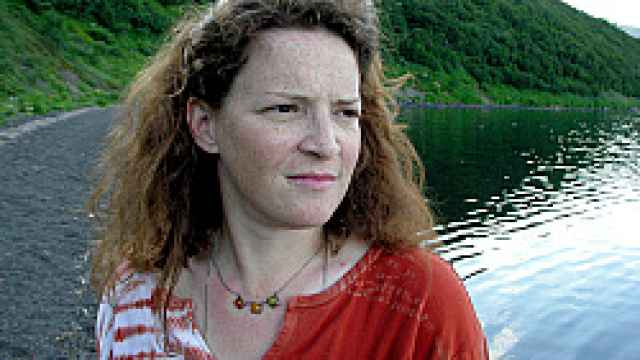
Laura Williams / For MT
Laura Williams decided to move to a small village and live on a salary of $60 a month after delivering a child on a train.
|  |
| |
Williams published a book this spring about her first year in the village, which follows seasonal changes in the nature reserve, the village's rural life and customs, and her relationship with Shpilenok. "I've always wanted to write, but it was hard to sit down and document the stories that were collected in my head," she said.
"She has a gift for telling interesting, human stories," said Paul Richardson, publisher of Russian Life magazine, where Williams began writing a column several years ago. The columns later served as the book's foundation.
Since the events in the book, Chukhrai's population has fallen to 14 people -- many of whom have strange nicknames like "Lepen" (wet snow) or "Balyk" (cured meat). Some are notorious poachers, who refuse to recognize the strictly protected area of the forest they have traditionally used for hunting. "Many see nature conservation as a luxury for people with no hardships," Williams said. "So I feel for the local people, and there can be some give and take, but there are also laws that need to be respected."
Williams and Shpilenok no longer work at the reserve, but continue to live in Chukhrai with their two sons. One of them is seven and is about to start school. Since there is no school for miles around, he will be home schooled, Williams said. The family travels to reserves all over Russia, as Williams continues to write and serve as an environmental policy consultant while Shpilenok works as a nature photographer. Freelancing became more feasible when cell phone reception reached their house five years ago. Prior to that, making a phone call or accessing the internet required riding a horse to the next village nine kilometers away.
Two years ago, they helped launch the WWF office in Kamchatka, which is now working locally to preserve the region's biodiversity. "It's harder to get a reserve started now, when economic development is the top priority," she said.
Williams's book, "The Stork's Nest: Life and Love in the Russian Countryside," is available from Fulcrum Publishing.
A Message from The Moscow Times:
Dear readers,
We are facing unprecedented challenges. Russia's Prosecutor General's Office has designated The Moscow Times as an "undesirable" organization, criminalizing our work and putting our staff at risk of prosecution. This follows our earlier unjust labeling as a "foreign agent."
These actions are direct attempts to silence independent journalism in Russia. The authorities claim our work "discredits the decisions of the Russian leadership." We see things differently: we strive to provide accurate, unbiased reporting on Russia.
We, the journalists of The Moscow Times, refuse to be silenced. But to continue our work, we need your help.
Your support, no matter how small, makes a world of difference. If you can, please support us monthly starting from just $2. It's quick to set up, and every contribution makes a significant impact.
By supporting The Moscow Times, you're defending open, independent journalism in the face of repression. Thank you for standing with us.

Remind me later.