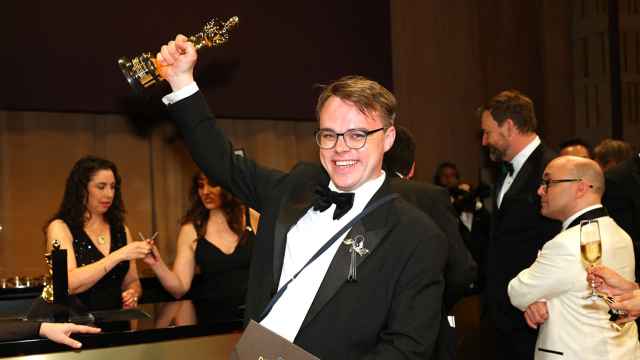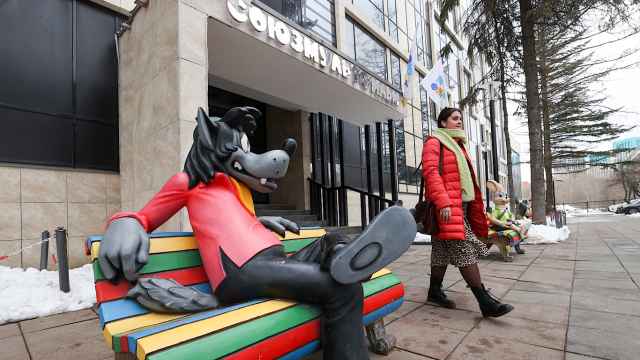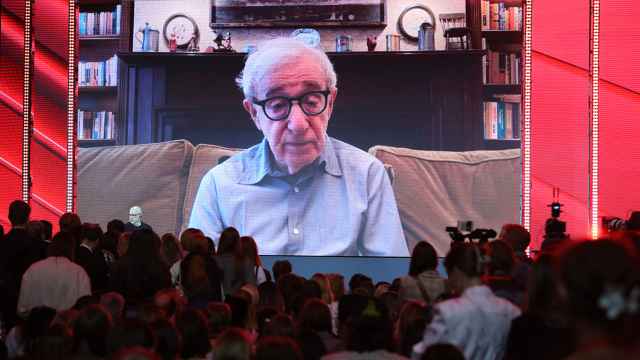
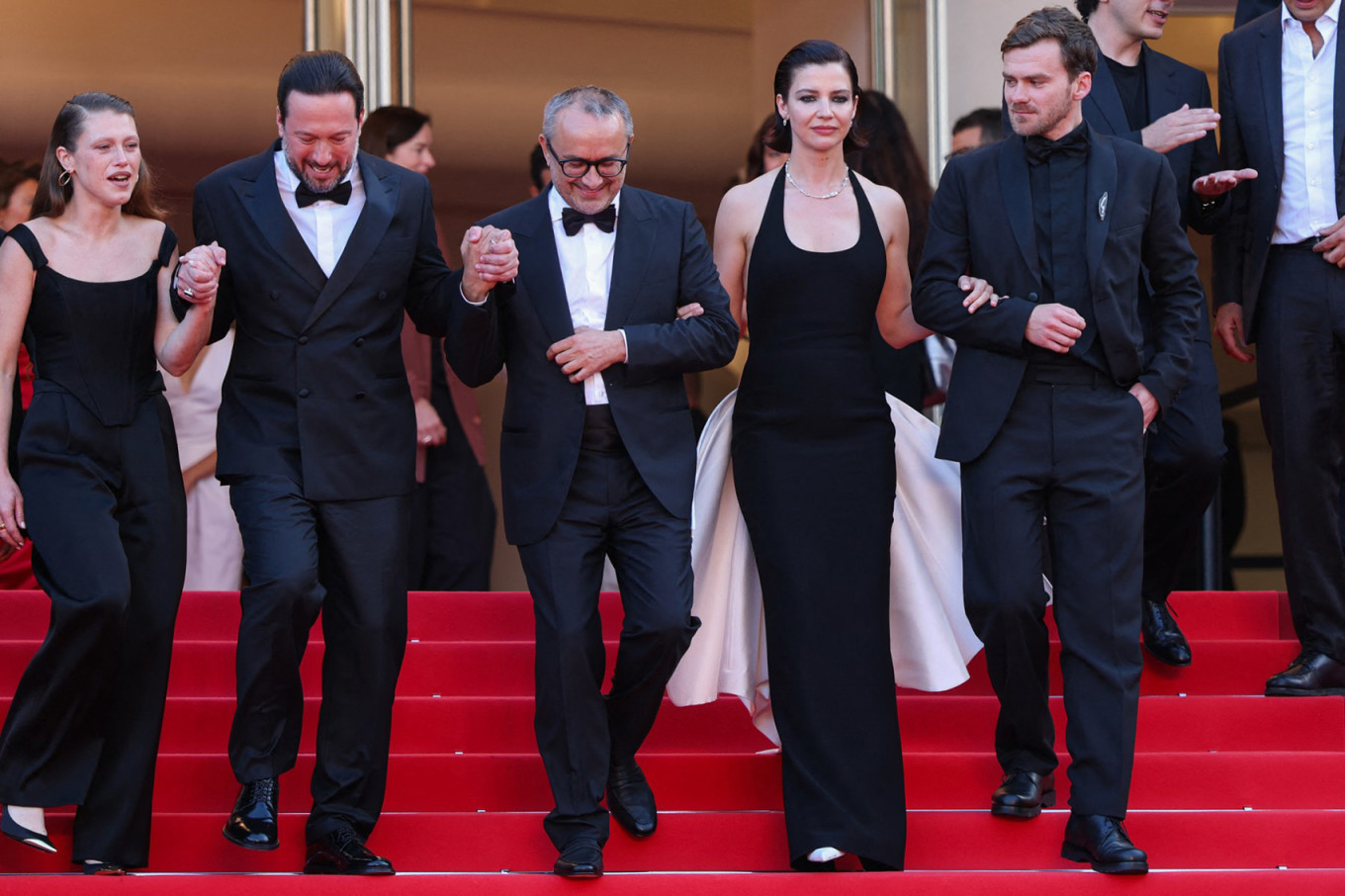
The reaction inside Russia to Andrey Zvyagintsev’s triumph at the 79th Cannes Film Festival was predictable. After the festival closed, Channel One, Rossiya-1 and NTV aired segments on the closing ceremony and the other winners.
But when it came to the Grand Prix awarded to “Minotaur,” the most acclaimed contemporary Russian film director’s latest film, their coverage fell silent. State news agencies mentioned Zvyagintsev only after Kremlin spokesman Dmitry Peskov condemned the anti-war speech he gave at the festival.
Pro-government bloggers and tabloids, by contrast, had plenty to say. Life.ru called the picture a “cheap knockoff” made with Western money and starring “foreign agent” actors and accused Zvyagintsev of “smearing the country for the sake of festival awards.”
Former State Duma lawmaker Sergei Markov, who in 2014 called on Zvyagintsev to apologize to the Russian people for his film “Leviathan,” attributed the prize to “Russophobia,” accusing the director of painting Russia in dark colors film after film. The popular pro-war Telegram channel Rybar ran a string of posts making much the same charge. Zvyagintsev, it said, trashed his homeland on the West’s dime.
Almost none of them had anything to say about what actually happens in the film.
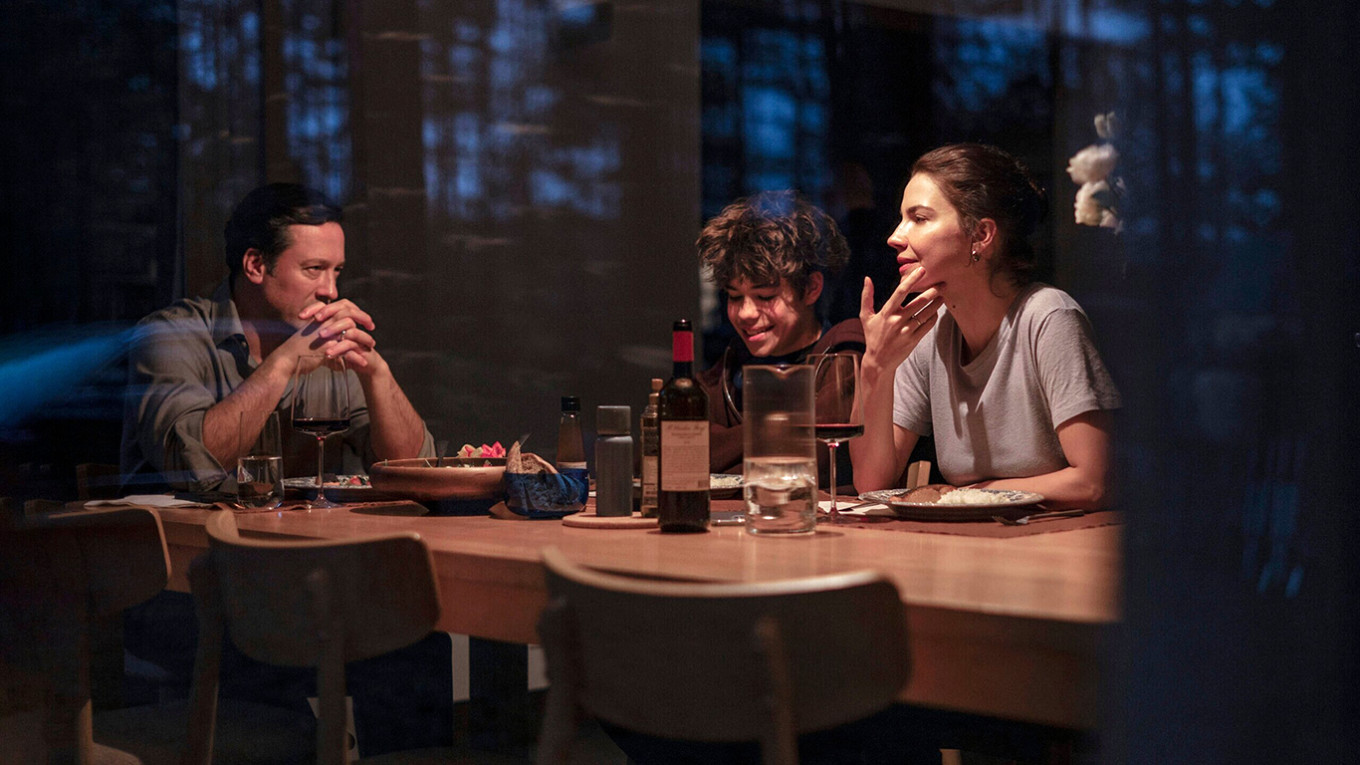
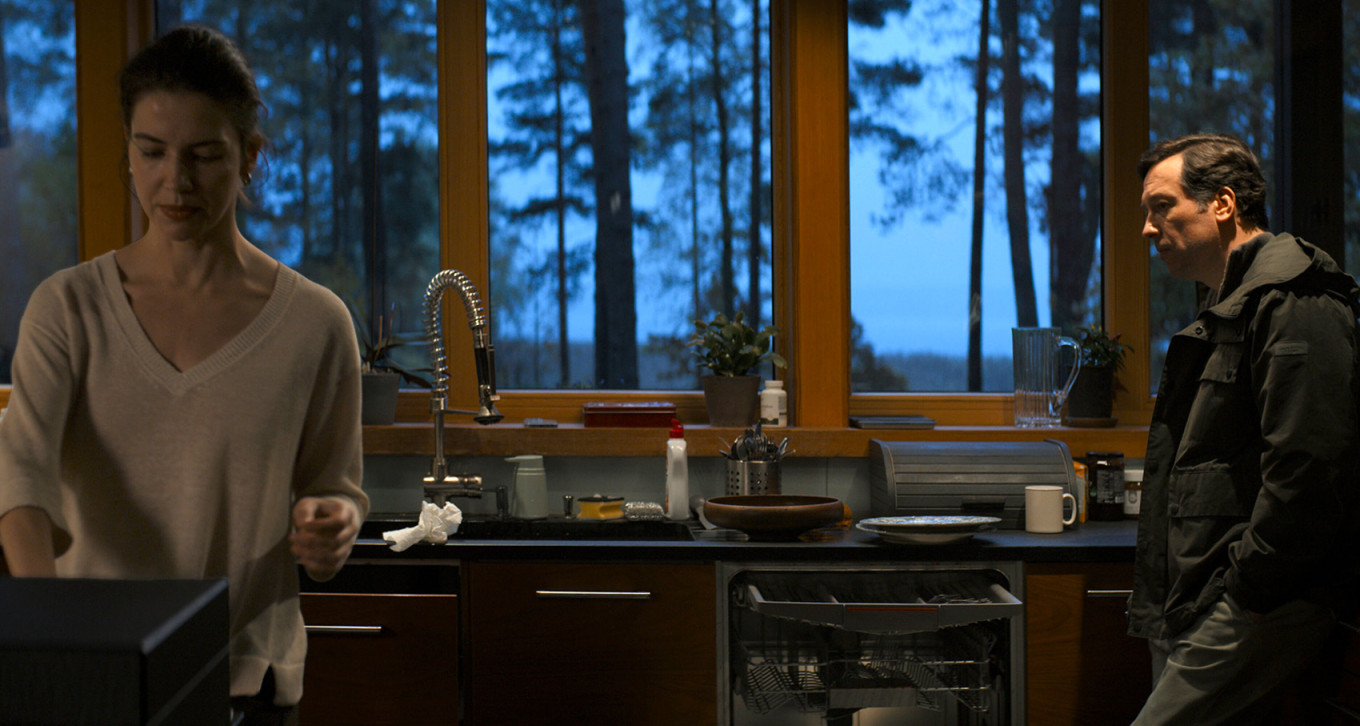
At the center of “Minotaur” is Gleb, a factory director in an unnamed Russian city. When he learns that his wife, Galina, has been unfaithful, he goes to see her lover and kills him in a fit of rage. He leaves behind every possible piece of evidence, from fingerprints to security camera footage. In this part, the plot loosely follows Claude Chabrol’s 1969 thriller “The Unfaithful Wife” (“La Femme infidèle”), in which a husband discovers his wife’s affair and the couple end up trying to cover up a murder together.
Zvyagintsev is especially good at showing how the war cuts into ordinary life, painfully and almost imperceptibly. People take taxis and buses to work or out to dinner. Then a poster urging men to sign a military contract comes into view, and a group of soldiers walks past. The war seeps just as quietly into conversations over dinner and into Gleb’s office routine. Nothing seems to have happened, and yet everything has changed.
Equally striking is the way warm, lively characters, such as Galina’s lover, make Gleb and his world seem colder. Zvyagintsev pulled off this juxtaposition especially well in his earlier films “Elena” and “Loveless.”
Much in the film still seems odd. Gleb, for instance, does not change at all — neither after he makes himself complicit in the crimes of the state, nor after he commits a crime of his own. He is cold, detached and harsh from the start, with occasional flashes of humanity.
Perhaps Zvyagintsev meant to show “crime without punishment,” even in Gleb’s own conscience. Yet Gleb seems as sure of himself at the beginning as he does at the end. Early on, he feels sorry for a 20-year-old worker. Near the end, that same sympathy leads him to cross the young man’s name off a list drawn up for the military enlistment office.
Most importantly, the situation itself misrepresents the logic of the repressive machine. The film’s biggest departure from reality comes when Gleb turns to the mayor. A single hint is all it takes for the mayor to shut down the murder investigation. The film gives a well-connected man the kind of protection that loyalty can still buy in Russia for a traffic violation or even a corruption case.
But making a murder investigation disappear takes considerably more influence than a provincial mayor in today’s Russia can usually offer.
In reality, these mayors are people who can easily end up in prison themselves and, from there, in the so-called “special military operation.” The security services answer to federal authorities and often go after mayors themselves.
The CEDAR research center estimates that from early 2023 to mid-2026, one in 10 mayors of large and mid-size cities was implicated in a criminal case, along with 9% of senior regional officials and about 8% of officials at the ministerial level. The arrest rate among officials has increased fivefold since the start of the full-scale invasion.
CEDAR found that regional elites had borne the brunt of the increase, as mounting economic problems and shrinking revenues are driving a new redistribution of property and spheres of influence in which the security services play the leading role.
Even before the full-scale invasion, Russians joked that chief accountant and governor were the two jobs most likely to land you in prison.
Since 2022, at least eight local leaders and dozens of their deputies have gone from office to the front. The former mayor of Surgut reportedly went to fight in Ukraine while on trial for commercial bribery charges. A former mayor of Vladimir, convicted of taking a bribe, is also in the combat zone. In Vladivostok, two successive former mayors have gone to war.
A military contract can offer a way out of criminal prosecution or a prison sentence, even for officials who once ran large regions. For some, it appears to have been their only way out. There is an echo here of Stalin’s purges, when high office and loyalty offered little protection and even the people who carried out the purges eventually fell victim to them.
The price Gleb pays for the mayor’s protection is just as hard to believe. Early in the film, city officials summon Gleb and other businessmen and tell them to hand over the details of 14 employees to the military enlistment office. The number comes from the Minotaur myth, in which Athenians sent 14 people into the labyrinth as a sacrifice to the monster.
By handing over his workers’ names, Gleb believes he has proven his loyalty and earned the right to ask the mayor for something in return.
But if that action marks a moral collapse for Gleb, all it does for the authorities is save the enlistment office the trouble of tracking down men who had not managed to flee abroad to escape mobilization. It is hard to see why a mayor would risk intervening in a murder investigation in exchange.
In the real post-2022 Russia, investigators would more likely have arrested Gleb and sent him to a pre-trial detention center. To escape punishment, he would have had to do more than call the mayor — he would have had to sign a contract with the Defense Ministry from behind bars.
Crime without punishment is, of course, a pressing question in Russia. The war has given people convicted of serious crimes a way to get out of prison, provided they survive what comes next. The country’s prison population has fallen by roughly 150,000 to 180,000 since 2022, largely because inmates were recruited to fight in Ukraine, first by the Wagner mercenary group and then directly by the Defense Ministry.
The news outlet Vyorstka found that men returning from the front killed at least 378 people in Russia in the first three years of the war. Of the 166 defendants in the murder cases it examined, 106 were former prisoners, many of whom had already served time for murder or grievous bodily harm.
It is hard to say which Russia is more frightening. Is it the one Zvyagintsev paints, where midlevel bosses prosper by sacrificing ordinary people? Or the real one, where governors can end up fighting in Ukraine alongside men called up in the mobilization, convicts who chose a contract over a prison sentence, men who went for the money and men who were tricked into signing?
Zvyagintsev seems to have conceived “Minotaur” as a parable about complicity and dehumanization. The film is at its strongest when it shows what Gleb is willing to do to the people who work for him.
Yet the bargain that saves him sells Western audiences a picture of Russia familiar from the 1990s, when a well-connected boss could expect to settle almost anything with a phone call and a mayor might bury a murder investigation without anyone ever finding out.
Perhaps the real Russia is scarier after all. There, not even loyalty to the regime can buy you safety.
A Message from The Moscow Times:
Dear readers,
We are facing unprecedented challenges. Russia's Prosecutor General's Office has designated The Moscow Times as an "undesirable" organization, criminalizing our work and putting our staff at risk of prosecution. This follows our earlier unjust labeling as a "foreign agent."
These actions are direct attempts to silence independent journalism in Russia. The authorities claim our work "discredits the decisions of the Russian leadership." We see things differently: we strive to provide accurate, unbiased reporting on Russia.
We, the journalists of The Moscow Times, refuse to be silenced. But to continue our work, we need your help.
Your support, no matter how small, makes a world of difference. If you can, please support us monthly starting from just $2. It's quick to set up, and every contribution makes a significant impact.
By supporting The Moscow Times, you're defending open, independent journalism in the face of repression. Thank you for standing with us.

Remind me later.