
Hello and welcome to Regions Calling, your guide to developments from beyond the Russian capital by The Moscow Times.
In this week’s edition, we examine how Russia’s ballooning budget deficit is affecting ordinary people in the regions and whether their worsening quality of life could feed into protest sentiment.
To read the full newsletter with our curated roundup of news from across the regions, subscribe to Regions Calling here or on Substack.
The Spotlight
Regional governments across Russia are cutting social spending and funding for basic utilities amid ballooning budget deficits.
Delayed benefit payments, shortages of subsidized medicines, hospital closures, prolonged food shortages in remote communities and public sector layoffs are just a few of the impacts already being felt in some regions.
Driven by the outsized burden of war-related spending that Moscow has placed on the regions, the cuts are bringing the impacts of the invasion of Ukraine to even the most isolated communities thousands of kilometers from front lines.
But while the unwelcome changes are fueling discontent, experts say that we are unlikely to see a significant public backlash.
“I certainly would not expect social discontent to evolve into a nationwide protest movement,” said Irina Busygina, a comparative federalism expert and researcher at Harvard University’s Davis Center for Russian and Eurasian Studies.
“People will direct their grievances toward governors and local administrations, even though a significant portion of reasons for their worsening situation stems from decisions made in Moscow,” Busygina told The Moscow Times.
Public sector workers are among those expected to feel the immediate impact of the planned cuts.
In central Russia’s Nizhny Novgorod region, where the draft 2027 budget projects a deficit of 31.1 billion rubles ($385 million), the regional government has announced plans to cut its workforce by 15% next year.
“Unfortunately, we are forced to make deep, painful spending cuts in some areas. We will begin by cutting costs within our own ranks — that is, within government institutions,” Governor Gleb Nikitin said.
He added that the planned budget would “maintain its social focus,” including support for Ukraine war veterans.
Siberia’s Krasnoyarsk region, a resource-rich territory roughly the size of Algeria, also plans to lay off 15% of public sector employees next year.
A major producer of aluminum and nickel, Krasnoyarsk has one of Russia’s most strained regional budgets following a sharp fall in corporate profit tax revenues in 2022, according to a recent study by Sinikka Parviainen of the Bank of Finland's Institute for Emerging Economies.
Yet Governor Mikhail Kotukov stopped short of blaming economic pressures for the planned layoffs, describing them instead as part of a “renewal” and “transition to digital format.”
Even public sector workers who manage to keep their jobs face a further decline in their real incomes, economist Sergei Aleksashenko said.
“People who work in the public sector generally have no opportunity to change jobs or move elsewhere…They are like serfs, effectively bound to their place of work,” Aleksashenko told the exiled news website Novaya Gazeta Europe.
Though these workers “realize that their lives are getting worse,” their frustrations are unlikely to manifest in anything beyond a few angry social media posts “addressed to the government, but not to Putin,” Aleksashenko said.
In the republic of Sakha (Yakutia), planned cuts are expected to affect state-linked media outlets that receive more than 2 billion rubles ($24 million) a year from the regional government.
The diamond-producing republic, roughly the size of India but home to fewer than 1 million people, also faces cuts to airfare subsidies for thousands of residents of its Arctic districts.
These people depend on subsidized flights to reach the regional capital, Yakutsk, in order to get essential services like medical procedures and specialist consultations unavailable in their communities.
Vasiliy Nikolayev, a member of Sakha’s Il Tumen regional parliament, said last month that without the subsidies, residents of these districts — some of the coldest areas in Russia — would have to pay upwards of 70,000 rubles ($860) one way to travel to Yakutsk, compared with an average monthly salary of 80,000 rubles.
“We, the people of Yakutia living in the central districts, cannot even afford to travel to the northern parts of our own republic. It is far too expensive. We never get to see those regions, and we cannot visit our relatives there,” Nikolayev told the independent outlet Lyudi Baikala.
Although Sakha’s draft 2027 budget projects a relatively modest deficit of 2.7 billion rubles ($33 million), the eventual shortfall is likely to be several times larger.
In 2025, the republic’s deficit reached 12.1 billion rubles ($150 million), compared with an initial projection of 2.7 billion rubles.
Sakha’s economic difficulties “are not caused by the region’s economic ‘poverty,’ but by the way tax revenues are distributed within Russia’s budgetary systems,” analytical groups Sakha Policy and Advocacy Center and the Reputation Institute of the Sakha Republic (Yakutia) said in a recent report seen by The Moscow Times.
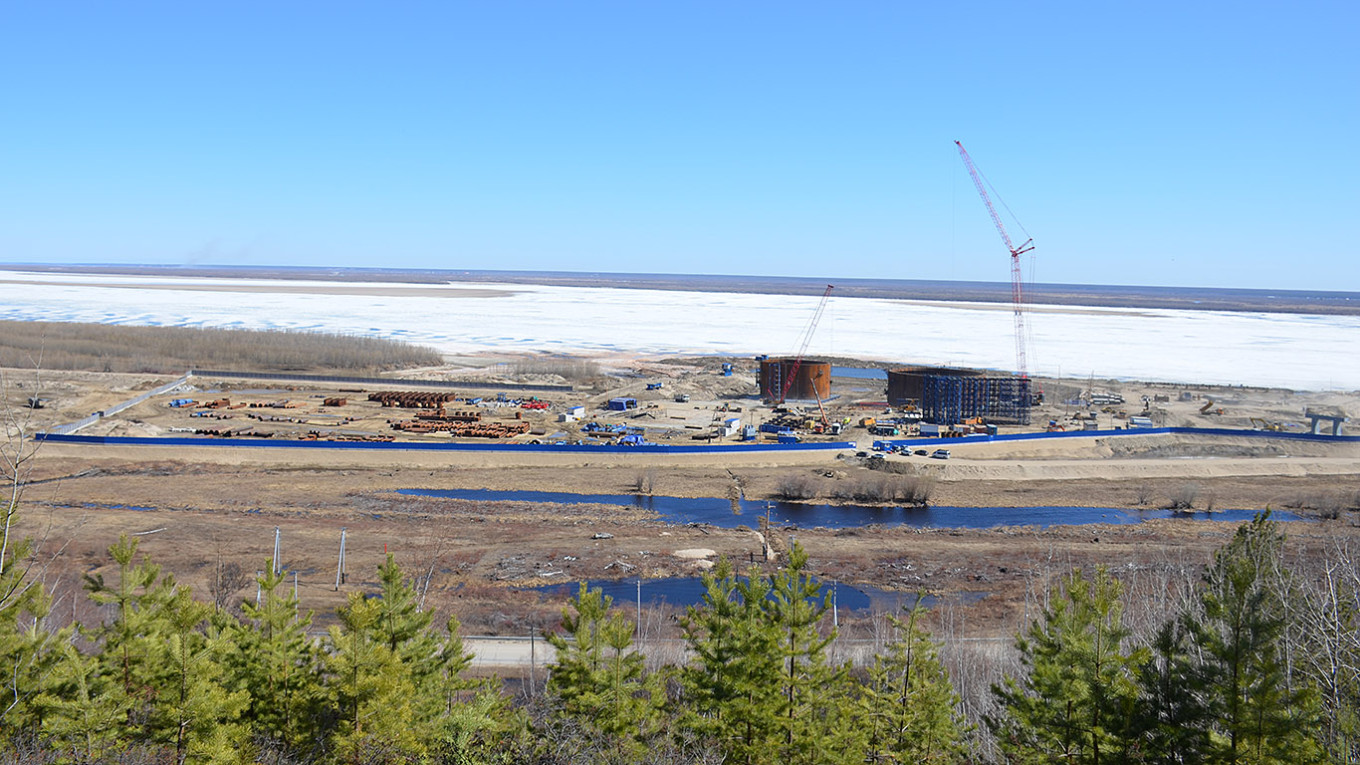
The republic’s gross regional product has steadily risen during the war from around 1.9 trillion rubles ($23 billion) in 2022 to 2.6 trillion rubles ($32 billion) by the end of 2025 thanks to growing resource extraction, the report says.
But “a significant share of the added value created is redistributed outside the regional budget or directed toward external priorities, including the war,” the report said.
That has left local authorities scrambling for money to cover even basic needs like funding for public kindergartens and schools.
In one recent proposal, a local lawmaker suggested halting construction of a bridge over the Lena River in Yakutsk and redirecting the money toward utilities.
First promised in the 1980s, the bridge is an essential lifeline for residents of the capital cut off from the rest of Russia by the river in fall and spring every year.
Although some officials in Sakha have publicly blamed Moscow for residents’ mounting hardships, the Kremlin retains “a fairly broad range of mechanisms at its disposal that allow it to keep protest activity in check, even as the economic situation deteriorates,” Busygina said.
Those tools include propaganda, shifting blame onto regional authorities and selectively providing financial aid in an attempt to “mitigate the most acute local crises” while increasing governors’ dependence on Moscow, she said.
“But all this does not mean [the Kremlin is] able to prevent the accumulation of social discontent,” she added.
- “Here's How Russia Plans to Pay for the Ukraine War in 2027” by Moscow Times Reporter
- “Russia Has a Budget Problem. Borrowing Its Way Out Won't Be So Simple” by Moscow Times Reporter
- “Regions Calling: The Human Cost of the Coal Industry Crisis” by Leyla Latypova
- “‘Crunching Ice Under My Feet’: In Russia’s Sakha, a Still-Unbuilt Bridge Is a Matter of Life and Death” by Leyla Latypova
A Message from The Moscow Times:
Dear readers,
We are facing unprecedented challenges. Russia's Prosecutor General's Office has designated The Moscow Times as an "undesirable" organization, criminalizing our work and putting our staff at risk of prosecution. This follows our earlier unjust labeling as a "foreign agent."
These actions are direct attempts to silence independent journalism in Russia. The authorities claim our work "discredits the decisions of the Russian leadership." We see things differently: we strive to provide accurate, unbiased reporting on Russia.
We, the journalists of The Moscow Times, refuse to be silenced. But to continue our work, we need your help.
Your support, no matter how small, makes a world of difference. If you can, please support us monthly starting from just $2. It's quick to set up, and every contribution makes a significant impact.
By supporting The Moscow Times, you're defending open, independent journalism in the face of repression. Thank you for standing with us.

Remind me later.