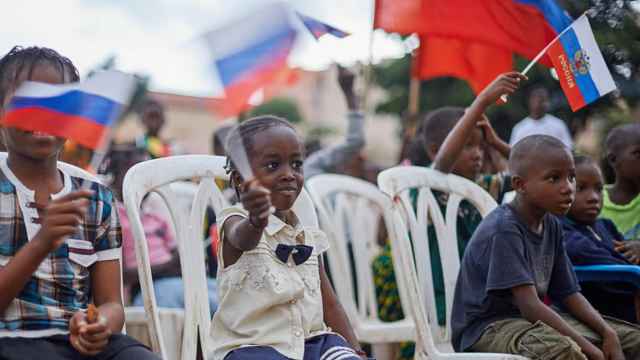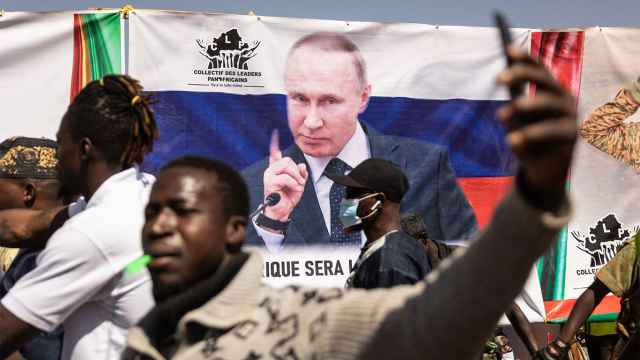

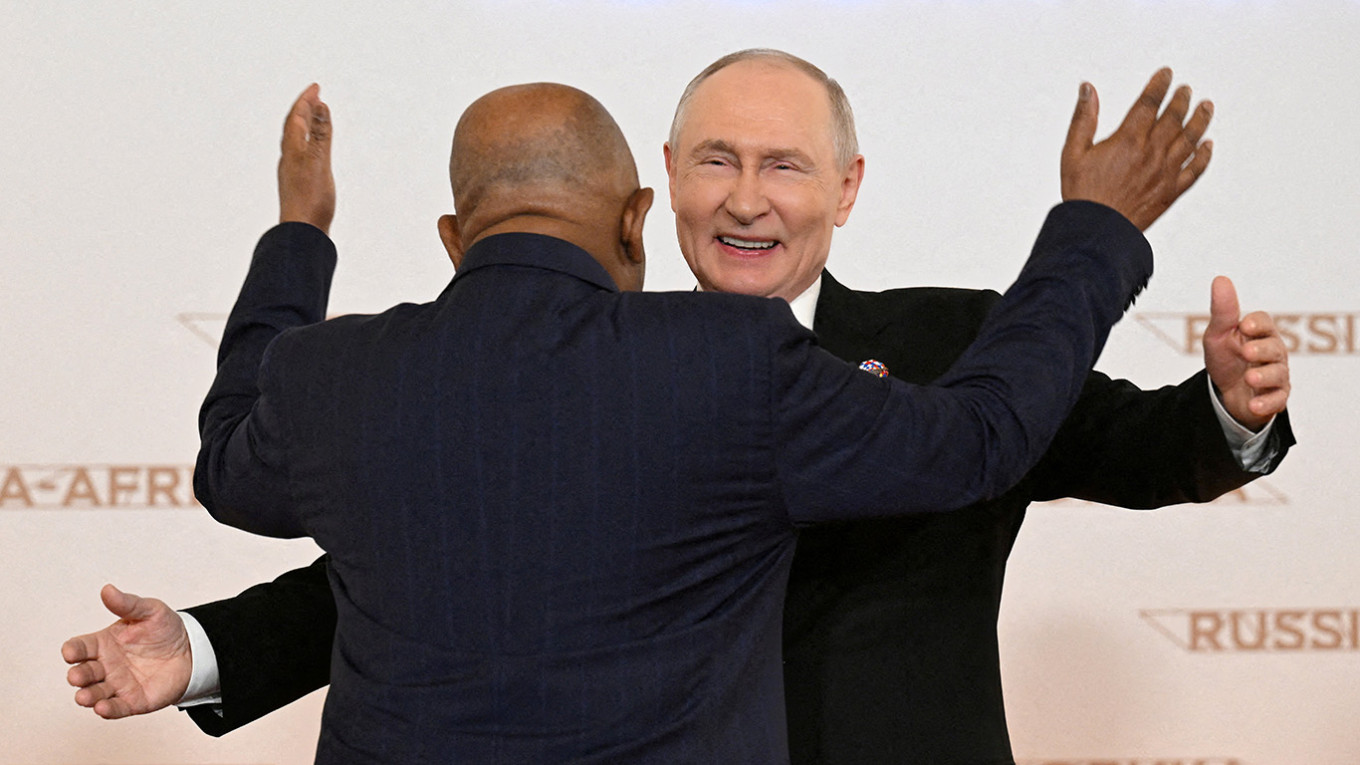
Every three years, the leaders of some of Africa’s largest nations descend on a major Russian city for a few days of shmoozing, media-ready photo opportunities and closed-door meetings with Kremlin officials.
Now in its third iteration, the Russia-Africa Summit has few surprises to offer. Each time, Moscow makes its pitch as an anti-imperialist bulwark, drawing on historic ties to African independence movements, while African leaders vie for trade deals and prestige.
The result is a mutually beneficial diplomatic concoction. Russia shows that it doesn’t need the West to have reliable allies, and African nations can boast of winning a global power’s favor.
This year’s event, which took place over the course of two jam-packed days this week, presented an altogether more pressing question: Nearly five years into the full-scale invasion of Ukraine, is cooperation with Russia still worth it?
The answer depends on who you ask, analysts told The Moscow Times this week.
The Russia-Africa Summit has become a staple diplomatic initiative for Moscow, one whose key attraction is the opportunity to meet with Russian officials including President Vladimir Putin. This year, delegations from 48 countries were in attendance, including 22 heads of state.
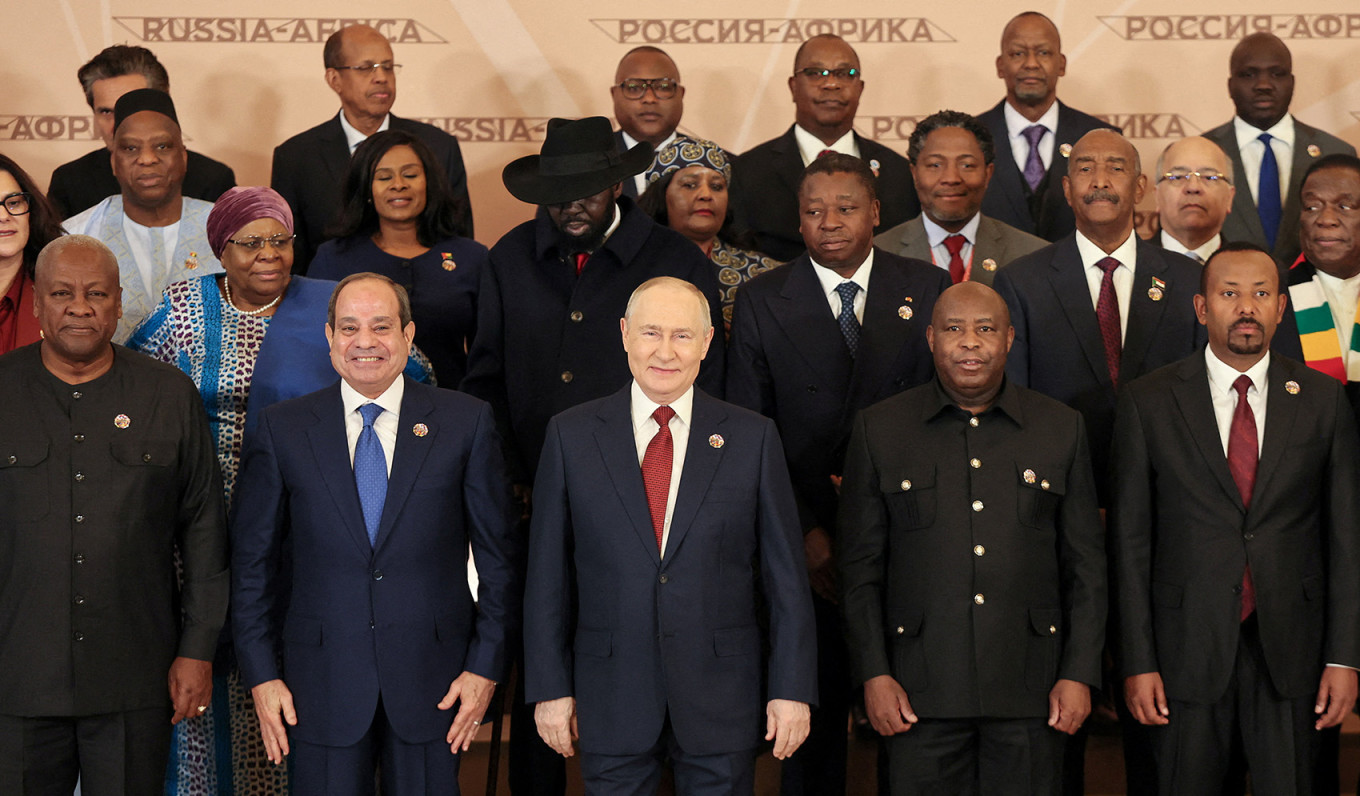
As with other regions where it has longstanding ties, Moscow’s relationship with Africa has been made trickier by the war in Ukraine.
Nowhere is this more visible than in the issue of military recruitment. African countries have been some of the biggest targets of Moscow’s shady efforts to fill a gap in manpower for the war in Ukraine by enlisting foreign citizens to serve, a practice that rights advocates say meets the criteria of human trafficking.
Meanwhile, fighting on land and sea continues to sporadically disrupt supply lines to longstanding buyers of Ukrainian agricultural products, like Kenya, Libya and Tunisia, driving up food costs as importers pivot to other providers.
These issues were present in a nascent form at the last Russia-Africa Summit in 2023. But three years on, the picture of how the war is reverberating across the continent is much clearer, and it doesn’t look reassuring for Moscow.
In countries like Kenya and South Africa, the recruitment of foreign citizens for the war has become a matter of national outrage, drawing attention from government investigators.
This week, human rights watchdog Amnesty International called on African officials to raise the issue with their Russian counterparts, saying it would be “a profound disservice to the people of their countries” to “remain silent.”
At the same time, Moscow continues to take a hands-off approach with managing its vast mercenary network. Rebranded as the Africa Corps and placed under the control of the Defense Ministry after the Wagner Group’s dissolution in 2023, the organization is still trailed by stories of human rights abuses in countries like Mali.
All of this complicates the image that the Russia-Africa Summit puts forward of two places “united by truly strong bonds of friendship and close partnership,” as Putin said during the second day of the summit.
In reality, those words might only apply to a limited number of countries in the region.
Many of the attending nations depend on Russian military or diplomatic support in one way or another, noted Joseph Siegle, a senior research associate at the University of Maryland’s Center for International and Security Studies and expert on African security issues.
“These are the majority of the 22 heads of state that are there,” Siegle told The Moscow Times. “Their rationale for being there is political rather than anything else. There’s a mutual interest in supporting that perception of Russia’s broader ambitions with Africa.”
The spectacle around the Russia-Africa Summit shouldn’t be taken as widespread approval of Moscow’s conduct, he added. Indeed, many countries in Africa are at worst skeptical and at best modestly enthusiastic of Russia’s ability to be a transformative partner.
There’s also fear of the potential reputational hit of engaging with Moscow.
For evidence of that, look no further than the number of participants. The Russia-Africa Summit’s strongest showing was in its first year, in 2019, when 43 heads of state attended. Both iterations since then have taken place during the war in Ukraine, and participation each time shrunk by nearly half.
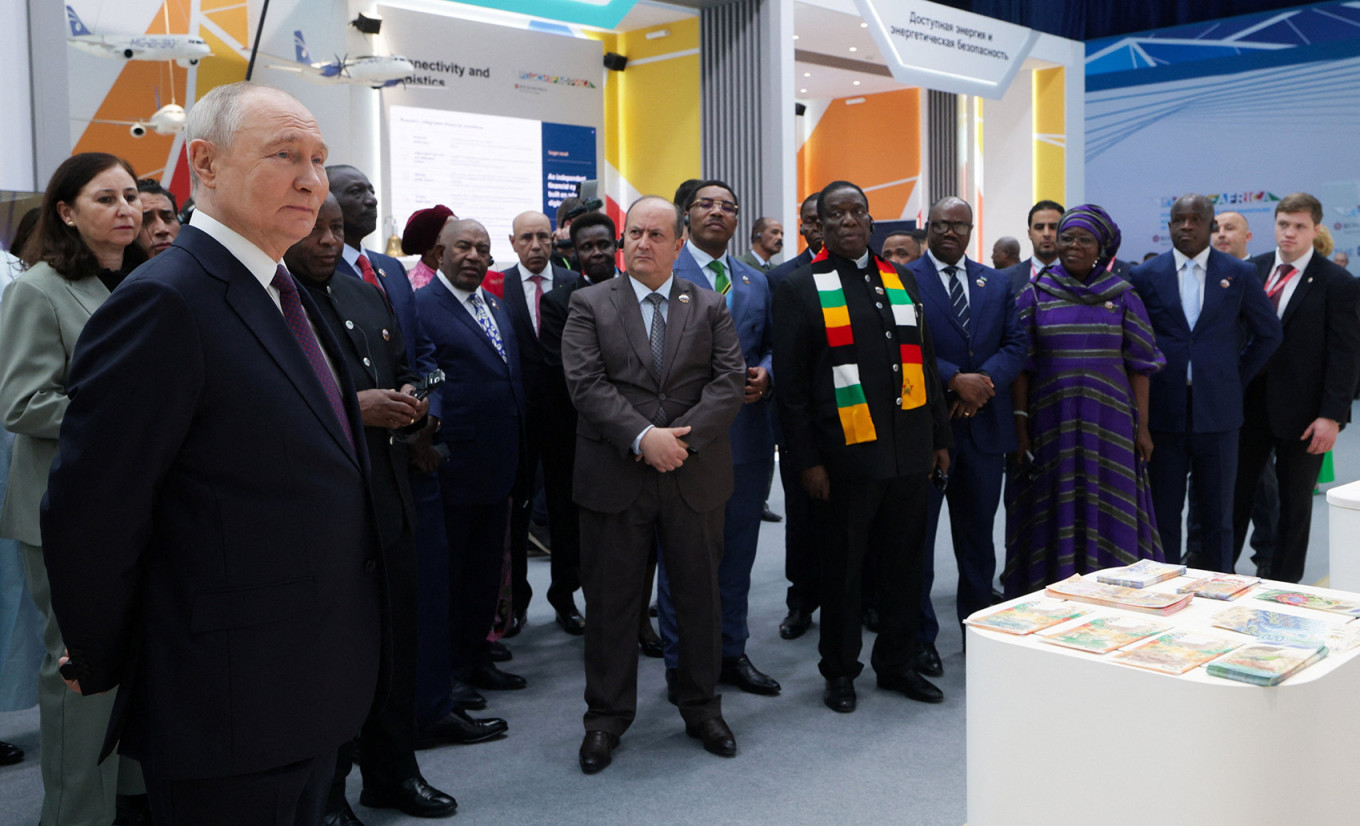
What’s more, while the summit sells itself on being a venue for dealmaking, there are some basic discrepancies in the macro Russia-Africa economic relationship, Siegle said.
Russia is not in Africa’s top 10 trading partners, what trade that does occur is lopsided, seeing Moscow export about seven times more than it imports, and Russia provides only about 1% of the total foreign direct investment going into the continent.
“From the African perspective, the primary interest for most external partners is what they can do to help with Africa’s economic prospects, and there’s a realization that Russia offers relatively little there,” he said.
Some countries, however, are coming away from this year’s summit with tangible agreements. In what was perhaps the summit’s highest-profile deal, Ethiopia, a country teetering on the brink of civil war, received 12 Russian Su-35 fighter jets. Officials did not say how much the deal would be worth.
Elsewhere, promises were abundant but light on details. Putin said that Russian firms are interested in opening production plants in African countries to circumvent Western sanctions, while officials from Rosatom, the state nuclear agency, announced that they are in talks with multiple countries to build power plants, including some that could float in coastal waters.
African attendees were clear that this is the kind of thing they want more of.
“We invite Russian companies to invest in Mozambique and establish reliable partnerships,” the state-run TASS news agency quoted Mozambique President Daniel Chapo as saying.
If this year is any indication, that’s not lost on the Russian side. While the summit is unavoidably a politicized affair, Russian officials appear to have “refined their pitch to their African counterparts” by this point, at least in their rhetoric, said Ivan Klyszcz, a research fellow at Estonia’s International Center for Defense and Security.
“The themes gesture more consistently at topics that are important for African development, which has always been a big kind of flaw in Russia’s offer to Africa,” Klyszcz said. “What it can offer cannot match what African governments seek.”
The biggest question going forward, then, will be whether Russia can actually deliver on the economic opportunities it promises, especially as it remains preoccupied by the war in Ukraine.
Even after two summits that promised a substantial expansion of the economic relationship, Russia’s trade with Africa is still falling short of targets, and its ties to many African nations remain primarily based on security assistance.
Those kinds of assistance “are important in the way African governments define their foreign policies — but not always,” Klyszcz said. “They’re less focused on these big political issues and more on concrete development.”
A Message from The Moscow Times:
Dear readers,
We are facing unprecedented challenges. Russia's Prosecutor General's Office has designated The Moscow Times as an "undesirable" organization, criminalizing our work and putting our staff at risk of prosecution. This follows our earlier unjust labeling as a "foreign agent."
These actions are direct attempts to silence independent journalism in Russia. The authorities claim our work "discredits the decisions of the Russian leadership." We see things differently: we strive to provide accurate, unbiased reporting on Russia.
We, the journalists of The Moscow Times, refuse to be silenced. But to continue our work, we need your help.
Your support, no matter how small, makes a world of difference. If you can, please support us monthly starting from just $2. It's quick to set up, and every contribution makes a significant impact.
By supporting The Moscow Times, you're defending open, independent journalism in the face of repression. Thank you for standing with us.

Remind me later.