President Vladimir Putin said Thursday that Russian companies are interested in opening up manufacturing plants across Africa as a way to get around Western sanctions.
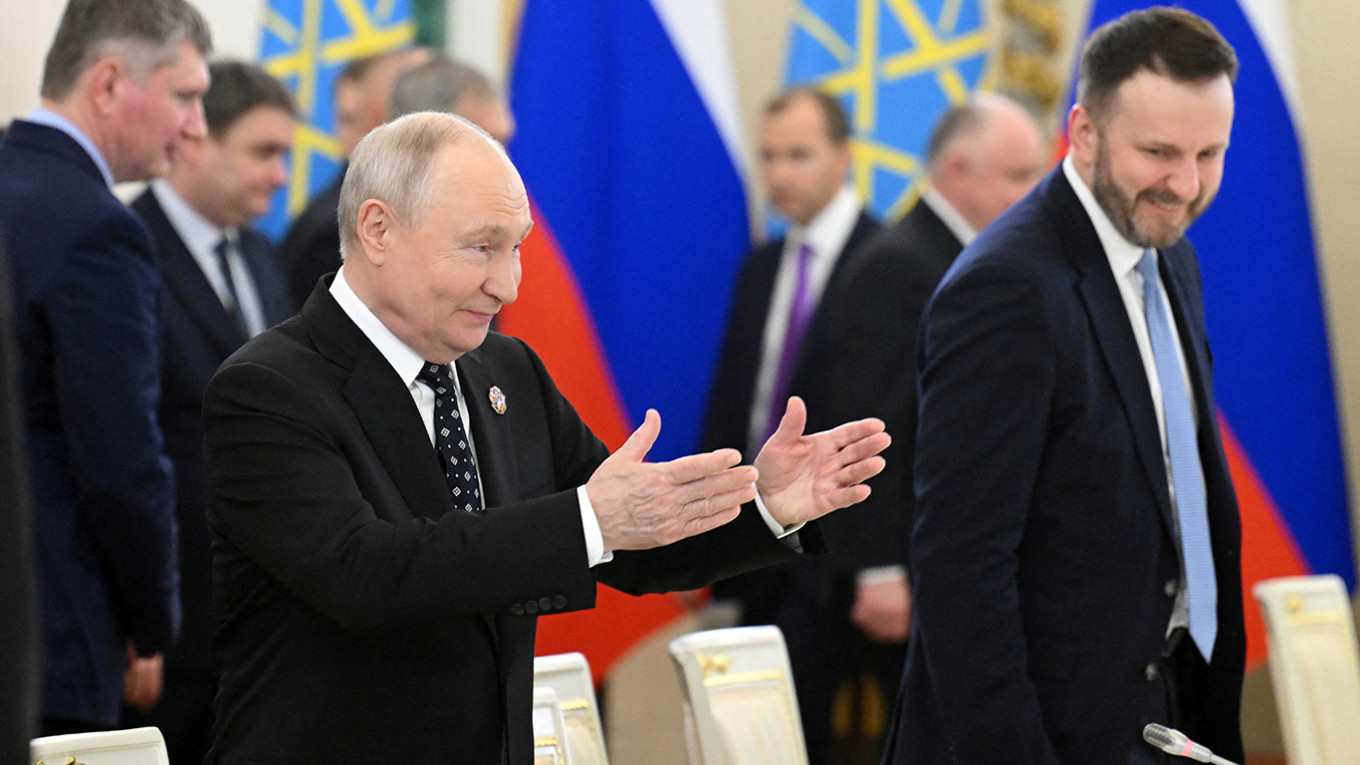
“Our companies are simply interested in moving certain production operations to African countries. It’s a mutual interest,” Putin said during the second day of the 2026 Russia-Africa summit in Moscow.
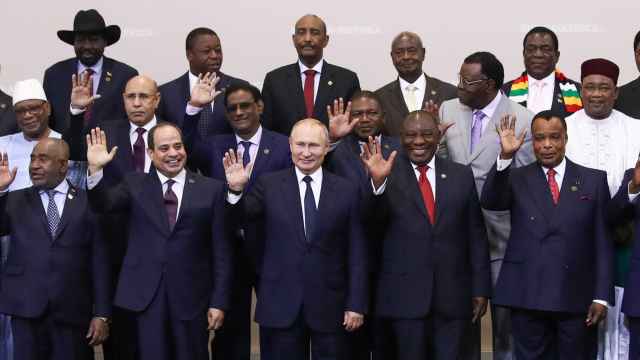
“This fully aligns with Russia’s interests, especially given current circumstances, when scores of sanctions are placed on the Russian economy and businesses,” he told the representatives of 48 African nations, including 22 heads of state.
Putin did not say which Russian manufacturing firms were looking to set up shop in Africa, but boasted that they have “sufficiently high” investment potential.
“All that matters is that your decisions remain sovereign, your investments stay safe and secure, and everything functions regardless of the political climate,” the Russian leader said.
Putin touted the volume of Russian trade with African nations last year, which totaled $27 billion, or 2.4% less than in 2024. He also expressed confidence that trade could double to $50 billion in the “near future.”
The president has repeatedly vowed to double Russia’s trade with countries across Africa since at least 2019. Trade with the entire African continent accounts for just 3.9% of Russia’s total foreign commerce.
Russia’s influence in Africa is largely rooted in military cooperation and security deals. In Mali, for example, Russian mercenaries have supported the central government in clashes with Al-Qaeda-linked militants since 2021.
Analysts note that African countries leverage relations with Russia to balance Western and Chinese influence, while also raising concerns about Russia’s recruitment of its citizens to fight in Ukraine.
A Message from The Moscow Times:
Dear readers,
We are facing unprecedented challenges. Russia's Prosecutor General's Office has designated The Moscow Times as an "undesirable" organization, criminalizing our work and putting our staff at risk of prosecution. This follows our earlier unjust labeling as a "foreign agent."
These actions are direct attempts to silence independent journalism in Russia. The authorities claim our work "discredits the decisions of the Russian leadership." We see things differently: we strive to provide accurate, unbiased reporting on Russia.
We, the journalists of The Moscow Times, refuse to be silenced. But to continue our work, we need your help.
Your support, no matter how small, makes a world of difference. If you can, please support us monthly starting from just $2. It's quick to set up, and every contribution makes a significant impact.
By supporting The Moscow Times, you're defending open, independent journalism in the face of repression. Thank you for standing with us.

Remind me later.