
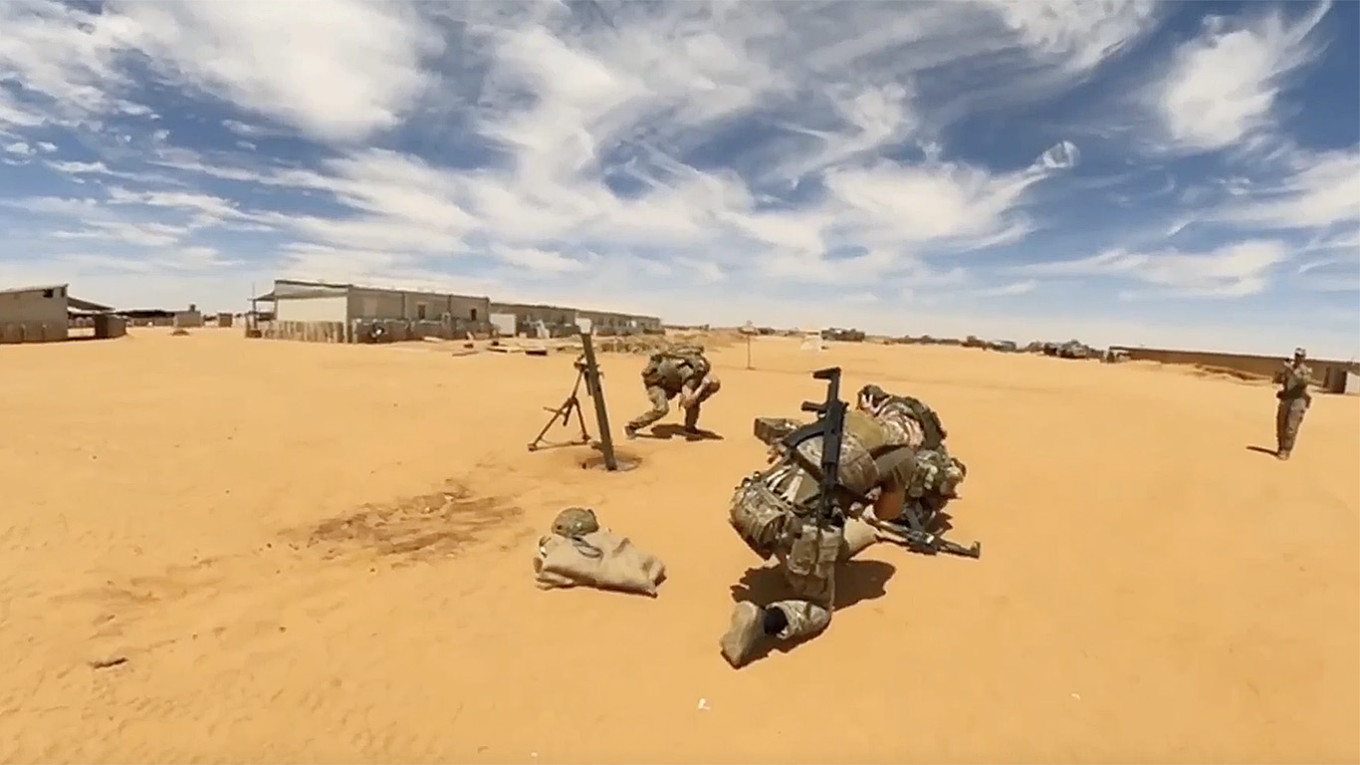
The defense minister is dead, strategically located military bases and entire cities have been captured and the president is reportedly in hiding.
Following a weekend that saw the largest coordinated attacks in Mali in more than a decade, the central government is assessing a staggering blow to its control of the country. That’s all the more worrying because its main partner in security operations, Russia, also suffered major military setbacks, a Moscow Times analysis of videos, images and satellite imagery shows.
Saturday’s attacks were carried out by Al-Qaeda-linked militants and armed Tuareg separatists who seek to form a breakaway state. These groups have clashed with the central government for years. Russian mercenaries arrived in 2021 to aid the government in repelling them.
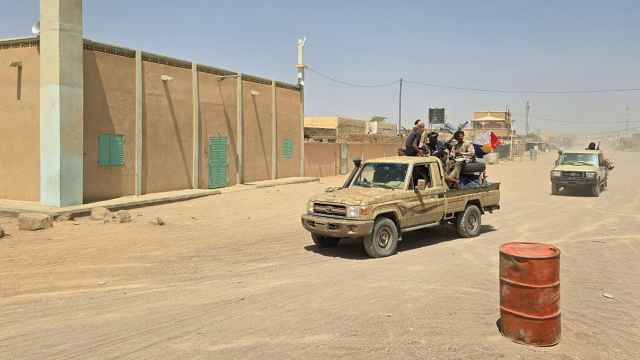
Multiple videos circulated over the weekend purporting to show soldiers of Russia’s Africa Corps evacuating Kidal, a strategic northern city, in what would amount to a major setback.
Using three reverse image search platforms, The Moscow Times confirmed that the videos did not appear online before this weekend.
One video shows trucks driving past a distinctive landmark, a structure painted red, yellow and green standing on four legs. Atop the structure a flag waves in the wind.
The Moscow Times was able to geolocate the video to an intersection in central Kidal. Based on the position of the person taking the video, the vehicles came from the south, the direction of a Malian Armed Forces (FAMa) and Russian base, and were heading west, a route that could lead to the main roadway out of the city.
The convoy contained one armored personnel carrier with three modified pickup trucks following close behind. Other videos show additional vehicles.
It is impossible to tell who is driving them. However, a security analyst who studies the Sahel said that one of the large convoy vehicles seen in another video looks to be a Chinese-built Shacman SX2190N, a logistics truck that has been known to be used by Russian mercenaries.
The analyst spoke on condition of anonymity due to the sensitivity of working in the region.
Other open-source researchers claimed the video also shows a Grad missile system.
Unverified reports claimed that the military base south of Kidal was a major site of fighting over the weekend.
Publicly available satellite imagery analyzed by The Moscow Times shows at least two dark marks appearing on Saturday consistent with the look of an explosion’s aftermath, something that could indicate skirmishes took place there.
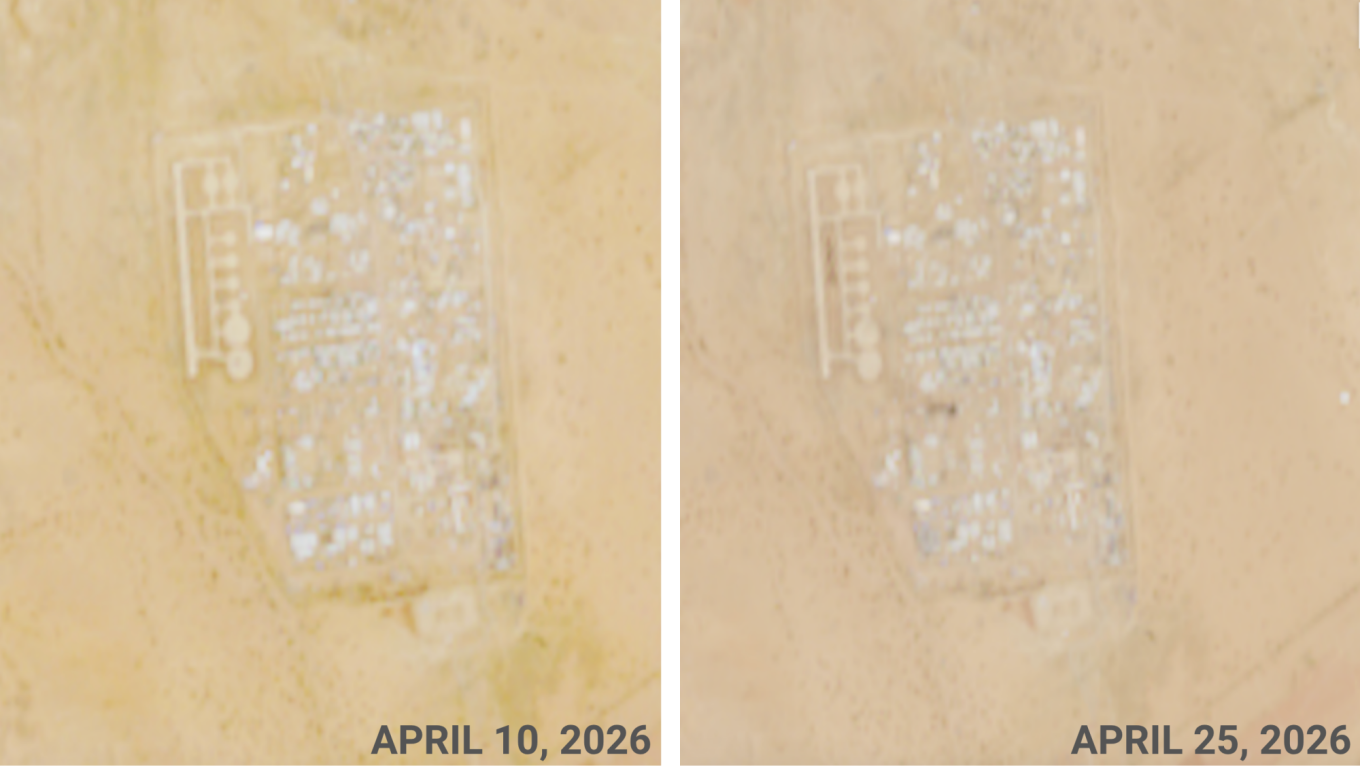
On Monday, as this story was being reported, Africa Corps officially announced its withdrawal from Kidal on Telegram.
“Wounded soldiers and heavy equipment were evacuated first,” Africa Corps said in a statement. “The troops continue to carry out their assigned combat mission. The situation in the Republic of Mali remains challenging.”
Africa Corps’ setbacks were not just limited to the loss of territory. Two videos analyzed by The Moscow Times show expensive military equipment in differing states of destruction.
One shows a vehicle consumed in flames, its body charred black. According to the Sahel security analyst, this is either a Soviet-built BMP-1 or BMP-2 infantry fighting vehicle that is often used to guard bases.
In another, a massive, sand-colored armored personnel carrier lies on its side, with no damage visible but its undercarriage exposed. The analyst said it is likely either a Russian Typhoon-K or Ural Typhoon, a vehicle designed to withstand landmines and other explosives.
“As Africa Corps withdraws from its northern bases, the military equipment Moscow supplied in 2025 is either being pulled out alongside the troops or destroyed by insurgents,” said Justyna Gudzowska, executive director of the Washington-based investigative organization The Sentry.
Gudzowska noted that the same kinds of vehicles reported destroyed were only delivered to Russian mercenaries in Mali last year.
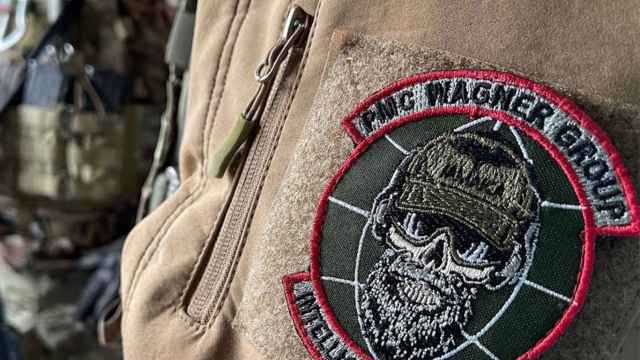
Mali has hosted one of the largest Russian mercenary forces on the continent since the Wagner group’s arrival in 2021. Last summer, the force rebranded as the Africa Corps and came under the control of the Defense Ministry.
Ulf Laessing, the Bamako-based head of the Konrad Adenauer Foundation’s Sahel program, told The Moscow Times that while a complete picture of the blow to Russia’s fighting capacity remains to be seen, the attacks have likely weakened morale.
“It’s more on the psychological level in terms of equipment and materiel. I don’t think that their assets at the airport were impacted,” Laessing said, referring to Russia’s equipment at Bamako’s main airport. “Their camp in Kidal was obviously looted and overrun, but much of the infrastructure remains intact, I’m sure.”
A Message from The Moscow Times:
Dear readers,
We are facing unprecedented challenges. Russia's Prosecutor General's Office has designated The Moscow Times as an "undesirable" organization, criminalizing our work and putting our staff at risk of prosecution. This follows our earlier unjust labeling as a "foreign agent."
These actions are direct attempts to silence independent journalism in Russia. The authorities claim our work "discredits the decisions of the Russian leadership." We see things differently: we strive to provide accurate, unbiased reporting on Russia.
We, the journalists of The Moscow Times, refuse to be silenced. But to continue our work, we need your help.
Your support, no matter how small, makes a world of difference. If you can, please support us monthly starting from just $2. It's quick to set up, and every contribution makes a significant impact.
By supporting The Moscow Times, you're defending open, independent journalism in the face of repression. Thank you for standing with us.

Remind me later.